
Passez à l'illimité avec Magzter GOLD
Obtenez un accès illimité à plus de 9 000 magazines, journaux et articles Premium pour seulement
The Rise And Fall Of The Saturn
BBC Sky at Night Magazine
|November 2017
Fifty years ago this month the mighty rocket launched for the first time.

On 9 November 1967, veteran journalist Walter Cronkite struggled to make himself heard as the first Saturn V unleashed a raging torrent of flame and ponderously took flight for the Apollo 4 mission. Its raw, naked power was unmistakable. “The building’s shaking,” he intoned. “This big blast window is shaking. We’re holding it with our hands. Oh, the roar is terrific! Part of our roof has come in here.” His usual calmness and poise were momentarily lost, as his gruff voice notched up an octave to overcome the din. For on that day, Cronkite and the people of Florida were left wondering if a rocket had risen or the Earth had sunk.
Flown 13 times between that winter’s morning, 50 years ago, and its final mission in May 1973, the Saturn V retains a mystique as the largest and most powerful rocket ever brought to operational status. Standing 110.6m tall – fractionally shorter than St Paul’s Cathedral – it carried five F-1 engines on its first stage, five J-2 engines on its second stage and a single J-2 on its third stage.
As high as a two-storey house, the F-1 remains the largest and most powerful single-chambered liquid-fuelled rocket engine ever developed, whilst the J-2 would fire twice to deliver astronauts into low-Earth orbit and onward to the Moon. Half the size of its big brother, the J-2 was America’s largest hydrogen-powered engine until the development of the Space Shuttle’s RS-25. It was also one of few engines of this period that could be ‘restarted’ in space.

Cette histoire est tirée de l'édition November 2017 de BBC Sky at Night Magazine.
Abonnez-vous à Magzter GOLD pour accéder à des milliers d'histoires premium sélectionnées et à plus de 9 000 magazines et journaux.
Déjà abonné ? Se connecter
PLUS D'HISTOIRES DE BBC Sky at Night Magazine
BBC Sky at Night Magazine
MOONWATCH
January's top lunar feature to observe

2 mins
January 2026
BBC Sky at Night Magazine
Speed up your processing workflow
How to use Photoshop's Actions tool to drastically cut your processing time
3 mins
January 2026
BBC Sky at Night Magazine
Chasing Canada's polar lights
With solar maximum peaking and a new Moon promising dark skies, Jamie Carter travels to Churchill, Manitoba to hunt the Northern Lights - and dodge polar bears – in Canada's far north
7 mins
January 2026
BBC Sky at Night Magazine
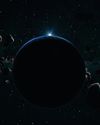
Beyond Pluto: The search for the hidden planets
Could one – or even two - undiscovered planets lurk at the edges of our Solar System? Nicky Jenner explores how close we are to finding the elusive 'Planet 9'
6 mins
January 2026
BBC Sky at Night Magazine
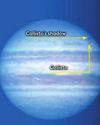
Jupiter moon events
Jupiter is a magnificent planet to observe.
2 mins
January 2026
BBC Sky at Night Magazine
What samples from space have taught us
Alastair Gunn explains what scientists have learnt in the 20 years since the first unmanned mission brought materials back from alien worlds
3 mins
January 2026
BBC Sky at Night Magazine
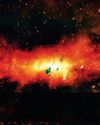
The Milky Way as you've never seen it before
This is the largest low-frequency radio colour image of our Galaxy ever assembled
1 min
January 2026
BBC Sky at Night Magazine
Merger of ‘impossibly' massive black holes explained
Scientists discover how enormous, fast-spinning black holes can exist after all
1 mins
January 2026
BBC Sky at Night Magazine
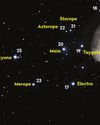
Lunar occultation of the Pleiades
BEST TIME TO SEE: 27 January from 20:30 UT
1 min
January 2026
BBC Sky at Night Magazine
The Universe's expansion may be slowing down
New study suggests current theories of dark energy could be wrong
1 mins
January 2026
Translate
Change font size