Essayer OR - Gratuit
A WINNING FORMULA
BBC Science Focus
|January 2022
Beneath the rainforests of South America lives a fungi that consumes 50,000 leaves a day without ever coming to the surface. It relies on ants to bring it food in exchange for nutrients. This unlikely partnership starred in Sir David Attenborough’s new wildlife series The Green Planet. Evolutionary biologist Dr Pepijn Kooij speaks to Amy Barrett about this special relationship…

THE LEAF-CUTTER ANTS RELY ON THEIR FUNGUS FOR FOOD. WHY DON’T THEY JUST CUT OUT THE MIDDLEMAN AND EAT THE LEAVES THEMSELVES?
Digesting plant material is a difficult process, even for us humans. It’s a hard thing to do.
Think about herbivores, carnivores and omnivores, and just look at, for example, the lengths of their intestines. If you take a tiger – a carnivore – the length of its intestines is about six metres. But if you look at a cow – the perfect example of a herbivore – the intestine is about 24 metres long, and cows also have multiple stomachs. It’s a long process to digest plant material, and you need lots of different bacteria to help you do it.
Plants have this defence mechanism: an enormous cell wall around their cells to protect them from being eaten. It takes a lot of energy to get to the parts in the plants that we actually need – the nitrogen and proteins. But there are specialised organisms, such as bacteria [in a cow’s stomach], that are designed to do that kind of work. For the ants, they want those proteins, but it’s very hard for the insects to actually extract them. So they have their fungus help penetrate the cell, then the ants feed on the fungus.
BUT DOESN’T THE FUNGUS NEED THE PROTEIN? WHY WOULD IT SHARE?
Well, the fungus takes some of the proteins, but it has developed this relationship with the leafcutter ants. The fungus grows specialised organs, which we call gongylidia. Inside the gongylidia are fats and proteins, which are nutritious for the ants. The ants eat these gongylidia.

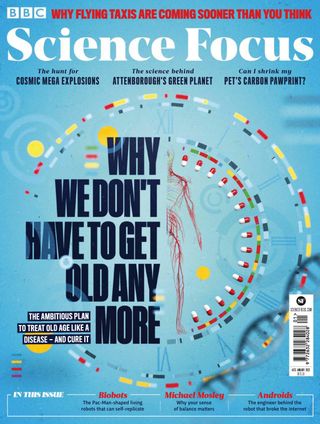

Cette histoire est tirée de l'édition January 2022 de BBC Science Focus.
Abonnez-vous à Magzter GOLD pour accéder à des milliers d'histoires premium sélectionnées et à plus de 9 000 magazines et journaux.
Déjà abonné ? Se connecter
PLUS D'HISTOIRES DE BBC Science Focus

BBC Science Focus
DOES MY DOG HAVE ADHD?
Officially, Attention-Deficit Hyperactivity Disorder (ADHD) is a human condition. People are diagnosed with it. Dogs are not. Yet many of its core features, including hyperactivity, impulsivity and distractibility, can be found in dogs.

1 min
March 2026
BBC Science Focus
DOES MY BRAIN LIVE A LITTLE IN THE PAST?
Yes, your brain does live a little in the past. It can't help it. The information it receives via your senses is always a little out of date. Whether it's light entering the retinas in your eyes, or sounds vibrating the hairs in your ears, it not only takes time for the data to arrive, but your brain then has to process it.
2 mins
March 2026
BBC Science Focus
ASTRONOMY FOR BEGINNERS
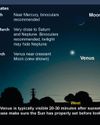
RETURN OF THE EVENING STAR (VENUS)
1 mins
March 2026

BBC Science Focus
CAN YOU STOP YOUR SENSE OF TASTE DULLING AS YOU AGE?
Sometimes I hear people say that food just doesn't taste the same as they get older. It's tempting to blame this on age, but there are other factors at play, too.
1 mins
March 2026
BBC Science Focus
MICROBIOMES OF THE SUPERAGERS
BY STUDYING THE INCREASING NUMBER OF PEOPLE WHO ARE LIVING BEYOND THEIR 100TH BIRTHDAYS, SCIENTISTS ARE DISCOVERING THAT THE SECRET TO REACHING A RIPE OLD AGE IN RUDE HEALTH MIGHT LIE IN OUR GUTS
8 mins
March 2026

BBC Science Focus
HOW BIG WERE MEDIEVAL WAR HORSES?
You might picture knights charging into battle on towering steeds, but medieval horses were typically no bigger than modern-day ponies.
1 min
March 2026
BBC Science Focus
FORCES OF HABIT
Could new research on setting up healthy habits resuscitate those stuttering New Year resolutions?
3 mins
March 2026

BBC Science Focus
5 DANGERS HIDING IN YOUR PROCESSED FOOD
We all know that ultra-processed foods are bad for us, but what ingredients should we particularly try to avoid? And what are they doing to our bodies?
9 mins
March 2026
BBC Science Focus
Mosquitoes are becoming thirstier for human blood
Habitat loss may be pushing mosquitoes towards human hosts with deadly consequences
1 mins
March 2026

BBC Science Focus
HOW CAN I GET OVER MY EX?
Relationship breakups can be brutal, just look at the popularity of songs like 'Someone Like You' by Adele, or all the covers of 'Cry Me a River' by Julie London.
1 mins
March 2026
Translate
Change font size