
Passez à l'illimité avec Magzter GOLD
Obtenez un accès illimité à plus de 9 000 magazines, journaux et articles Premium pour seulement
Essayer OR - Gratuit
"Come and assist your loving mother. I am in prison for debt". "Dear mother, so am I"
BBC History UK
|April 2023
Debtors' prisons inflicted untold misery on families in the 18th and 19th centuries.

Straitened circumstances
The debtors' excercise grounds at Newgate prison in 1809. "The debtors' prison was not a distant threat in 18th-century England but a feature of everyday life," argues Alexander Wakelam.
In May 1728, the 36-year-old trumpet player John Grano discovered his luck had finally run out. Grano’s debts had been piling up for weeks. Business had not been good of late but his spending on fine clothes and finer wines had not slowed. By Thursday 30th his creditors had finally had enough of Grano’s empty promises and applied to the court for his arrest. He was seized by a bailiff in the street and instructed to pay up or face the consequences of his spending. Grano was not panicked – this was hardly the first time he had faced his creditors’ threats. However, this time there was no deal to be done, no new extension to be found and, as he wrote in his diary that night, no “brother, relation or friend came nigh me” to bail him out. Unable to pay, Grano was taken to “this Hell between 7&8 at night” – the Marshalsea debtors’ prison.
The debtors’ prison was not a distant threat in 18th-century England but a feature of everyday life. Almost every town had a jail, and some maintained several – when Grano was arrested, at least 15 were operating in London. Prisons stood on bridges, on the edges of marketplaces, and in the middle of fashionable high streets.
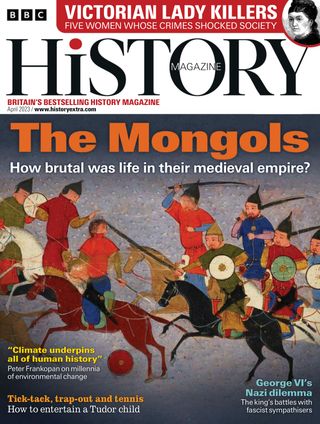

Cette histoire est tirée de l'édition April 2023 de BBC History UK.
Abonnez-vous à Magzter GOLD pour accéder à des milliers d'histoires premium sélectionnées et à plus de 9 000 magazines et journaux.
Déjà abonné ? Se connecter
PLUS D'HISTOIRES DE BBC History UK

History Extra
Personal stories
Few shows have enjoyed the longevity of Who Do You Think You Are? and it's easy to understand why it has endured.

1 min
June 2026

History Extra
Tidal change
Southern mythos notwithstanding, there exists no static, exceptional American South.
1 mins
June 2026

History Extra
Marriage story
Emily Howes on her novel about Catherine Dickens' relationship with her famous husband
1 mins
June 2026
History Extra
Sexual her-story
A witty, wide-ranging account of the myths and power structures behind female sexuality impresses SARAH JONES
2 mins
June 2026

History Extra
History man
According to Tom Hanks, during his childhood 'The War' was a recurring topic in the conversations of the adults around him.
1 min
June 2026
History Extra
How to be a master of disguise
10 do's and don'ts when attending a masquerade
2 mins
June 2026

History Extra
Age of indulgence
Our content producer Charlotte Vosper picks episodes of the HistoryExtra podcast about Georgian Britain
1 min
June 2026

History Extra
Gaffer tape
While Bobby Robson and Gareth Southgate both led England to World Cup semi-finals, Alf Ramsey remains the only manager to actually win the trophy.
1 mins
June 2026

History Extra
What's the origin of the Fosbury Flop?
Like the Salchow in ice skating, the Fosbury Flop is a sport technique that immortalises the name of its creator.
1 min
June 2026

History Extra
EXHIBITIONS
In 1776, the United States of America was born - heralded by the Declaration of Independence.
1 min
June 2026
Translate
Change font size