
Passez à l'illimité avec Magzter GOLD
Obtenez un accès illimité à plus de 9 000 magazines, journaux et articles Premium pour seulement
Essayer OR - Gratuit
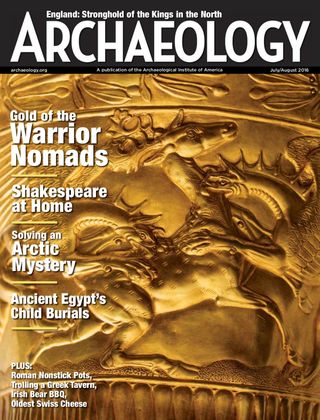
Rites of the Scythians
Archaeology
|July/August 2016
Spectacular new discoveries from the Caucasus set the stage for a dramatic hilltop ritual.

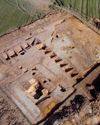
RUSSIAN ARCHAEOLOGIST ANDREY BELINSKI wasn’t sure what to expect when he found himself facing a small mound in a farmer’s field at the foot of the Caucasus Mountains. To the untrained eye, the 12-foot feature looked like little more than a hillock. To Belinski, who was charged with excavating the area to make way for new power lines, it looked like a type of ancient burial mound called a kurgan. He considered the job of excavating and analyzing the kurgan, which might be damaged by the construction work, fairly routine. “Basically, we planned to dig so we could understand how it was built,” Belinski says. As he and his team began to slice into the mound, located 30 miles east of Stavropol, it became apparent that they weren’t the first people to take an interest. In fact, looters had long ago ravaged some sections. “The central part was destroyed, probably in the nineteenth century,” Belinski says. Hopes of finding a burial chamber or artifacts inside began to fade.
It took nearly a month of digging to reach the bottom. There, Belinski ran into a layer of thick clay that, at first glance, looked like a natural feature of the landscape, not the result of human activity. He uncovered a stone box, a foot or so deep, containing a few finger and rib bones from a teenager. But that wasn’t all. Nested one inside the other in the box were two gold vessels of unsurpassed workmanship. Beneath these lay three gold armbands, a heavy ring, and three smaller bell-shaped gold cups. “It was a huge surprise for us,” Belinski says. “Somehow, the people who plundered the rest didn’t locate these artifacts.”

Cette histoire est tirée de l'édition July/August 2016 de Archaeology.
Abonnez-vous à Magzter GOLD pour accéder à des milliers d'histoires premium sélectionnées et à plus de 9 000 magazines et journaux.
Déjà abonné ? Se connecter
PLUS D'HISTOIRES DE Archaeology
Archaeology
THE EGYPTIAN SEQUENCE
Until now, the earliest Egyptians to have even part of their DNA sequenced were three people who lived between 787 and 544 B.C.

1 mins
November/December 2025
Archaeology
SOURCE MATERIAL
As early as 40,000 years ago, some hunter-gatherers in southern Africa ventured long distances to procure special types of stone to make their tools.
1 min
November/December 2025

Archaeology
Secrets of the Seven Wonders
How archaeologists are rediscovering the ancient world's most marvelous monuments
13 mins
November/December 2025
Archaeology
ACTS OF FAITH
Evidence emerges of the day in 1562 when an infamous Spanish cleric tried to destroy Maya religion
12 mins
November/December 2025
Archaeology
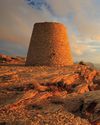
OASIS MAKERS OF ARABIA
Researchers are just beginning to understand how people thrived in the desert of Oman some 5,000 years ago
8 mins
November/December 2025
Archaeology
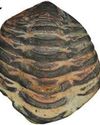
FOSSIL FORCE
One of the planet's most successful arthropods, trilobites, abounded in the oceans from about 520 million to 250 million years ago.
1 min
November/December 2025
Archaeology
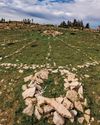
BIGHORN MEDICINE WHEEL, WYOMING
Perched almost 9,700 feet above sea level on Medicine Mountain in Wyoming's Bighorn Range, the Medicine Wheel is an 80-foot-diameter circular structure made from limestone boulders.
2 mins
November/December 2025
Archaeology
ANCIENT LOOK BOOK
A young woman buried in China's Tarim Basin some 2,000 years ago went to the afterlife accompanied by the height of fashion.
1 mins
November/December 2025
Archaeology
A FAMILIAR FACE
In the early eleventh century, a landslide on the island of Ostrów Lednicki in western Poland caused a hillfort to collapse and slip to the bottom of Lake Lednica.
1 min
November/December 2025
Archaeology
Temples to Tradition
A looted cache of bronzes compels archaeologists to explore Celtic sanctuaries across Burgundy
13 mins
November/December 2025
Translate
Change font size