
Vuélvete ilimitado con Magzter GOLD
Obtenga acceso ilimitado a más de 9000 revistas, periódicos e historias Premium por solo
Intentar ORO - Gratis
Class A, Class A/B and Class D amplification WHAT DOES IT ALL MEAN?
What Hi-Fi UK
|November 2023
We explain why some amplifiers run hot and others don't
-

If you have read an amplifier review or looked at the specifications for one, the chances are that you have come across a term such as ‘Class A/B’. In fact, this is just one of a number of different amplifier classes, the most common being Class A, Class A/B and Class D.
Most amps have the same basic building blocks in their electronic design. They typically use transistors as the core amplification component along with a supporting cast of resistors, capacitors, inductors, wires and transformers to make the whole thing work. But it is the amount of current that flows through the main output devices (the output transistors) when there is no input signal that defines the class of the amplifier.
This single engineering decision sets the product’s basic parameters. It decides the power output, the amount of energy the amp consumes, the level of heat generated and even the minimum size that the product can be.
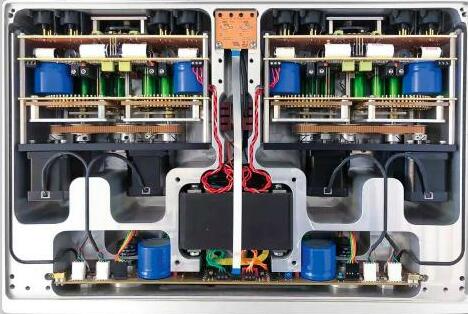
Class A amplification
A transistor needs a certain amount of bias current flowing through it to actually work. In a Class A circuit, the level of that current is always set to maximum. If that amplifier design is working at full volume then the bulk of that energy is used to drive the speakers. (Note that no amplifier is 100 per cent efficient, so there is always some wastage of the input energy, but that isn’t significant in what we are describing here.)


Esta historia es de la edición November 2023 de What Hi-Fi UK.
Suscríbete a Magzter GOLD para acceder a miles de historias premium seleccionadas y a más de 9000 revistas y periódicos.
¿Ya eres suscriptor? Iniciar sesión
MÁS HISTORIAS DE What Hi-Fi UK

What Hi-Fi UK
Serious hi-fi system
We're getting into pricier territory here, but the gains are more than worth it

4 mins
February 2026
What Hi-Fi UK
THE 7 TRACKS WE ENJOYED MOST LAST YEAR WHILE TESTING KIT
The year 2025 already seems like a dim and distant memory as we charge full-throttle into 2026, but the tracks we used to test kit last year are still thrilling us.
3 mins
February 2026
What Hi-Fi UK
Neat streaming set-up
Fewer boxes, but all the great sound you need in one convenient package
4 mins
February 2026

What Hi-Fi UK
Pure Classic Aura
Pure puts the 'blue' (and various other colours of the rainbow) in 'Bluetooth speaker'
2 mins
February 2026

What Hi-Fi UK
Ultra-big-screen bargain home cinema
For movies, TVs and games, this value set-up has to be seen to be believed
4 mins
February 2026
What Hi-Fi UK
FiiO S15
FiiO's streamer looks tempting on paper, but disappoints in use
6 mins
February 2026
What Hi-Fi UK
Luxman E-07
Ask us to talk about some of our favourite high-end phono stages of all time, and it wouldn't be long before Luxman's excellent valve-based EQ-500 is mentioned. What Hi-Fi? tested this immaculately engineered unit back in 2017, and it made such an impression that we used it in our reference system for a while.
6 mins
February 2026
What Hi-Fi UK
Audiolab D7
Neat, capable and packed with features
3 mins
February 2026

What Hi-Fi UK
Premium stereo system
A serious price for seriously talented and well-matched hi-fi
4 mins
February 2026

What Hi-Fi UK
Hisense 65U7QTUK Pro
The Chinese firm turns up the value
5 mins
February 2026
Translate
Change font size