
Vuélvete ilimitado con Magzter GOLD
Obtenga acceso ilimitado a más de 9000 revistas, periódicos e historias Premium por solo
Intentar ORO - Gratis
Legacy tech, modern problems
PCQuest
|May 2025
Legacy tech is the silent roadblock to sustainability. Outdated systems can’t sync with smart grids or green dreams. But with smart retrofits and bold thinking, we can bridge the gap—evolving without ripping apart the past. The future is modular
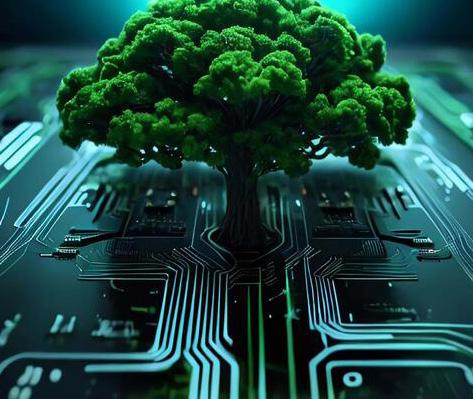
In a world chasing carbon neutrality and clean energy dreams, there's one elephant sitting right in the server room—legacy systems. Those dusty, outdated backbones of industry that still hum along in buildings, factories, and data centers across the globe. You know the type: hardware from the early 2000s, software with no updates since the flip-phone era, and protocols older than some of your interns.
Here's the twist. It's not the lack of technology that's slowing down the sustainability race. It's the tech that's already there-rooted deep, outdated, and stubbornly clinging on. So, what happens when smart grids and renewable energy meet dumb systems?
Let's unpack it.
1. Old Tech, New Headaches
Legacy systems weren't built for a sustainable future. They were built to work. And they did—for years. But now they’re the bottleneck.
- Communication Failures: Legacy hardware often runs on proprietary protocols that can’t “talk” to modern renewable systems or smart meters. Imagine plugging a Tesla into a cassette player.
- Data Silos: Real-time insights? Not with these guys. Information gets trapped, scattered, or—worse-lost. This kills efforts to optimize renewable integration.
- No APIs, No Party: No modern interfaces mean no seamless integration. Just a lot of duct-taped middleware and frustration.
Smart grid ready? Not quite.
2. Too Weak, Too Slow, Too Risky
Even if you could get legacy systems to integrate, they're still...well, old.
- Not Built for Scale: Smart infrastructure requires massive data crunching in real time. Legacy systems struggle with this volume and complexity.


Esta historia es de la edición May 2025 de PCQuest.
Suscríbete a Magzter GOLD para acceder a miles de historias premium seleccionadas y a más de 9000 revistas y periódicos.
¿Ya eres suscriptor? Iniciar sesión
MÁS HISTORIAS DE PCQuest

PCQuest
AI on the ground Practical use cases of AI in large enterprise operations
AI isn't a side project anymore, it's the quiet operator inside global giants. It reads invoices, senses machine fatigue, tailors every customer moment, flags risk in real time, and feeds leaders sharper instincts. Scale just got smarter

3 mins
March 2026

PCQuest
From AI experiments in 2025 to enterprise scale in 2026: Why data foundations will decide the winners
Everyone's betting big on Al, but most are burning cash instead of building value. The hidden culprit? Dirty data, clunky processes, and missing context. What if fixing your foundation, not your algorithms, was the real AI game-changer?
4 mins
March 2026

PCQuest
How automation at the periphery is accelerating digital transformation
Digital transformation is not tearing down the core anymore. It is happening at the edges. With AI and automation layered onto existing systems, companies are cutting costs, boosting productivity by up to 40%, and scaling smarter without risking operational chaos
2 mins
March 2026

PCQuest
When AI moves from chips to racks
AI performance is no longer just about faster chips. It is about how racks, power, networking, and orchestration work together. As agentic AI grows, infrastructure must become predictable, open, and built for scale from day one
4 mins
March 2026

PCQuest
Designing enterprise AI systems that stay fair
In 2026, bias is no longer treated as a communications issue or a public relations headache.
6 mins
March 2026

PCQuest
HALO smart sensor
What if bathrooms, locker rooms, and isolated spaces could become safer without adding cameras?
2 mins
March 2026

PCQuest
Building enterprise AI that doesn't discriminate
Bias in enterprise AI is not a side issue. It starts in data pipelines, training systems, product design, and engineering workflows. As AI scales, fairness, transparency, and accessibility are becoming core software requirements
4 mins
March 2026

PCQuest
Bias travels faster than code
Bias in enterprise AI is not a surface issue. It enters through data, features, model training, APIs, and UI logic, then spreads across the stack. The technical response is shifting from audits to architecture, observability, and deployment controls
6 mins
March 2026

PCQuest
How hospitals can use AI without risking patient data
With the fast pace of adoption of Artificial Intelligence (AI) and digital health systems in Indian hospitals, issues related to the security of patient data are also increasing at an equal rate.
2 mins
March 2026

PCQuest
DeFi in 2026: The rise of liquidity, privacy and decentralized exchanges
DeFi's teenage years are over. Liquidity now behaves like infrastructure, privacy is baked in with zero-knowledge math, and DEXS hum like borderless trading engines. What once felt scrappy now resembles parallel financial system-without gatekeepers
3 mins
March 2026
Listen
Translate
Change font size