Intentar ORO - Gratis
When Machines Learn Faster Than Us
Open Source For You
|February 2026
The danger lies not in machines getting more intelligent with time... but in humans finding it convenient to depend on that intelligence.

Not so long ago, learning was something only humans could do. Children learnt through textbooks, and professionals took decades to master their skills — the road to expertise was long and filled with mistakes and mentorships. Today, however, a machine can completely master in mere minutes what a human would take years to learn. A generative AI model can write code that it was never explicitly taught, diagnose diseases from scans better than trained specialists, and create marketing strategies without attending business school.
Artificial intelligence is not arriving with a big bang or in the form of dystopian robot armies. It is coming in a subtle way—through recommendation engines, chatbots, automated hiring systems, predictive analytics, and decision-making algorithms that are deeply embedded in everyday systems. And while AI is not ‘killing’ humans in a literal sense, it may be taking away what makes human contribution economically and cognitively relevant. Are we witnessing progress—or the slow outsourcing of human thinking?
From tools to thinkers: How AI crossed the line
For decades, technology acted as an amplifier of human capability. Calculators enhanced arithmetic. Computers accelerated computation. Software automated repetitive tasks. Humans remained firmly ‘in the loop’.
Today, AI systems have not only come close to the level of human intelligence but have also surpassed it in many ways. Besides carrying out commands, they now analyse, foresee, and improve their performance. Large language models can reason in different fields. Vision machines can sense patterns that are not visible even to the human eye. Reinforcement learners are becoming better with the help of the loops of feedback in a very short time—far quicker than any human could ever be.
In 2023, researchers noticed that AI models were able to do tasks better than humans in:
- Diagnostics of medical images


Esta historia es de la edición February 2026 de Open Source For You.
Suscríbete a Magzter GOLD para acceder a miles de historias premium seleccionadas y a más de 9000 revistas y periódicos.
¿Ya eres suscriptor? Iniciar sesión
MÁS HISTORIAS DE Open Source For You

Open Source For You
Sending IoT Sensor Data to Public or Private Servers
This IoT system shows a simple and effective way to send sensor data using an ESP8266 microchip.

3 mins
March 2026

Open Source For You
Popular FOSS Tools for LLM Observability, Monitoring and Evaluation
This overview of popular tools for monitoring large language models also sheds light on how LLM-as-a-judge enhances their performance.
2 mins
March 2026
Open Source For You
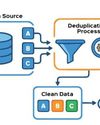
Data Deduplication Done the Right Way
Deduplication helps to save space on Linux-based storage systems. Choose the right platform and check whether it meets your goals.
6 mins
March 2026

Open Source For You
The Relevance of Rubber Duck Debugging in the Age of AI
Discover why rubber duck debugging is a powerful process today. There's also a step-by-step guide on how to use it in the age of artificial intelligence.
4 mins
March 2026

Open Source For You
GitHub weighs turning off pull requests as AĬ slop floods projects
GitHub has formally acknowledged that AI-generated 'slop' is overwhelming open source projects, forcing maintainers to sift through poor pull requests (PRS), abandoned submissions and guideline violations - and is now considering restricting or even disabling pull requests, the core mechanism of open collaboration.
1 min
March 2026

Open Source For You
Global banks are deploying Ethereum's Layer-2 stack
Banks are standardising on Ethereum's open source stack as production financial infrastructure, shifting from experimental pilots and proprietary blockchains to live Layer-2 networks for tokenised deposits, interbank payments, and cross-border settlement.
1 min
March 2026

Open Source For You
OpenClaw's creator joins OpenAl
In a move that reinforces its commitment to open development rather than acquisition, OpenAI has brought Peter Steinberger, founder of OpenClaw, into the company while placing the popular AI agent under a foundation structure to ensure it remains open source.
1 min
March 2026
Open Source For You
LibreOffice 26.2 comes with native Markdown support
LibreOffice 26.2 has been released by The Document Foundation, strengthening its position as a fully free and open source office suite for Windows, macOS, and Linux, with support for more than 120 languages.
1 min
March 2026

Open Source For You
Indian government mandates labelling of Al-generated content and quicker deletion of illegal deepfakes
India has introduced sweeping AI content rules that immediately place pressure on social platforms and open source AI ecosystems to label, trace and rapidly remove AI Open ource synthetic media at scale.
1 min
March 2026
Open Source For You
I2C and I3C: How Modern Devices Communicate
I3C and I2C are both two-wire communication protocols that help exchange data between multiple devices. While I3C preserves the simplicity of I2C, it introduces new features suited for today's sensor-rich devices.
8 mins
March 2026
Listen
Translate
Change font size