
Vuélvete ilimitado con Magzter GOLD
Obtenga acceso ilimitado a más de 9000 revistas, periódicos e historias Premium por solo
Rapid industrialisation driving energy consumption patterns evolution in India
EPR Magazine (Electrical & Power Review)
|February 2025
Transitioning to sustainable energy practices demands substantial investment, making incentivisation mechanisms essential. Policies like the proposed green credit system are critical in encouraging individuals and organisations to adopt sustainable technologies.
-

India stands at the cusp of a transformative energy evolution.
Ranked third globally in power consumption, following the U.S. and China, the nation is poised to witness a significant surge in energy demand.
With aspirations to become a $7 trillion economy by 2030, every 1 percent increase in GDP is projected to result in a corresponding 0.8 percent rise in power demand. This anticipated growth is accompanied by the need to achieve ambitious sustainability targets, such as the commitment made at COP26 to become net zero by 2070 and reduce the carbon footprint by 20 billion tonnes.
Rapid industrialisation India is undergoing rapid industrialisation and urbanisation, and the energy consumption patterns are changing.
By 2030, nearly 40 percent of India's population is expected to reside in urban areas, resulting in a sharp increase in urban energy demand. India's per capita power consumption is approximately one-third of the global average, but this is set to double by the end of the decade. Meeting this growing demand while adhering to climate commitments presents a dual challenge of scaling up energy generation and integrating sustainability into the energy ecosystem.
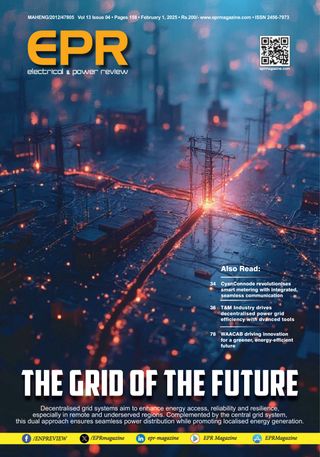

Esta historia es de la edición February 2025 de EPR Magazine (Electrical & Power Review).
Suscríbete a Magzter GOLD para acceder a miles de historias premium seleccionadas y a más de 9000 revistas y periódicos.
¿Ya eres suscriptor? Iniciar sesión
MÁS HISTORIAS DE EPR Magazine (Electrical & Power Review)

EPR Magazine (Electrical & Power Review)
Wirepas certification a major step toward India's upcoming phase of AMI deployments
The Wirepas Certified programme is a major advancement for India's massive AMI deployments. This affirms device suitability for the diverse and challenging environments in the country. Teppo Hemiä, CEO of Wirepas discusses more with EPR.

2 mins
December 2025
EPR Magazine (Electrical & Power Review)
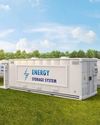
BESS becoming the backbone of power capacity additions
India is undergoing a rapid clean energy revolution, aiming to deploy 500 GW of non-fossil capacity by 2030, of which it has already reached 250 GW.
6 mins
December 2025

EPR Magazine (Electrical & Power Review)
Transformer industry undergoes evolution to meet capacity addition
The projected increase of over 433,000 MVA in substation capacity nationwide has served as a guiding force for the transformer sector. Amit Varshney shares his expertise in talks with EPR.
3 mins
December 2025

EPR Magazine (Electrical & Power Review)
RenewSys elevates solar module reliability with advanced encapsulant technologies
To enhance the efficiency and reliability of its products, RenewSys has introduced advanced encapsulants and backsheets, including AA EVA (Anti-Acid) to combat internal corrosion, ENT POE to guarantee PID-free performance, and environmentally friendly options like the Green Backsheet.
2 mins
December 2025
EPR Magazine (Electrical & Power Review)
REC facilitates MoU between MePDCL and CPRI for quality testing in Meghalaya
REC Limited, a Maharatna Public Sector Enterprise under the Ministry of Power and a leading NBFC, has successfully mediated a crucial Memorandum of Understanding (MoU) between Meghalaya Power Distribution Corporation Limited (MePDCL) and the Central Power Research Institute (CPRI).
1 min
December 2025

EPR Magazine (Electrical & Power Review)
SECI, Andhra finalise 1200 MWh BESS and 50 MW hybrid project
Solar Energy Corporation of India Limited (SECI), a Navratna CPSU under the Ministry of New & Renewable Energy (MNRE), Government of India, has exchanged Government Orders (GOs) with the Government of Andhra Pradesh for the development of a 1200 MWh Battery Energy Storage System (BESS) at Nandyal and a 50 MW Hybrid Solar Project.
1 min
December 2025

EPR Magazine (Electrical & Power Review)
Convergence of digitalisation, automation, and electrification is the foundation of next-gen infra
Panasonic Life Solutions India is on a mission to contribute to reliable, sustainable electrification across various sectors in the country. Shahab Naqvi shares insights about the company's strategies in talks with EPR. Let us know more from him.
3 mins
December 2025

EPR Magazine (Electrical & Power Review)
FY26 to attract $20-25 bn in renewable investments in India
The renewable energy sector in India has just hit a turning point. Between April and August 2025, the country added a record 20.1 gigawatts (GW) of renewable power capacity, a 123 per cent increase compared to the same period last year, when additions totalled just 9 GW. According to data from the Ministry of New and Renewable Energy (MNRE) and market observers like ICRA, this pace positions India to cross 35 GW of new capacity by the end of FY26, the highest annual addition in its clean-energy history.
3 mins
December 2025

EPR Magazine (Electrical & Power Review)
Wirepas certification a major step toward India's upcoming phase of AMI deployments
This certification provides DISCOMs and AMISPs with confidence that a device has passed the toughest real-world tests for scalability, interoperability and reliability.
2 mins
December 2025

EPR Magazine (Electrical & Power Review)
Renewable surge strains the grid as storage strengthens stability
The CEA mandates co-located ESS (approx. 2 hours) for new solar projects, aiming to reach 60 GW of storage by FY 2032 (including 42 GW of BESS and 19 GW of pumped hydro).
3 mins
December 2025
Listen
Translate
Change font size