Intentar ORO - Gratis
WHIZ KIDS
The Week Junior Science+Nature UK
|Issue 78
Claire Karwowski asks what makes people tick and if there is a secret to being smart.
-

You’ve probably heard the terms “book smart” and “street smart”. Your cousin Sammy solves every maths problem at lightning speed (book smart) or your neighbour Amaya, who reads people very well and isn’t easily scared (street smart), but have you ever heard of “music smart”? How about “nature smart”?
For over 100 years, scientists have studied bright people and asked what it takes to be clever. The brain is a mysterious place, though, and researchers around the world continue to argue about what it means to have and measure intelligence. Put on your thinking caps, because it’s time to explore the science and history behind being a whizz.
What is intelligence?
Put simply, intelligence is the mental ability to learn and understand new things, or to adapt to new situations. Neuroscientists (scientists who study the brain) believe that the frontal and parietal lobes, which are the forward and top parts of your brain, are most likely to be the main processing areas for human intelligence, but how is cleverness actually measured? One of the most widely known ways of measuring it is the Intelligence Quotient, or IQ.
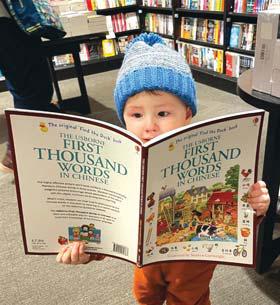 IQ is a number that originally measured a person’s mental age in relation to their physical age. For example, if you are 10 years old with the mental age of a 10-year-old, then you’d have a score of 100 – the average IQ – but if you’re a 10-year-old with a mental age of a 17-year-old, you will have a higher-than-average IQ.

Esta historia es de la edición Issue 78 de The Week Junior Science+Nature UK.
Suscríbete a Magzter GOLD para acceder a miles de historias premium seleccionadas y a más de 9000 revistas y periódicos.
¿Ya eres suscriptor? Iniciar sesión
MÁS HISTORIAS DE The Week Junior Science+Nature UK

The Week Junior Science+Nature UK
Make a smoothie bowl
Use left-over fruit and veg to whip up this breakfast treat.

1 min
May 2026
The Week Junior Science+Nature UK
Indian snakes travel by train
King cobras - the world's longest venomous snakes - are slithering on board trains across India, researchers have revealed.
1 min
May 2026

The Week Junior Science+Nature UK
Carr House Meadows
The UK's wildflower meadows are often brimming with life, colour and sound. As these habitats are full of plant and animal species, they are very precious.
1 min
May 2026
The Week Junior Science+Nature UK
Did dragons ever exist?
These fire-breathing monsters have been flying into stories for centuries.
2 mins
May 2026

The Week Junior Science+Nature UK
Should big species return to the UK?
Would you be happy about large animals roaming our countryside - including predators?
1 mins
May 2026

The Week Junior Science+Nature UK
SAVING CORAL REEFS
Find out how scientists, conservationists and imaging experts are joining forces to discover more about corals and bring reefs back to life.
1 mins
May 2026
The Week Junior Science+Nature UK
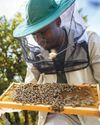
THE SECRET LIFE OF BEES
Step into a miniature world that quite literally buzzes with life.
1 min
May 2026
The Week Junior Science+Nature UK
Windermere Science Festival
On 9 and 10 May, Windermere Science Festival returns to Windermere Jetty Museum. Get ready for science-themed family fun, including roving robots and awesome virtual reality.
1 min
May 2026

The Week Junior Science+Nature UK
Aneeshwar Kunchala
Hear from a young TV star about his new series and his ambition to save wildlife.
3 mins
May 2026

The Week Junior Science+Nature UK
WORLD'S OLDEST COCKATIEL
Sonny, a family pet living in the US state of Illinois, has been officially recognised as the oldest of his species.
1 min
May 2026
Listen
Translate
Change font size