
Vuélvete ilimitado con Magzter GOLD
Obtenga acceso ilimitado a más de 9000 revistas, periódicos e historias Premium por solo
Intentar ORO - Gratis
Asel Sartbaeva
The Week Junior Science+Nature UK
|February 2025
Meet the researcher whose work will save lives around the world.
-
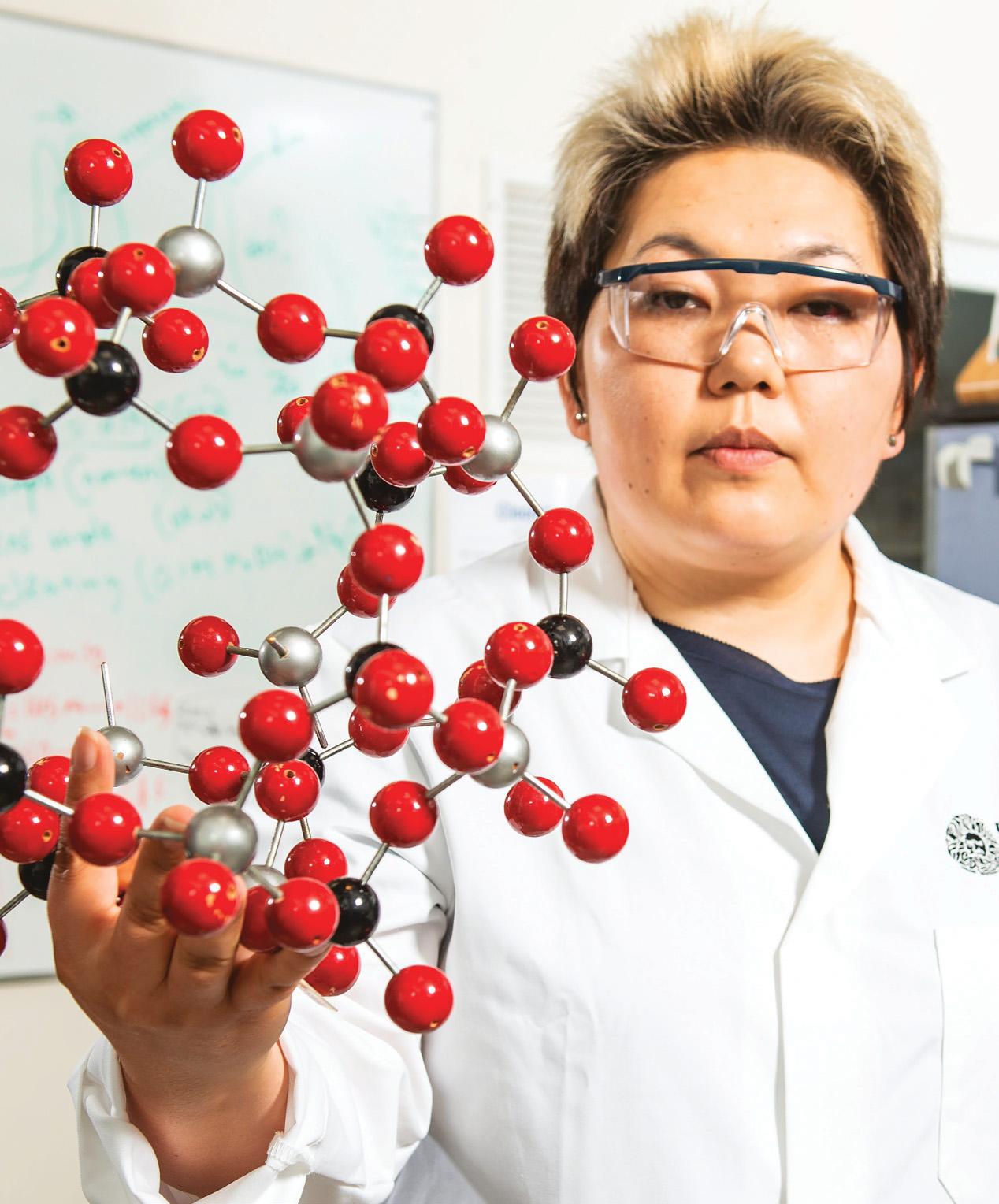
Vaccines are incredibly important. A vaccine is a type of medicine that trains the body to fight a disease using its own defences. Every year across the world, they prevent as many as five million people from dying. Unfortunately, most vaccines need to be kept cool to stop them from going off. This makes it difficult to transport them to remote areas of the world because if they get too warm, they won't work. Dr Asel Sartbaeva is a scientist who is trying to find a solution to this problem. For more than 10 years, she has been developing a way to keep vaccines stable outside of a fridge or freezer. Sartbaeva spoke to The Week Junior Science+Nature about her love of science, her research, and the inspirations behind it.
Finding certainty in science
Sartbaeva grew up in Kyrgyzstan in Central Asia. It used to be part of the Soviet Union, a group of countries once ruled from Moscow, the capital of Russia. The Soviet Union broke up into different countries in 1991, when Sartbaeva was around 12 years old. At the time, she had been spending a lot of time in hospital. She immersed herself in reading science fiction and started with Isaac Asimov's novels. "I think reading sci-fi was one of my biggest passions, which then ignited me wanting to become a scientist," she said. While there was a lot of change going on in her country and her own life, she felt she "needed something certain", which drew her to topics such as maths and physics, where there was always an answer.
Keeping vaccines stable

Esta historia es de la edición February 2025 de The Week Junior Science+Nature UK.
Suscríbete a Magzter GOLD para acceder a miles de historias premium seleccionadas y a más de 9000 revistas y periódicos.
¿Ya eres suscriptor? Iniciar sesión
MÁS HISTORIAS DE The Week Junior Science+Nature UK
The Week Junior Science+Nature UK
ANIMAL ISLANDS
Hop aboard as Daisy Dobrijevic sets sail to discover the world's most unusual beasts.

5 mins
March 2026
The Week Junior Science+Nature UK
Wildlife watch
Take a walk on the wild side with Jenny Ackland.
1 mins
March 2026

The Week Junior Science+Nature UK
Pushmeet Kohli
Meet the tech genius who trains the smart computers that are changing your world.
3 mins
March 2026
The Week Junior Science+Nature UK
New map reveals secrets hidden under Antarctic ice
A new map of Antarctica has A revealed thousands of hills Are revealed thousands of hills and valleys buried under its thick layers of ice.
1 min
March 2026
The Week Junior Science+Nature UK
Why do dolphins jump out of the water?
Discover what makes these graceful ocean mammals leap for joy.
2 mins
March 2026
The Week Junior Science+Nature UK
Ancient fish had four eves
Ancient vertebrates (animals that have backbones) had four eyes that worked a lot like ours, new research shows.
1 min
March 2026
The Week Junior Science+Nature UK
How? What? Why?
Set your curiosity free as Mike Rampton explains how asking questions changes the world.
5 mins
March 2026

The Week Junior Science+Nature UK
Bye-bye bitter grapefruits
Scientists have found a way to make grapefruits less bitter.
1 min
March 2026
The Week Junior Science+Nature UK
Spreading seeds of hope
Meet the scientists who are using drones to seed lost landscapes.
1 mins
March 2026
The Week Junior Science+Nature UK
Udderly brilliant cow seen using tools
A talented Austrian cow has shecked researchers by using both ends of a broom as a grooming tool.
1 min
March 2026
Listen
Translate
Change font size