Intentar ORO - Gratis
Education in the U.S.Needs Facts, Not Ideologies
Scientific American
|July/August 2025
One hundred years after the Scopes trial, religious ideologues are still trying to supplant evidence-based curricula with myths, to the detriment of a well-informed society
-
IN JULY OF 1925 hundreds of reporters and other onlookers crowded into a sweltering courtroom in Dayton, Tenn., to watch what would become widely recognized as the trial of the century. Against a backdrop of societal anxieties over cultural upheaval, the Scopes “monkey trial,” as it was dubbed in the press, pitted the authority of the Bible against the evidence-based science behind evolution. At the center of the trial was John Scopes, a 24-year-old teacher accused of teaching human evolution at a public school, in violation of a religiously motivated state law against it.
Opinions on who won the case differ depending on whom you ask. Technically the defense lost—the jury found Scopes guilty of breaking the law, and the judge ordered him to pay a $100 fine (a ruling that was later overturned on a technicality). But defense attorney Clarence Darrow’s arguments raised public awareness of the evidence supporting evolution and the threat that religious dogma posed to science education, academic freedom and individual liberty. Still, for decades after the trial, discussion of evolution in high school textbooks declined, and in many cases, it was omitted altogether.
One hundred years after that famous trial, education in the U.S. is still under attack from the same antiscience political forces, which are continuously using state and federal courts to assail the roles of critical thinking, inquisition and curiosity in schools in favor of religious instruction. Those who value public education must redouble their efforts to fight those forces.
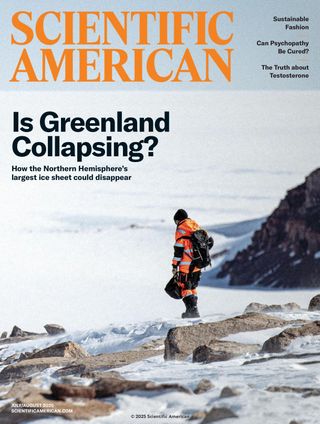

Esta historia es de la edición July/August 2025 de Scientific American.
Suscríbete a Magzter GOLD para acceder a miles de historias premium seleccionadas y a más de 9000 revistas y periódicos.
¿Ya eres suscriptor? Iniciar sesión
MÁS HISTORIAS DE Scientific American
Scientific American
Probiotic Hope and Hype
Despite their popularity, supplements with billions of \"good\" microbes help only a few illnesses, research shows

3 mins
January 2026
Scientific American
Mondays Really Are More Stressful
The start of the workweek can be a biologically measurable stressor, with consequences for long-term health that can stretch into retirement
4 mins
January 2026
Scientific American
Tiny Display
An e-paper breakthrough brings extremely high-resolution color
2 mins
January 2026
Scientific American
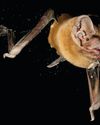
Fine-Feathered Snack
A bat's tracker documents a dramatic midair hunt
2 mins
January 2026

Scientific American
OUR ROBOTIC PICTURE
Will mechanical helpers ever be commonplace at home, at work and beyond?
11 mins
January 2026
Scientific American
"Use Your Words" Can Be Good for Kids' Health
Writing or expressing feelings can help adults mentally and physically. Kids are no different
5 mins
January 2026
Scientific American
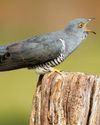
Distant Diplomacy
Unrelated species “talk” and understand one another to avoid threats
2 mins
January 2026
Scientific American
Behind the Nobel
A 2025 winner reflects on the mysterious T cells that won him the prize
5 mins
January 2026
Scientific American
A Suite of Killers
Heart ailments, kidney diseases and type 2 diabetes actually may be part of just one condition. It's called CKM syndrome
10 mins
January 2026
Scientific American
Static Launch
Tiny worms leap toward their fruit fly hosts with an electric “tractor beam”
3 mins
January 2026
Listen
Translate
Change font size