
Vuélvete ilimitado con Magzter GOLD
Obtenga acceso ilimitado a más de 9000 revistas, periódicos e historias Premium por solo
Intentar ORO - Gratis
NEXT-GEN FIGHTER JETS
How It Works UK
|Issue 204
Sixth-generation stealth fighter jets are coming. How will these advanced flying machines remain undetected in a world of increasingly sophisticated radar technology?
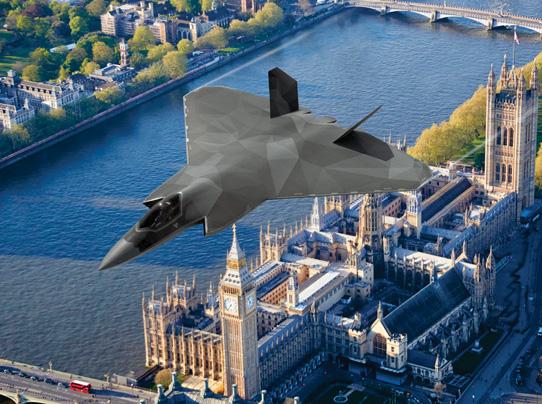
Almost everything about a classic fighter jet demands attention. These machines boast big, bold frames, sound like thunder as they soar through the sky at supersonic speeds and reveal their presence as glowing targets as they pop up on radar. But stealth fighter jets are an entirely different species, built to not only dominate the skies during combat, but disappear into them too.
Stealth fighter jets are engineered ghosts, designed to make an aircraft over 15 metres long undetectable. In a technological arms race as aircraft detection techniques improve, countries across the globe are racing to produce the most up-to-date stealth fighters so that if needed they can defend their airspace. Many countries have grouped together to form alliances, sharing ideas and signing agreements to use new fighter jets for their mutual interests. These international ventures combine top innovative technologies and demonstrate stealth superiority.
But what is a sixth-generation stealth fighter jet? Generally speaking, they're housed in non-reflective, matte coatings and have edges that blend smoothly into unusual-looking geometric shapes that manipulate how radar signals interact with their bodies. Meanwhile, the weapons that usually hang off jets in full display are concealed within the jet’s body inside internal bays. To be counted among the next generation of fighter jets, these aircraft require significant advances in stealth capabilities. For sixth-generation fighters, this is largely in the form of digital offence and passive defence in a world where computer power can outperform human analysis and improve response times to keep the aircraft undercover.


Esta historia es de la edición Issue 204 de How It Works UK.
Suscríbete a Magzter GOLD para acceder a miles de historias premium seleccionadas y a más de 9000 revistas y periódicos.
¿Ya eres suscriptor? Iniciar sesión
MÁS HISTORIAS DE How It Works UK
How It Works UK
SPACE MINING UNCOVERED
Asteroids rich in rare elements could be harvested for their valuable contents, but the real worth may be in using them as interplanetary fuel stations

2 mins
Issue 211

How It Works UK
WHY THINGS ROT
How dead plants and animals decay, and how living organisms rely on this natural process to survive
3 mins
Issue 211

How It Works UK
BOOZE, BEANS AND YOUR BODY
Caffeine and alcohol are two of the world's most common drugs. But what effects does drinking them have on our brains and bodies?
5 mins
Issue 211

How It Works UK
HOW TO CLEAN A SKYSCRAPER WINDOW
Discover how skilled window cleaners with nerves of steel tackle these towering glass facades
2 mins
Issue 211
How It Works UK
ASTRONAUTS SEE COMET LEMMON 'ABSORBED' BY AURORAE
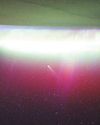
For skywatchers, scientists and even the astronauts on the International Space Station (ISS), the skies have been active. The Sun has released its largest eruptions of 2025, sparking a series of aurorae that have reached as far south as Mexico. While astronauts on the ISS had to take shelter during the recent solar storms to avoid potentially dangerous radiation, they did manage to capture this image of Comet Lemmon appearing near the aurorae on Earth.
1 min
Issue 211
How It Works UK
HOW TO MAKE MAPLE SYRUP
Your favourite pancake topping is much more than just a sugary treat made in a factory
1 mins
Issue 211
How It Works UK
A high-fibre diet may ‘rejuvenate' immune cells that fight cancer
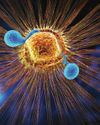
Microbes in the gut can help the immune system fight cancer, and a fibre-rich diet may be the key to unlocking those benefits, a study in mice suggests. The immune system is a key player in the body’s battle against cancer. On the front line of this resistance are CD8+ killer T cells, a type of immune cell that marauds around tumours and then exterminates the cancerous cells. But after each successive battle, these cells become worn out and don’t find tumours as effectively. As such, treatments that provide the cells with enough pep to finish their job are in high demand.
2 mins
Issue 211

How It Works UK
SEE THE BUTTERFLY NEBULA LIKE NEVER BEFORE
On 26 November 2025, the Gemini South telescope turned 25, and astronomers celebrated its birthday with a dazzling new image of the Butterfly Nebula.
1 min
Issue 211

How It Works UK
The Gulf of Suez is pulling apart
The Gulf of Suez, which partially divides Africa and Asia, may still be widening 5 million years after we thought it had stopped.
2 mins
Issue 211

How It Works UK
REMOTE ABILITIES
Infrared remotes are cheaper and more power-efficient than Bluetooth alternatives
1 mins
Issue 211
Listen
Translate
Change font size