Intentar ORO - Gratis
URBAN DISCOMFORT
Down To Earth
|May 01, 2024
Poorly planned, heat-trapping infrastructure, along with dwindling natural spaces, turn up the temperatures in major Indian cities
-
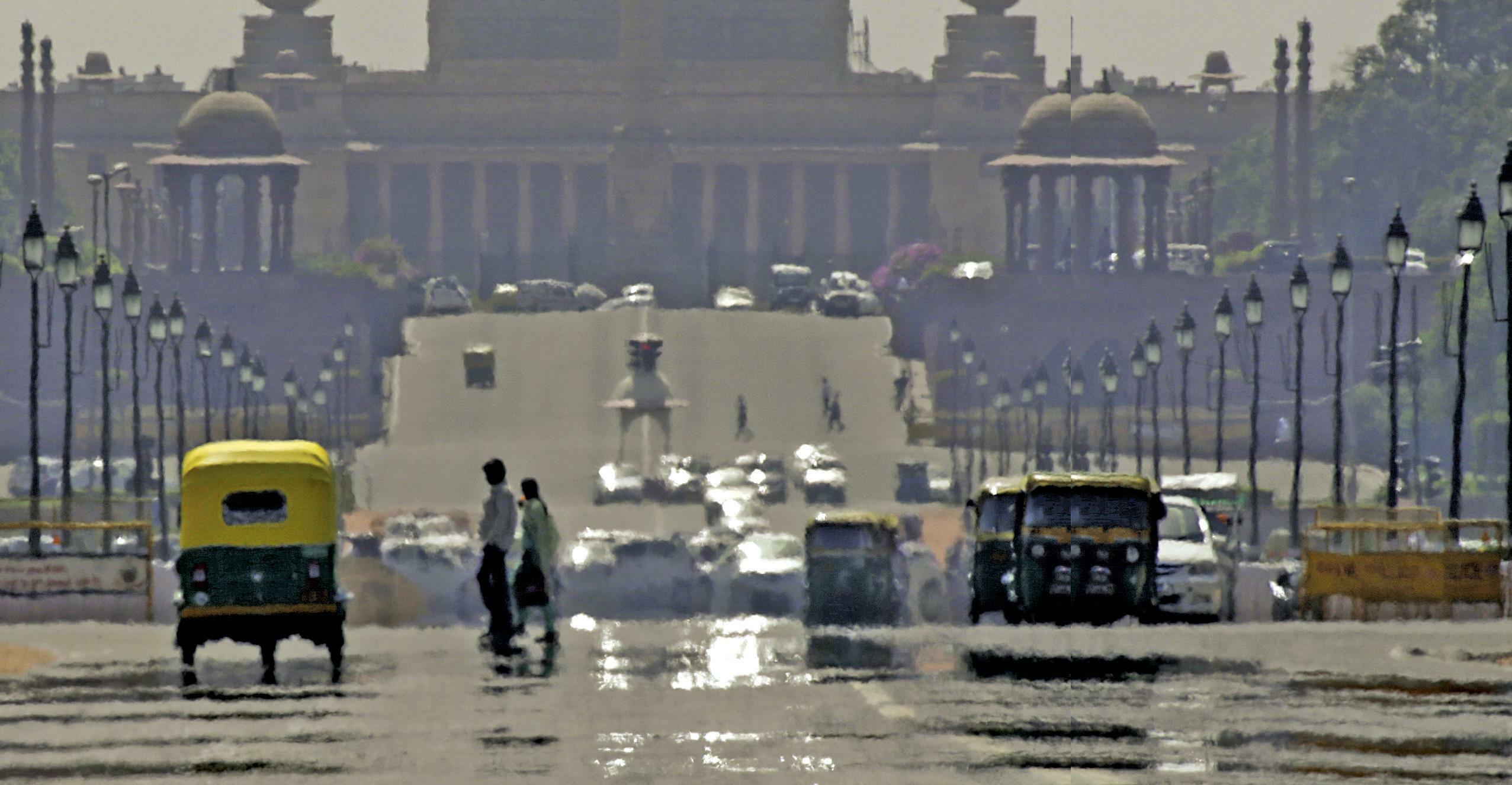
IN A warming world, urbanisation has a profound impact on heat. As a city's population grows, infrastructure needs to be developed to cater to its requirements.
Cities contribute more than two-thirds of global carbon dioxide emissions, according the UN Environment Programme. However, their environmental impact goes beyond emissions. As a city grows, the way buildings, roads and railways are laid out; the density, height and size of buildings, and the materials used; the amount of green spaces and water bodies; and level of human activities such as use of vehicles and airconditioners together determine how much heat is retained in the immediate area.
When released, this heat raises the temperatures of the nearby atmosphere. As the grey infrastructure gets denser and more concentrated, it erodes the natural spaces that act as heat sinks and keep the environment cool (see 'Influencing factors'). If left unchecked, such development could create an urban heat island effect, with cities recording high temperatures that can adversely impact the health of people, and also potentially be fatal.
To analyse the status of urban heat islands in the country and establish the ongoing heat burden that is a result of their development, Delhi-based think tank Centre for Science and Environment (CSE) conducted a study in nine cities-Delhi, Jaipur, Kolkata, Nagpur, Pune, Ahmedabad, Hyderabad, Chennai and Bhubaneswar.
These cities, which are of different sizes and are located in different climatic zones, show that the problem of heat is not restricted to a specific kind of climate or geography.


Esta historia es de la edición May 01, 2024 de Down To Earth.
Suscríbete a Magzter GOLD para acceder a miles de historias premium seleccionadas y a más de 9000 revistas y periódicos.
¿Ya eres suscriptor? Iniciar sesión
MÁS HISTORIAS DE Down To Earth
Down To Earth
CONSERVED BY COMMUNITY
How a desire to make snow leopard tourism sustainable helped a small Ladakhi settlement became the region's first Community Conserved Area

4 mins
May 16, 2026

Down To Earth
An 'open' and 'shut' case of Al's risky trajectory
Elon Musk's lawsuit against Sam Altman, OpenAl, Microsoft is crucially about open-source versus closed technology for corporate profit
4 mins
May 16, 2026
Down To Earth
Burden of transition
Clean energy transition is once again shifting environmental, human costs to the Global South, finds a UN university investigation
4 mins
May 16, 2026
Down To Earth
One step closer
India attains criticality in fast breeder reactor technology, reaching the second stage of the country's three- stage nuclear programme towards energy security
4 mins
May 16, 2026

Down To Earth
ZESTY SEEDS
Coriander seeds are a traditional antidote to summer heat
3 mins
May 16, 2026

Down To Earth
Sahyadri gets a bird village
Residents of Maharashtra's Pisavare village have embarked on a mission to protect birds in their vicinity through simple practices such as documenting species and building nests
2 mins
May 16, 2026

Down To Earth
CONFLICT IN THE BACKYARD
Across India, farmers are abandoning their fields as conflict with wild and stray animals intensifies. Conservation policy must move beyond protection alone to restore a workable coexistence between people and animals.
18 mins
May 16, 2026
Down To Earth
Capital punishment
Adequate compensation and proper rehabilitation remain a mirage for many displaced by the construction of Chhattisgarh's new capital, Nava Raipur, even two decades after the project began
3 mins
May 16, 2026
Down To Earth
Migrant workers are assets
MIGRATION HAS turned into a potent tool of political warfare across the world. For over a decade, domestic electoral politics across regions, from Europe and North America to Asia and Africa, have fuelled anti-immigration sentiments. This is also increasingly fuelling anti-immigrant vigilantism, as seen widely across Europe in 2015-16, coinciding with the refugee crisis.
2 mins
May 16, 2026

Down To Earth
Petri dish to plate
Synthetic meat production has seen a rise globally, even as environmental benefits of growing foods in laboratory remain debatable
10 mins
May 16, 2026
Listen
Translate
Change font size