Intentar ORO - Gratis
The politics and economics of mpox
Down To Earth
|September 16, 2024
Africa's mpox epidemic stems from delayed responses, neglect of its health risks and the stark vaccine apartheid
-

WHEN IT arrived finally in Kinshasa on Thursday September 5, one could only wonder at the time and effort it took for a small consignment of vaccines from Europe to reach the Democratic Republic of Congo (DRC), the epicentre of the mpox (earlier called monkeypox) outbreak in Africa. The picture of the container of desperately needed vaccines, 100,000 doses donated by the EU, unloaded on a trolley at the airport, is reflective of the global politics, economics and bureaucratic heaviness that dictate how an epidemic in a poor country is handled.
Two days later, as this column was being written, another 200,000 doses sent by the EU arrived in the DRC capital and a few other African countries where mpox cases are spiking. Yet, together the donation is just a fraction of what is needed to combat the epidemic which has so far hit a dozen countries in the continent.
In the eight months of 2024, over 18,000 cases of mpox have been reported in DRC alone which has recorded 629 deaths, the majority of them children. As before, and most recently with the COVID-19 pandemic, Africa is desperately short of vaccines, not to mention testing kits and therapies to help fight a disease which is a throwback to the times when smallpox was the deadliest scourge in the world. DRC needs 3.5 million doses to stop the spread of the disease while other African states need 10 million doses. Vaccine though is the best tool to control the epidemic and what works is the smallpox vaccine; who has any shots to spare?
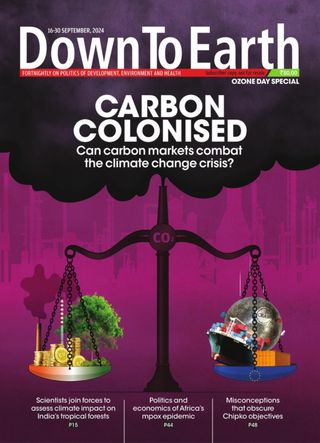

Esta historia es de la edición September 16, 2024 de Down To Earth.
Suscríbete a Magzter GOLD para acceder a miles de historias premium seleccionadas y a más de 9000 revistas y periódicos.
¿Ya eres suscriptor? Iniciar sesión
MÁS HISTORIAS DE Down To Earth

Down To Earth
THINK TWICE BEFORE FELLING SAL TREES
Many trees considered to be affected by sal borer in the 1990s are still alive today

1 mins
February 16, 2026

Down To Earth
EDGE OF SURVIVAL
Caste divides deny marginalised communities land, resources and essential aid, leaving them more vulnerable to climate disasters
6 mins
February 16, 2026

Down To Earth
A WISH LIST?
Union Budget for 2026-27 conveys the impression of a roll-call of intentions and ambitious proposals, with little detail on their formulation
6 mins
February 16, 2026
Down To Earth
Break down the gender wall
THE RULING National Democratic Alliance (NDA) government has been heavily invested in the goal to make India a developed economy by 2047.
2 mins
February 16, 2026

Down To Earth
MENSTRUAL HEALTH, NOW A FUNDAMENTAL RIGHT
In a landmark judgement, the Supreme Court has recognised menstrual health and hygiene as a fundamental right under Article 21 of the Constitution of India, which guarantees the right to life and dignity.
8 mins
February 16, 2026

Down To Earth
Of devolution and new disasters
The 16th Finance Commission pushes for changes in view of new fiscal and climatic conditions
11 mins
February 16, 2026
Down To Earth
Rising risks of plastics
NEGATIVE IMPACTS on human health due to emissions linked to the plastic lifecycle could double by 2040, according to a study published in The Lancet Planetary Health in January.
1 min
February 16, 2026

Down To Earth
GAP BETWEEN EPIDEMICS NARROWING
A watershed-based and landscape-level approach is needed to address forest degradation
2 mins
February 16, 2026
Down To Earth
WAITING TO STRIKE
Sal heartwood borer is considered the biggest threat to forestry in India, especially to the sal tree, where it lives and breeds.
11 mins
February 16, 2026

Down To Earth
A SPRING DELIGHT
Mustard flowers are not meant only for the eyes. Invite them to your plate once in a while
3 mins
February 16, 2026
Listen
Translate
Change font size