Intentar ORO - Gratis
REBIRTH OF COEXISTENCE
Down To Earth
|May 16, 2025
The portrayal of nature on the cinematic screen leaves us as silent, merely applauding spectators
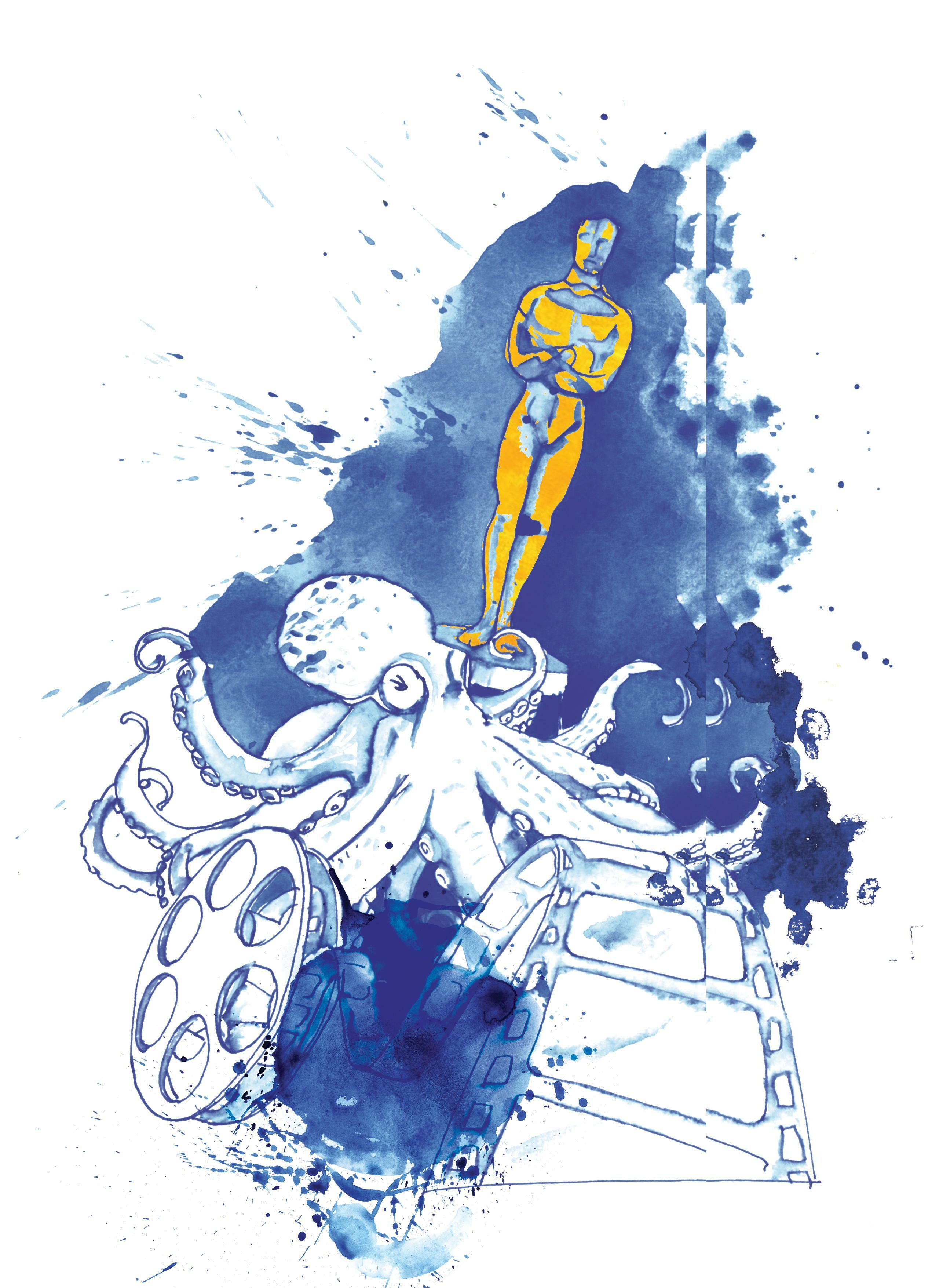
When the documentary feature My Octopus Teacher won an Oscar in 2020, it drew the world's attention. It was one of the few visual experiences that, without making noise, urged you to feel the pulse of nature. This film requests that you just watch and listen to it peacefully without imposing your thoughts. It has the capacity to teach you the philosophy of living that has shaped humans since primitive times. Through its visual language, this documentary feature establishes a different kind of dialogue with viewers. Although there have been many visual depictions in cinema before which urge careful observation of nature, the number of such scenes is quite small. In this context, My Octopus Teacher is an excellent example of the human story taking a back seat and the patience to feel nature assuming priority.
If we talk about the environment in cinema, it has always been present in some form or another. Cinema has always used the beauty of nature like a theatrical landscape, just like actors in the background who are present yet not present. Viewers' attention rarely goes to them.
Nature is present in cinema just to make a scene more beautiful; the viewer does not linger to watch and listen to it, but moves forward with the story of the main character. Until now, cinema has created such ornamental delineation where the story revolves around a human. The practice of stopping to listen to nature in cinematic scenes, if ever done, is only through a character. Nature itself has rarely been portrayed as a character. Although, there have been some exceptions to this trend that has been ongoing from the past three decades.
Many excellent films have been made on various environmental issues, including Dreams (by Akira Kurosawa, 1990), Fire Down Below (by Felix Enriquez, 1997), A Civil Action (by Steven Zaillian, 1998), Erin Brockovich (by Steven Soderbergh, 2000) and

Esta historia es de la edición May 16, 2025 de Down To Earth.
Suscríbete a Magzter GOLD para acceder a miles de historias premium seleccionadas y a más de 9000 revistas y periódicos.
¿Ya eres suscriptor? Iniciar sesión
MÁS HISTORIAS DE Down To Earth

Down To Earth
THINK TWICE BEFORE FELLING SAL TREES
Many trees considered to be affected by sal borer in the 1990s are still alive today

1 mins
February 16, 2026

Down To Earth
EDGE OF SURVIVAL
Caste divides deny marginalised communities land, resources and essential aid, leaving them more vulnerable to climate disasters
6 mins
February 16, 2026

Down To Earth
A WISH LIST?
Union Budget for 2026-27 conveys the impression of a roll-call of intentions and ambitious proposals, with little detail on their formulation
6 mins
February 16, 2026
Down To Earth
Break down the gender wall
THE RULING National Democratic Alliance (NDA) government has been heavily invested in the goal to make India a developed economy by 2047.
2 mins
February 16, 2026

Down To Earth
MENSTRUAL HEALTH, NOW A FUNDAMENTAL RIGHT
In a landmark judgement, the Supreme Court has recognised menstrual health and hygiene as a fundamental right under Article 21 of the Constitution of India, which guarantees the right to life and dignity.
8 mins
February 16, 2026

Down To Earth
Of devolution and new disasters
The 16th Finance Commission pushes for changes in view of new fiscal and climatic conditions
11 mins
February 16, 2026
Down To Earth
Rising risks of plastics
NEGATIVE IMPACTS on human health due to emissions linked to the plastic lifecycle could double by 2040, according to a study published in The Lancet Planetary Health in January.
1 min
February 16, 2026

Down To Earth
GAP BETWEEN EPIDEMICS NARROWING
A watershed-based and landscape-level approach is needed to address forest degradation
2 mins
February 16, 2026
Down To Earth
WAITING TO STRIKE
Sal heartwood borer is considered the biggest threat to forestry in India, especially to the sal tree, where it lives and breeds.
11 mins
February 16, 2026

Down To Earth
A SPRING DELIGHT
Mustard flowers are not meant only for the eyes. Invite them to your plate once in a while
3 mins
February 16, 2026
Listen
Translate
Change font size