Intentar ORO - Gratis
Not close enough
Down To Earth
|August 01, 2022
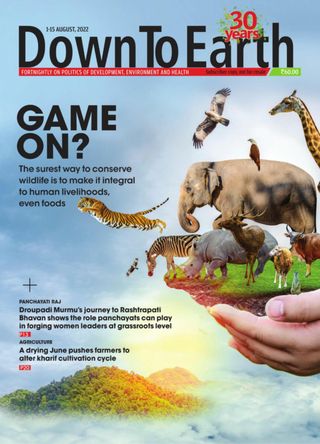
Human milk banks are important for infants who do not have access to mother's milk. But India is yet to see large-scale rollout of such centres

EARLY THIS year, Poonam (name changed), a resident of Amravati in Maharashtra, lost her four-month-old son following a surgery to fix a hole in his heart. Amid the grief and loss she found a purpose that kept her going. "My son was admitted to the neonatal intensive care unit (NICU) at the Kokilaben Dhirubhai Ambani Hospital in Mumbai. There were two other babies in the NICU. One mother was not able to express milk. So I offered to give her child my milk instead of formula," Poonam recalls. After losing her son, Poonam decided to continue donating her milk rather than take medication to stop lactation. "After returning to Amravati, I started going to the human milk bank at Dr Panjabrao Deshmukh Memorial Medical College and donated 100-120 ml daily for over a month," she says. Women like Poonam are the backbone of India's human milk bank network.
Breast milk is the ideal food for infants, says the World Health Organization (WHO). It contains nutrients and antibodies crucial for their early days. WHO recommends that infants be exclusively breastfed for the first six months. If mother's milk is not available, it says donated milk is the next best option. Brazil is a key example for a successful network of human milk banks; the first facility there was set up in 1943. Today, it has the world's largest human milk bank network. As per the Economic Commission for Latin America and the Caribbean, as of 2015, Brazil has 218 of the 301 human milk banks in the region.

Esta historia es de la edición August 01, 2022 de Down To Earth.
Suscríbete a Magzter GOLD para acceder a miles de historias premium seleccionadas y a más de 9000 revistas y periódicos.
¿Ya eres suscriptor? Iniciar sesión
MÁS HISTORIAS DE Down To Earth

Down To Earth
A WISH LIST?
Union Budget for 2026-27 conveys the impression of a roll-call of intentions and ambitious proposals, with little detail on their formulation

6 mins
February 16, 2026

Down To Earth
MENSTRUAL HEALTH, NOW A FUNDAMENTAL RIGHT
In a landmark judgement, the Supreme Court has recognised menstrual health and hygiene as a fundamental right under Article 21 of the Constitution of India, which guarantees the right to life and dignity.
8 mins
February 16, 2026

Down To Earth
Of devolution and new disasters
The 16th Finance Commission pushes for changes in view of new fiscal and climatic conditions
11 mins
February 16, 2026
Down To Earth
Rising risks of plastics
NEGATIVE IMPACTS on human health due to emissions linked to the plastic lifecycle could double by 2040, according to a study published in The Lancet Planetary Health in January.
1 min
February 16, 2026

Down To Earth
WAITING TO STRIKE
Sal heartwood borer is considered the biggest threat to forestry in India, especially to the sal tree, where it lives and breeds.
11 mins
February 16, 2026
Down To Earth
Cold January for West
ON JANUARY 23-27, parts of the Western Hemisphere—Colombia, Mexico, US and Canada—were hit by a winter storm bringing a mix of rain, sleet, freezing rain and snow across the region.
1 min
February 16, 2026
Down To Earth
Queries on ashwagandha
The article “Sip and unwind” (1-15 October, 2025) highlights the popularity of Withania somnifera (ashwagandha) and its use in contemporary wellness practices.
2 mins
February 16, 2026
Down To Earth
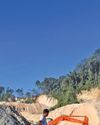
Mining impunity
A fatal blast in Meghalaya highlights the deep failure to curb rat-hole mining despite court orders and enforcement measures
4 mins
February 16, 2026
Down To Earth
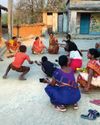
Games of change
In Odisha's Sundargarh district, tribal women use games to learn their rights, and confront harassment
2 mins
February 16, 2026
Down To Earth
Popular distrust
THE WORLD seems to be going through a period of stasis despite facing an unfathomable polycrisis.
2 mins
February 01, 2026
Translate
Change font size