
Vuélvete ilimitado con Magzter GOLD
Obtenga acceso ilimitado a más de 9000 revistas, periódicos e historias Premium por solo
Intentar ORO - Gratis
Missed opportunity
Down To Earth
|February 16, 2025
The draft National Policy on Agricultural Marketing highlights challenges in markets but offers no long-term solutions beyond privatisation
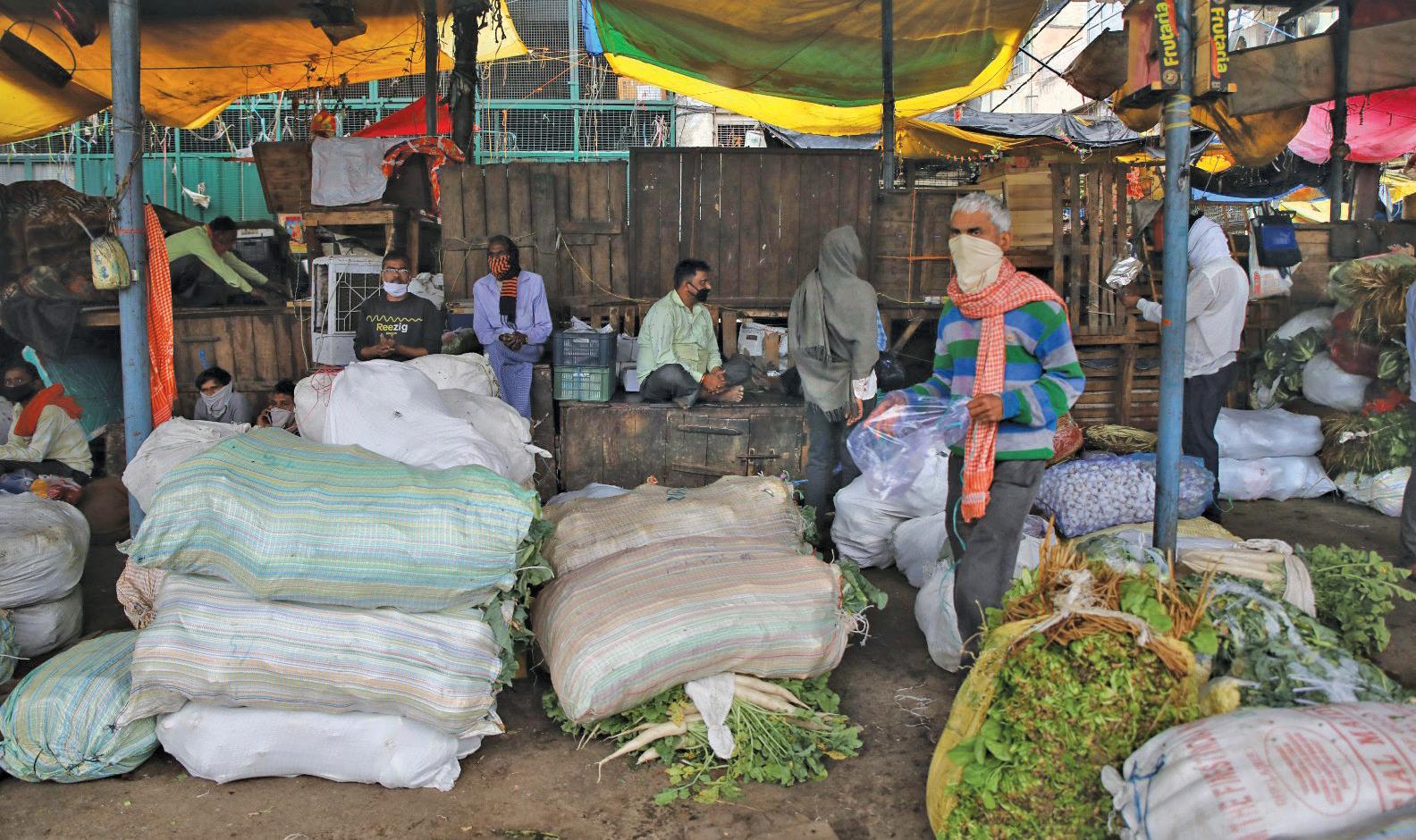
INDIA'S DRAFT National Policy Framework on Agricultural Marketing has reignited concerns among farmer groups, who view it as a renewed push towards the privatisation of wholesale markets—the critical first point of sale for their produce. These markets are not just trading hubs; they determine the demand and prices of all crops and, ultimately, the livelihoods of farmers. For Samyukt Kisan Morcha, an umbrella organisation of 32 farmer unions that led the nationwide year-long protests in 2020-21 against the now-repealed farm laws, the draft policy feels eerily familiar. In a press release, the group called it a “backdoor resurrection” of the very laws that sparked the protests because it will “hand over control” of agriculture and the supply chain “to a few corporates.”
The draft policy was released on November 25, 2024, with a short window of just 14 days for comments.
It says that India has 7,057 Agricultural Produce Marketing Committee (APMC) markets, or mandis, regulated under APMC laws enacted in 27 states and three Union Territories. Alongside these, there are 125 private wholesale markets and around 500 unregulated wholesale markets, mostly in states without APMC laws such as Bihar and Kerala. The country also has grameen haats and other small markets that are either under APMC, or run by private players and local bodies.


Esta historia es de la edición February 16, 2025 de Down To Earth.
Suscríbete a Magzter GOLD para acceder a miles de historias premium seleccionadas y a más de 9000 revistas y periódicos.
¿Ya eres suscriptor? Iniciar sesión
MÁS HISTORIAS DE Down To Earth

Down To Earth
THINK TWICE BEFORE FELLING SAL TREES
Many trees considered to be affected by sal borer in the 1990s are still alive today

1 mins
February 16, 2026

Down To Earth
EDGE OF SURVIVAL
Caste divides deny marginalised communities land, resources and essential aid, leaving them more vulnerable to climate disasters
6 mins
February 16, 2026

Down To Earth
A WISH LIST?
Union Budget for 2026-27 conveys the impression of a roll-call of intentions and ambitious proposals, with little detail on their formulation
6 mins
February 16, 2026
Down To Earth
Break down the gender wall
THE RULING National Democratic Alliance (NDA) government has been heavily invested in the goal to make India a developed economy by 2047.
2 mins
February 16, 2026

Down To Earth
MENSTRUAL HEALTH, NOW A FUNDAMENTAL RIGHT
In a landmark judgement, the Supreme Court has recognised menstrual health and hygiene as a fundamental right under Article 21 of the Constitution of India, which guarantees the right to life and dignity.
8 mins
February 16, 2026

Down To Earth
Of devolution and new disasters
The 16th Finance Commission pushes for changes in view of new fiscal and climatic conditions
11 mins
February 16, 2026
Down To Earth
Rising risks of plastics
NEGATIVE IMPACTS on human health due to emissions linked to the plastic lifecycle could double by 2040, according to a study published in The Lancet Planetary Health in January.
1 min
February 16, 2026

Down To Earth
GAP BETWEEN EPIDEMICS NARROWING
A watershed-based and landscape-level approach is needed to address forest degradation
2 mins
February 16, 2026

Down To Earth
WAITING TO STRIKE
Sal heartwood borer is considered the biggest threat to forestry in India, especially to the sal tree, where it lives and breeds.
11 mins
February 16, 2026

Down To Earth
A SPRING DELIGHT
Mustard flowers are not meant only for the eyes. Invite them to your plate once in a while
3 mins
February 16, 2026
Listen
Translate
Change font size