Intentar ORO - Gratis
BLINDING GLOW
Down To Earth
|November 01, 2024
The science is clear: increased illumination has damaging consequences for the health of humans, animals and plants. It’s time governments introduced policies to protect the natural darkness and improved the quality of outdoor lighting.

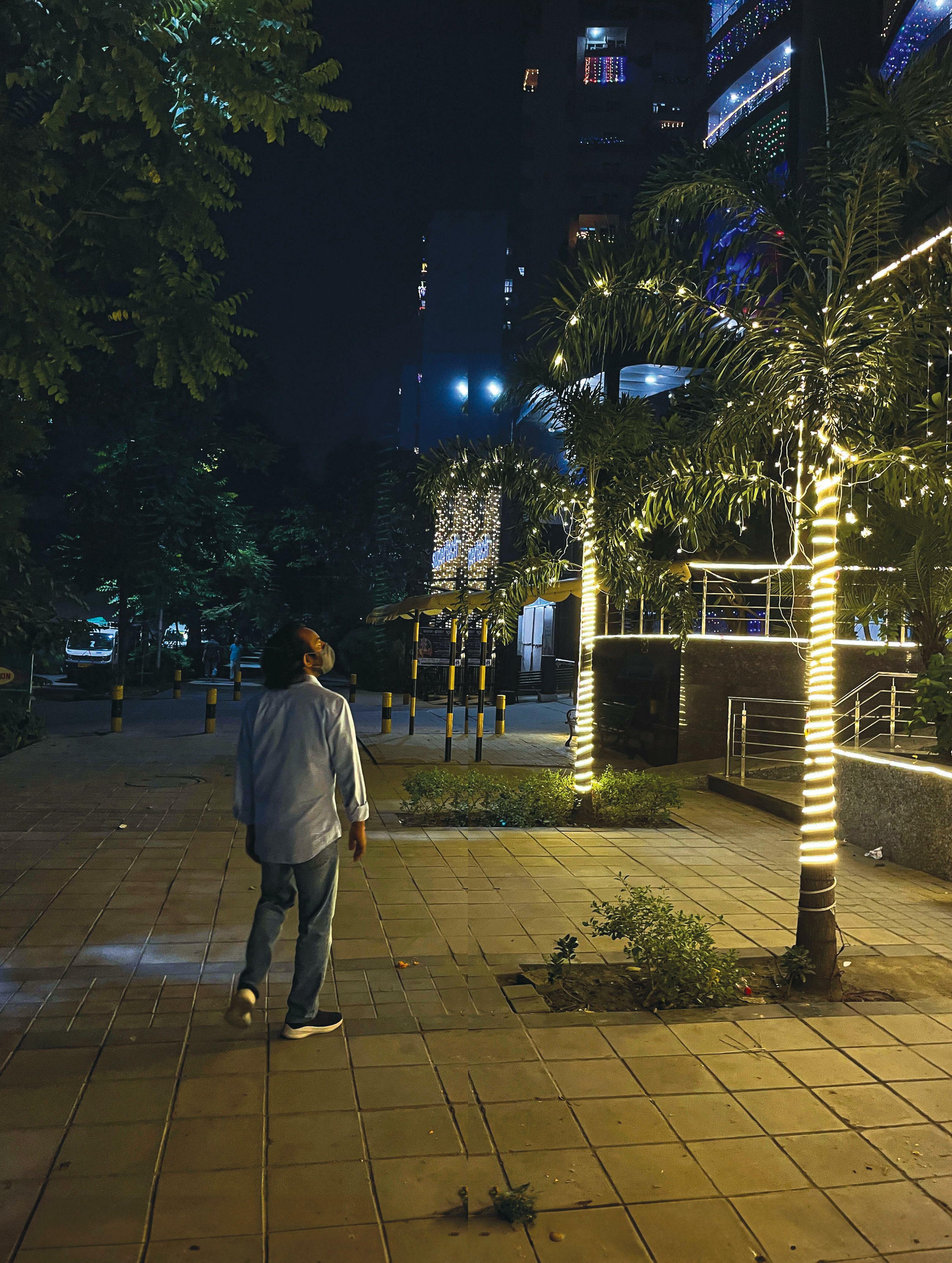
THE HIGH Court of Bombay is hearing a rather unusual case these days. On March 7, Rohit Manohar Joshi, a social activist in Mumbai, moved the court, seeking removal of decorative lights from tree trunks and branches in the city. While such decorations are supposed to be temporary, “trees in Mumbai’s Malabar Hills, Breach Candy, Walkeshwar and Andheri areas have been draped with lights for several months. Similarly, such lighting can be seen in various areas of Thane and Mira Bhayander,” Joshi said in the petition. Last year, a similar plea had reached the office of Maharashtra Chief Minister Eknath Shinde. Environmentalists Jyoti Nadkarni and B N Kumar wrote an email to the chief minister, opposing the municipal corporation’s plan to beautify the 400-year old Vadale lake at Panvel in Raigad district by illuminating its 1,300-metre shore with colourful leds (light-emitting diodes), artificially lit benches, animal figurines, street motifs and a 5-metre-tall parachute. Subsequently, the municipal corporation replaced the bright leds with dim lighting inside the boundary wall of the lake.
 The opposition to decorative lights and floodlights may appear bizarre to some at a time when abundant luminosity is synonymous with economic progress and development. Since Humphry Davy, a British chemist, invented the first electric light 200 years ago, paving the path for development of light bulbs, artificial lighting has revolutionised the way we live, work, socialise and run business. Arguably, light bulb is one of the most transformative inventions in human history; it has propelled us into the modern era, shaping various industries, infrastructure and scientific advancement. In a world where hundreds of millions of people still live in the dark—as per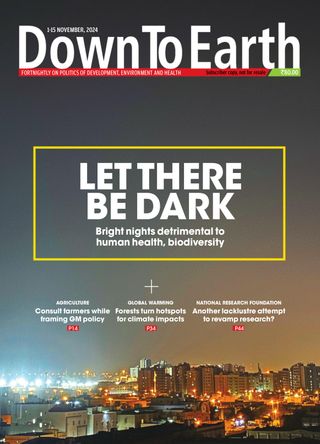

Esta historia es de la edición November 01, 2024 de Down To Earth.
Suscríbete a Magzter GOLD para acceder a miles de historias premium seleccionadas y a más de 9000 revistas y periódicos.
¿Ya eres suscriptor? Iniciar sesión
MÁS HISTORIAS DE Down To Earth

Down To Earth
Bitter pill
THE WEB SERIES PHARMA EXPOSES HARSH TRUTHS OF THE PHARMACEUTICAL INDUSTRY, WHERE PROFIT OFTEN BECOMES MORE IMPORTANT THAN HUMAN HEALTH

3 mins
January 16, 2026
Down To Earth
CHAOS IN-DEFINITION
The Aravallis are perhaps India's most litigated hill range. More than 4,000 court cases have failed to arrest their destruction. The latest dispute concerns a narrow legal definition of this geological antiquity, much of which has been obliterated by mining and urban sprawl. While the Supreme Court has stayed its own judgement accepting that definition, it must see the underlying reality and help reconcile development and national security with conservation.
19 mins
January 16, 2026
Down To Earth
BITS: INDIA
Indore has recorded 16 deaths and more than 1,600 hospitalisations between December 24 and January 6.
1 min
January 16, 2026
Down To Earth
GUARANTEE EXPIRES
India's rural employment guarantee law is replaced with a centrally controlled, budget-capped scheme. Is this an attack on the right to work?
3 mins
January 16, 2026
Down To Earth
BLOOM OR BANE
Surge of vibrant pink water lilies in Kuttanad, Kerala, provides socio-economic benefits, but the plant's ecological impacts must be understood
4 mins
January 16, 2026
Down To Earth
INVISIBLE EMPLOYER
Field and academic evidence shows sharp falls in casual agricultural employment at places where groundwater access declines
3 mins
January 16, 2026

Down To Earth
Schemed for erasure
Does the VB-G RAMG Act address structural weaknesses long observed in MGNREGA's implementation?
10 mins
January 16, 2026

Down To Earth
School of change
An open school in Panagar, Madhya Pradesh, aims to protect children of tribal settlements from falling into the trap of addiction
2 mins
January 16, 2026

Down To Earth
PULSE OF RESILIENCE
As a climate-ready crop, cowpea shows potential for widespread use in India
3 mins
January 16, 2026
Down To Earth
BITS GLOBAL
Britain recorded its hottest and sunniest year ever in 2025, the country's meteorological office said on January 2.
1 min
January 16, 2026
Listen
Translate
Change font size