Intentar ORO - Gratis
Has Webb broken cosmology?
BBC Sky at Night Magazine
|August 2024
Caroline Harper

When the James Webb Space Telescope (JWST) launched on Christmas Day 2021, we knew its groundbreaking capabilities had the potential to rewrite the astronomy textbooks. And this incredible spacecraft has not disappointed.
The deployment of its giant segmented mirror and sun shield went without a hitch, its science instruments are operational and exceeding expectations, and the launch trajectory was so precise that there's fuel to maintain its orbit for many years to come.
Right from its first observations, the space telescope has given astronomers new puzzles to solve and new questions to pursue. In particular, it is challenging what we thought we knew about the early evolution of galaxies.
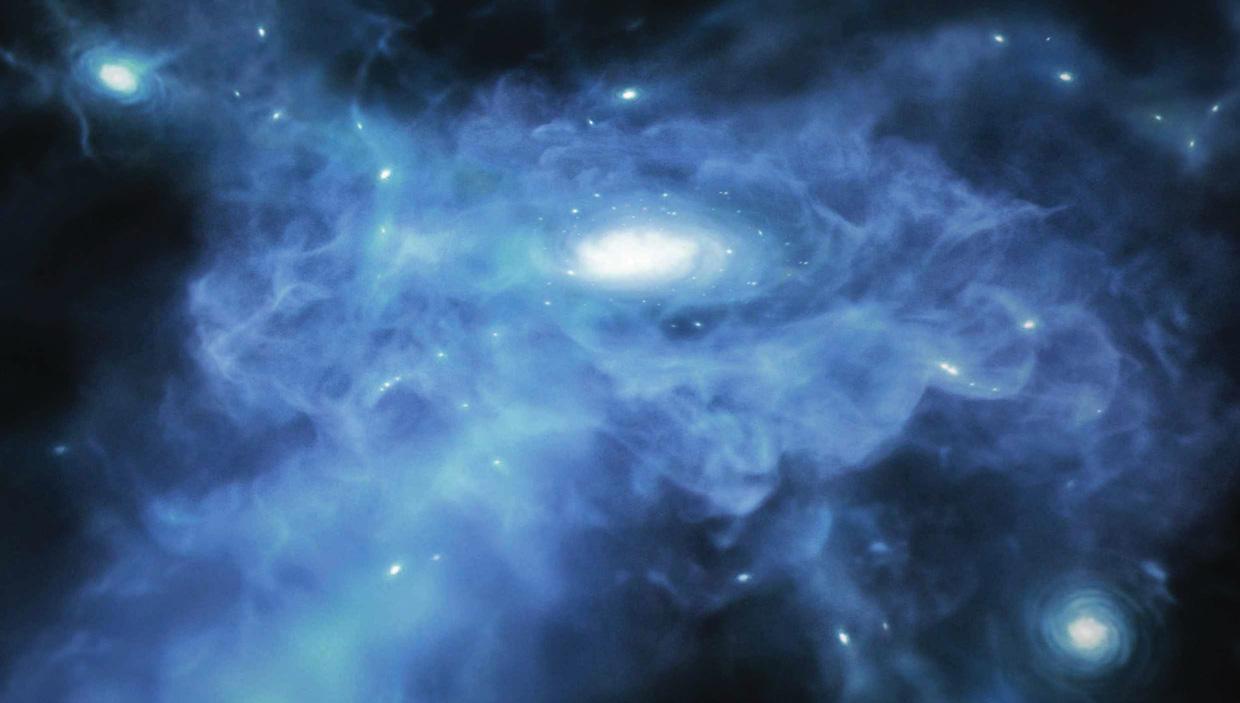 'Impossible' galaxies
 JWST's intriguing deep-field observations of faint light from the early, distant Universe reveal stars and galaxies that seem to be much larger than expected.
The CEERS (Cosmic Evolution Early Release Science) survey, led by Prof Steven Finkelstein of the University of Texas at Austin, used JWST's NIRCam instrument to look back as far as the epoch of reionisation, just after the so-called dark ages of cosmic evolution, to study the structure of galaxies in the very early Universe.
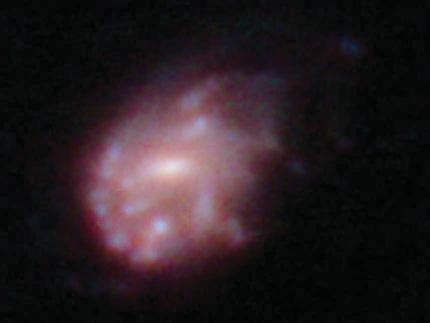 It found more of them than predicted, and they appear bigger and brighter than expected. According to our best models of how the infant Universe developed, they aren't supposed to be there so early or look as they do.

Esta historia es de la edición August 2024 de BBC Sky at Night Magazine.
Suscríbete a Magzter GOLD para acceder a miles de historias premium seleccionadas y a más de 9000 revistas y periódicos.
¿Ya eres suscriptor? Iniciar sesión
MÁS HISTORIAS DE BBC Sky at Night Magazine

BBC Sky at Night Magazine
Crush: Close Encounters with Gravity
Gravity is something that we're all innately familiar with. It keeps our feet on the ground, fights against a rocket trying to leave Earth and governs the movement of the planets and stars.

1 mins
April 2026
BBC Sky at Night Magazine
Exploring the Universe
There's no shortage of children's books about astronomy.
2 mins
April 2026
BBC Sky at Night Magazine
Make your Milky Way images pop
Simple, free processing techniques using FastStone Image Viewer
3 mins
April 2026

BBC Sky at Night Magazine
Nightfaring: In Search of the Disappearing Darkness
This book is a manifesto for dark skies, written as a travel memoir.
1 mins
April 2026
BBC Sky at Night Magazine
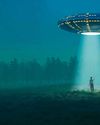
Flying saucers- The making of a modern myth
Our obsession with UFOs goes back further than you might think. Robert Pateman traces how early science fiction, dubious sightings and an alien-mad media led to the 1950s saucer fever
9 mins
April 2026

BBC Sky at Night Magazine
STAR OF THE MONTH
Alphecca, the brightest jewel in the Crown
1 min
April 2026

BBC Sky at Night Magazine
How to use a planisphere
Navigate the sky with the original stargazer's tool. No batteries, apps or Wi-Fi required!
3 mins
April 2026
BBC Sky at Night Magazine
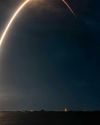
Why rockets don't launch straight up
For a rocket to get its payload into space, it has to follow a curved path. But what would happen if it didn't?
2 mins
April 2026
BBC Sky at Night Magazine
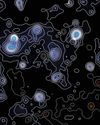
Q&A WITH A DARK MATTER SPECIALIST
Dark matter makes up 27 per cent of all matter in the Universe. So why is it so hard to find? Meet one of the people making a map that leads us to it
3 mins
April 2026

BBC Sky at Night Magazine
Why I want to put a hotel on the Moon
Bored of the beach? Sick of city breaks? Step this way. Space entrepreneur Skyler Chan explains how he'll build a holiday destination on the Moon by 2030
2 mins
April 2026
Listen
Translate
Change font size