
Vuélvete ilimitado con Magzter GOLD
Obtenga acceso ilimitado a más de 9000 revistas, periódicos e historias Premium por solo
Eclipse España One country, three years, three eclipses
BBC Sky at Night Magazine
|September 2025
The total solar eclipse in 2026 is Spain's first in over a century, kicking off a remarkable 18 months of Spanish Moon-shadow fever. Jamie Carter is your tour guide
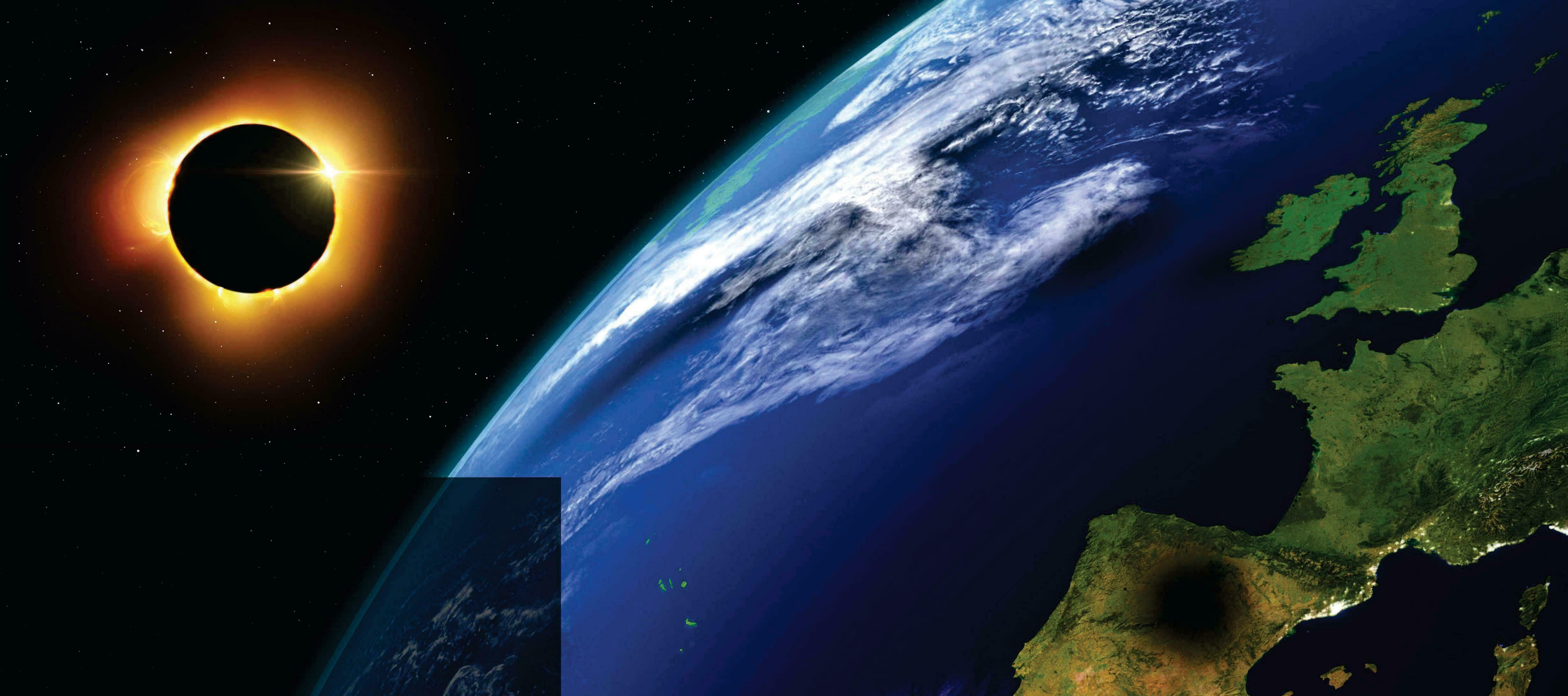
Sun, sangria and... solar eclipses? Over the next few years, Spain will offer front-row seats to some of the most spectacular celestial shows on Earth, with three 'central' - that is, total or annular - solar eclipses in less than 18 months. This astonishing sequence looks set to make it Europe's eclipse-chasing epicentre for the rest of the decade. The standout is on Wednesday 12 August 2026: Spain's first total solar eclipse in over a century, during which a short totality will briefly reveal to the naked eye the sun's corona (Spanish for 'crown', incidentally), its tenuous outer atmosphere.
On that date, a path of totality will pass over the Arctic, Greenland, Iceland, the Atlantic, a speck of Portugal and northern Spain. Occurring just before sunset, totality will last under two minutes, first kissing Galicia on Spain's north coast, crossing a 290km-wide (180-mile) swathe to the Costa del Azahar and Costa Dorada before sinking beneath the Mediterranean Sea as seen from the Balearic Islands. If you were to look at Spain from space, the Moon's shadow would take just six minutes to cross the country, accelerating to over 32,000km/h (20,000mph) as it races toward sunset and slips off the edge of the Earth.
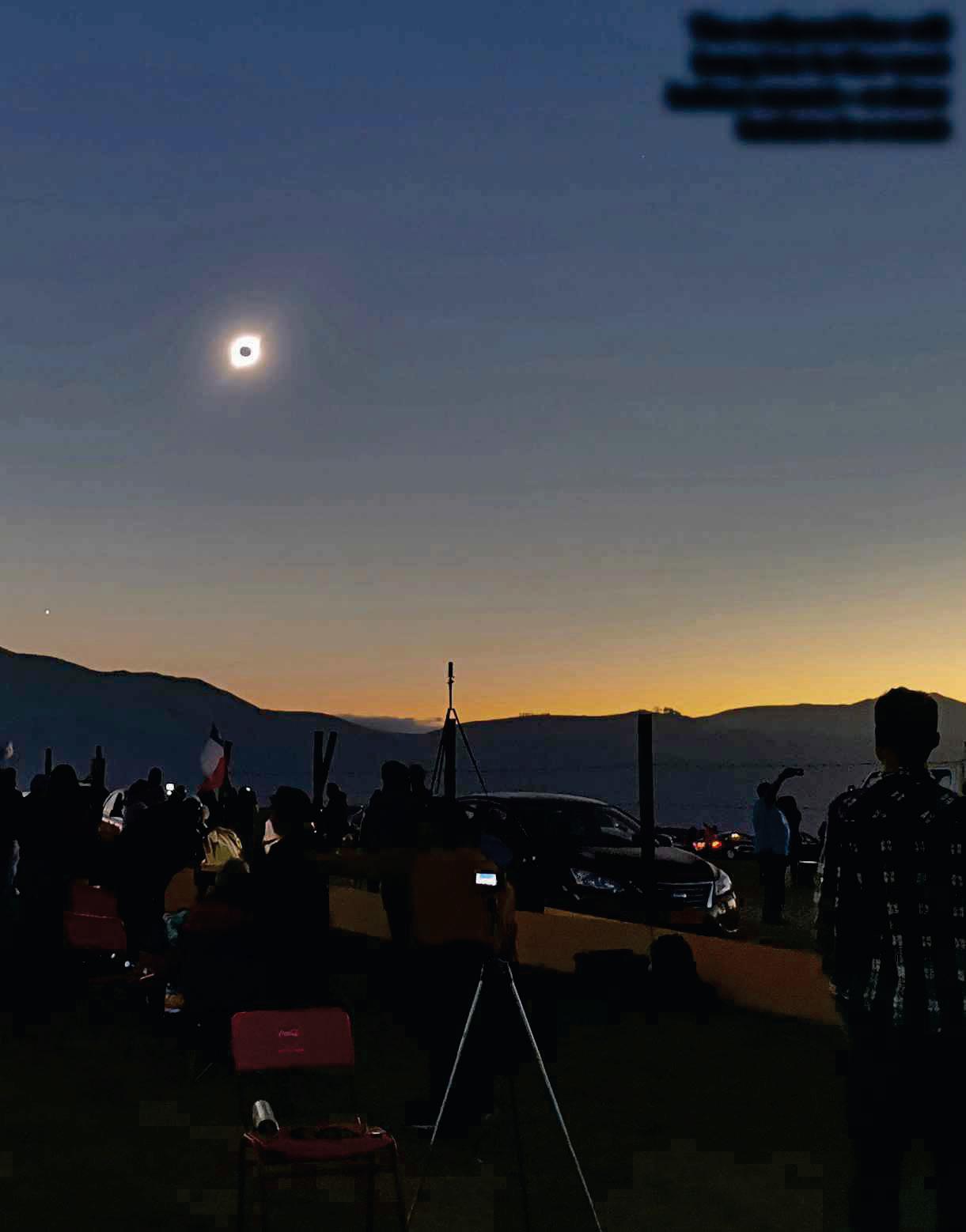 It will be 121 years since this last happened. Although a slice of northwestern Spain briefly experienced a hybrid eclipse – just one second of totality - on 17 April 1912, it was barely noticeable. The 2026 total solar eclipse is unmatched since an almost identical path of totality swept through northern Spain on 30 August 1905.

Esta historia es de la edición September 2025 de BBC Sky at Night Magazine.
Suscríbete a Magzter GOLD para acceder a miles de historias premium seleccionadas y a más de 9000 revistas y periódicos.
¿Ya eres suscriptor? Iniciar sesión
MÁS HISTORIAS DE BBC Sky at Night Magazine
BBC Sky at Night Magazine
MOONWATCH
January's top lunar feature to observe

2 mins
January 2026
BBC Sky at Night Magazine
Speed up your processing workflow
How to use Photoshop's Actions tool to drastically cut your processing time
3 mins
January 2026
BBC Sky at Night Magazine
Chasing Canada's polar lights
With solar maximum peaking and a new Moon promising dark skies, Jamie Carter travels to Churchill, Manitoba to hunt the Northern Lights - and dodge polar bears – in Canada's far north
7 mins
January 2026
BBC Sky at Night Magazine
Beyond Pluto: The search for the hidden planets
Could one – or even two - undiscovered planets lurk at the edges of our Solar System? Nicky Jenner explores how close we are to finding the elusive 'Planet 9'
6 mins
January 2026
BBC Sky at Night Magazine
Jupiter moon events
Jupiter is a magnificent planet to observe.
2 mins
January 2026
BBC Sky at Night Magazine
What samples from space have taught us
Alastair Gunn explains what scientists have learnt in the 20 years since the first unmanned mission brought materials back from alien worlds
3 mins
January 2026
BBC Sky at Night Magazine
The Milky Way as you've never seen it before
This is the largest low-frequency radio colour image of our Galaxy ever assembled
1 min
January 2026
BBC Sky at Night Magazine
Merger of ‘impossibly' massive black holes explained
Scientists discover how enormous, fast-spinning black holes can exist after all
1 mins
January 2026
BBC Sky at Night Magazine
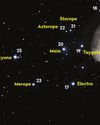
Lunar occultation of the Pleiades
BEST TIME TO SEE: 27 January from 20:30 UT
1 min
January 2026
BBC Sky at Night Magazine
The Universe's expansion may be slowing down
New study suggests current theories of dark energy could be wrong
1 mins
January 2026
Listen
Translate
Change font size