Intentar ORO - Gratis
ASTROPHOTOGRAPHY CAPTURE
BBC Sky at Night Magazine
|September 2022
Take the perfect astrophoto with our step-by-step guide

Lunar occultations of planets
How to image a far-from-easy Uranus disappearing behind the Moon on 14 September
Occultations of the planets by the Moon aren't very common and when they happen, all fingers are crossed for clear skies. If the weather holds good for the lunar occultation of Uranus on 14 September, there will be a lot of interest in the little planet, certainly more than it normally gets.
Unlike the main planets closer to the Sun, Uranus appears dim, right on the threshold of naked-eye visibility. It's also rather distant and looks small even through a sizable telescope. This presents issues with visually observing the event as well as some awkward problems when trying to image it.
These will be exacerbated by the fact that the start of the occultation will involve the Moon's bright limb passing in front of the planet. Setting up captures for Uranus will certainly overexpose the Moon, while exposing for the lunar surface may mean Uranus is lost from the shot altogether.
Fix upon framing
There are various imaging setups that can be used for this. First consider how you want to record the view: a wide field to cover the whole Moon or a riskier narrow field zoomed in on the planet? The latter isn't that hard to organise for the disappearance event, but adds uncertainty in when Uranus reappears from behind the Moon's dark limb: here you'll need your best guess as to where the planet will reappear.


Esta historia es de la edición September 2022 de BBC Sky at Night Magazine.
Suscríbete a Magzter GOLD para acceder a miles de historias premium seleccionadas y a más de 9000 revistas y periódicos.
¿Ya eres suscriptor? Iniciar sesión
MÁS HISTORIAS DE BBC Sky at Night Magazine
BBC Sky at Night Magazine
The Giant Leap: Why Space is the Next Frontier in the Evolution of Life
“Earth is the cradle of humanity, but one cannot live in the cradle forever,” wrote Konstantin Tsiolkovsky in 1911.

1 mins
February 2026
BBC Sky at Night Magazine
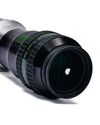
Tele Vue Nagler Type-7 series eyepieces
These premium optics were inspired by Apollo - and deliver a giant leap to your views
4 mins
February 2026
BBC Sky at Night Magazine
Once Upon a Time in Space
While the Space Race of the Cold War years was ultimately a geopolitical contest between the USA and the Soviet Union, the rivalry sparked rapid innovation and inspired multiple generations to look skyward.
1 mins
February 2026
BBC Sky at Night Magazine
The Multiverse: When One Universe Isn't Enough
The concept of a 'multiverse' – the idea that our Universe may be just one of many – is widespread in science fiction and a common thread of online discussions.
1 mins
February 2026
BBC Sky at Night Magazine
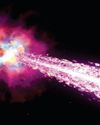
Q&A WITH A GAMMA RAY SPECIALIST
In 2025, astronomers detected a blast from space that lasted seven hours. Now they're uncovering the strange processes behind the exceptional outburst
3 mins
February 2026
BBC Sky at Night Magazine
Astronomy Photographer of the Year
The world-leading astrophotography competition returns. Could your image take the top prize of £10,000?
2 mins
February 2026
BBC Sky at Night Magazine
MOONWATCH
February's top lunar feature to observe
2 mins
February 2026
BBC Sky at Night Magazine
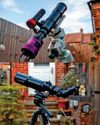
NOVAStar Scarlet A62Q 62mm f/8.4 quadruplet achromatic refractor
Well-built and capable, this beginner scope punches well above its bargain price
4 mins
February 2026
BBC Sky at Night Magazine
STAR OF THE MONTH
Rasalas, Leo the Lion's metal-rich crown
1 min
February 2026
BBC Sky at Night Magazine
Comet 24P/Schaumasse
Having reached perihelion on 8 January, comet 24P/ Schaumasse is now fading. Starting the month at a small-telescope-friendly mag. +10.5, it dims throughout February to below 12th magnitude.
1 min
February 2026
Translate
Change font size