Intentar ORO - Gratis
WATER BOTTLES: HOW SAVING THE PLANET COULD MAKE YOU SICK
BBC Science Focus
|February 2024
Reusable water bottles reduce waste from single-use plastic, but without regular cleaning become havens for bacteria

Take a walk around any local park, office or city centre and there’s a good chance you’ll see a number of people drinking from reusable water bottles.
They’ve become something of a fashion accessory, as well as a means to help us meet the NHS health recommendations of drinking 6-8 glasses of water per day and reduce our environmental footprint by cutting down on the need for single-use plastic bottles.
But, while using a water bottle might be a noble, health-improving and planet-protecting act, the bottles may be carrying a hidden risk. Research carried out by US water filtration company WaterFilterGuru has shown that if you don’t regularly wash your water bottle thoroughly, bacteria and moulds can build up – both on the inside and outside – that, if swallowed, have the potential to make you very ill.
Water, even from a kitchen tap, isn’t usually sterile, and bacteria begins growing naturally in all non-carbonated waters only a few days after a bottle is filled. The longer that water is stored in a bottle at room temperature, the more bacteria will grow. (Refrigerating filled water bottles can help limit microbial numbers, however.)
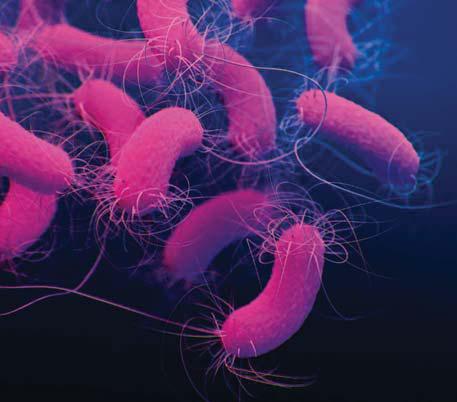
Some of a water bottle’s microbes will come from the water itself, but mostly they come from the person drinking from it. Our bodies are naturally covered with millions of microbes (microflora), including the insides of our mouths.
Microbes found inside a typical water bottle unsurprisingly include skin and oral microbes, such as Staphylococcus and

Esta historia es de la edición February 2024 de BBC Science Focus.
Suscríbete a Magzter GOLD para acceder a miles de historias premium seleccionadas y a más de 9000 revistas y periódicos.
¿Ya eres suscriptor? Iniciar sesión
MÁS HISTORIAS DE BBC Science Focus
BBC Science Focus
HEALTH: Eating oats could lower your cholesterol in just two days
The health benefits of a two-day porridge diet lasted for weeks afterwards

1 mins
April 2026

BBC Science Focus
Most people are too sure they can identify fake human faces
Even 'super recognisers' struggle with the challenge. Can you do better?
1 min
April 2026
BBC Science Focus
WHAT'S THE WORST THING YOU CAN DO FOR THE PLANET ONLINE?
Human beings can barely move a muscle without some kind of deleterious effect on the environment around us.
2 mins
April 2026
BBC Science Focus
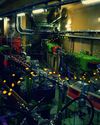
A bug in the system
The complex arrangement of equipment you see here is part of a particle accelerator.
1 min
April 2026
BBC Science Focus
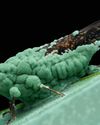
Snug as a bug in a rug
At first glance, you might feel envious of this little leafhopper, swaddled beneath the folds of what appears to be a luxurious fur blanket.
1 min
April 2026

BBC Science Focus
WHY DO WE ROOT FOR THE VILLAIN IN MOVIES?
Whether it's Darth Vader or Cruella de Vil, we all have a favourite movie villain.
1 mins
April 2026
BBC Science Focus
A TURN TO DISPERSE
Why a fart walk after dinner does more than release your gas
3 mins
April 2026

BBC Science Focus
Hatching a nebula
Welcome to the Egg Nebula, an enigmatic structure formed by ejected stardust in the Cygnus constellation around 1,000 light-years from Earth.
1 min
April 2026

BBC Science Focus
7 TIMES AI GOT IT SPECTACULARLY WRONG
For the past four years, AI has been reshaping how we work and live. But its failures are proving just as transformative as its triumphs
8 mins
April 2026
BBC Science Focus
CHARLES ADCOCK, VIA EMAIL: COULD DARK MATTER BE ALL AROUND PLANET EARTH BUT UNDETECTABLE?
Astronomers have gathered overwhelming evidence that 80 per cent of all matter in the Universe is invisible.
1 min
April 2026
Listen
Translate
Change font size