Intentar ORO - Gratis
How to stop taking weight loss drugs, without the weight returning
BBC Science Focus
|April 2026
Weight gain is likely for anyone coming off weight-loss drugs – but it's not inevitable
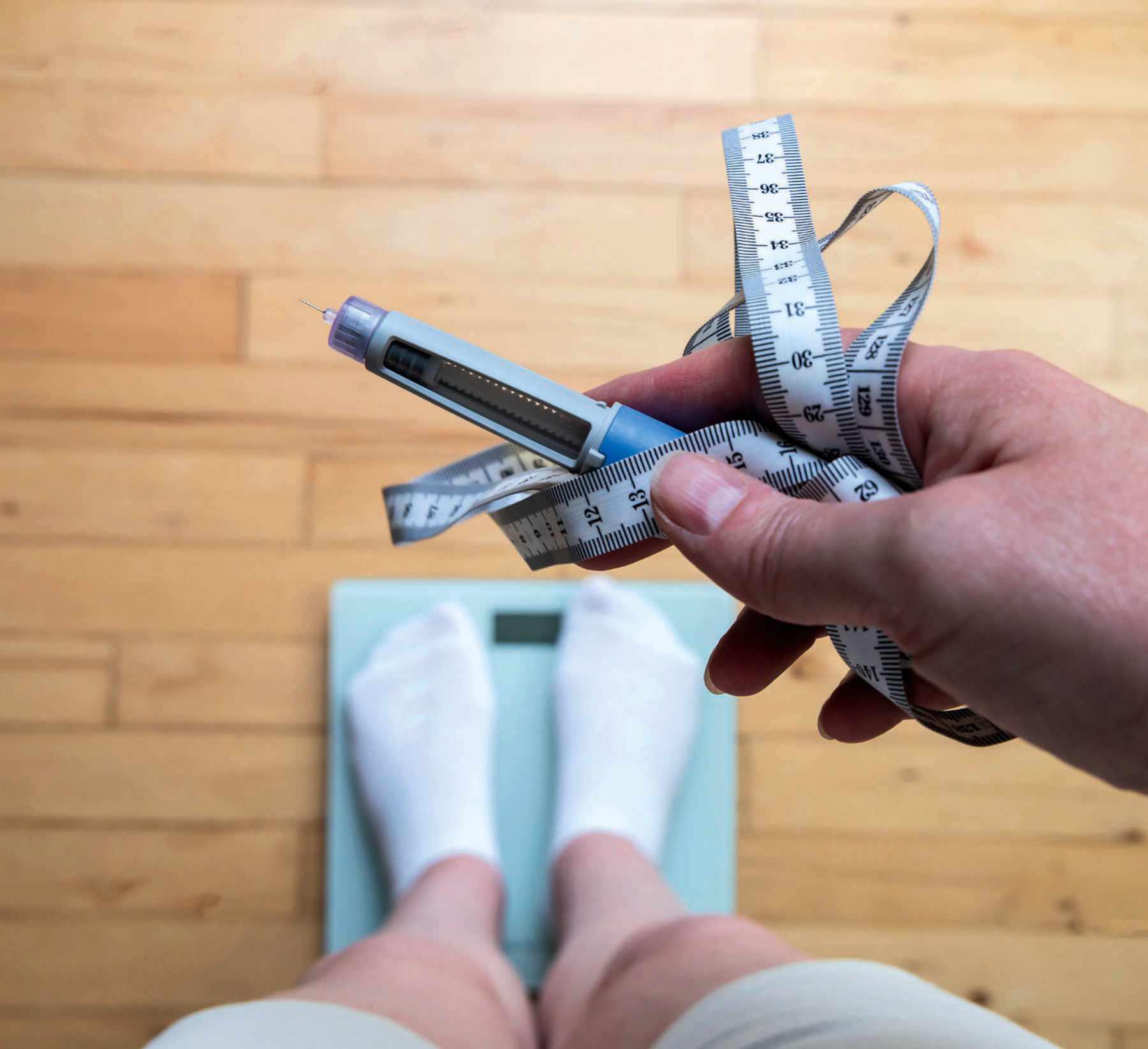
The new class of weight-loss drugs promises staggering results and, in most cases, delivers them. But if, after months of weekly injections, you hit your target weight and decide to stop taking the medication, there's something you should know: you're likely to put the weight back on.
Studies on these drugs have shown that people with obesity can lose 15-20 per cent of their body weight in just over a year. But if they halt the treatment, the research shows they're likely to regain two-thirds of that lost weight back over the following 12 months.
These drugs – known collectively as GLP-1 agonists, but prescribed under various brand names (including Ozempic, Wegovy, Mounjaro) - mimic the effect of naturally produced hormones that make you feel full. By reducing your appetite, the drugs help you eat less and lose weight - but their effects only last as long as you take them.
That's true whether you're taking them to get a smaller waistline or as a protective measure against weight-related diseases, such as type 2 diabetes and heart disease.
The solution to this problem might seem simple: keep taking the drug. But not everyone can face a lifetime of weekly injections, let alone the high costs of the medication and its possible side effects.
"Taking a treatment forever is probably not what people are looking for, particularly if they're paying for it themselves," says Prof Susan Jebb OBE, a nutrition scientist at the University of Oxford. "People want to lose weight and keep it off."
Roughly half of the people who start taking a weight-loss drug decide to stop within a year. If that's you, while regaining the weight you lost is likely, there are strategies you can adopt to help keep it off.
 THE PERSISTENT PROBLEM

Esta historia es de la edición April 2026 de BBC Science Focus.
Suscríbete a Magzter GOLD para acceder a miles de historias premium seleccionadas y a más de 9000 revistas y periódicos.
¿Ya eres suscriptor? Iniciar sesión
MÁS HISTORIAS DE BBC Science Focus

BBC Science Focus
HEALTH: Eating oats could lower your cholesterol in just two days
The health benefits of a two-day porridge diet lasted for weeks afterwards

1 mins
April 2026

BBC Science Focus
Most people are too sure they can identify fake human faces
Even 'super recognisers' struggle with the challenge. Can you do better?
1 min
April 2026

BBC Science Focus
WHAT'S THE WORST THING YOU CAN DO FOR THE PLANET ONLINE?
Human beings can barely move a muscle without some kind of deleterious effect on the environment around us.
2 mins
April 2026
BBC Science Focus
A bug in the system
The complex arrangement of equipment you see here is part of a particle accelerator.
1 min
April 2026
BBC Science Focus
Snug as a bug in a rug
At first glance, you might feel envious of this little leafhopper, swaddled beneath the folds of what appears to be a luxurious fur blanket.
1 min
April 2026

BBC Science Focus
WHY DO WE ROOT FOR THE VILLAIN IN MOVIES?
Whether it's Darth Vader or Cruella de Vil, we all have a favourite movie villain.
1 mins
April 2026

BBC Science Focus
A TURN TO DISPERSE
Why a fart walk after dinner does more than release your gas
3 mins
April 2026

BBC Science Focus
Hatching a nebula
Welcome to the Egg Nebula, an enigmatic structure formed by ejected stardust in the Cygnus constellation around 1,000 light-years from Earth.
1 min
April 2026

BBC Science Focus
7 TIMES AI GOT IT SPECTACULARLY WRONG
For the past four years, AI has been reshaping how we work and live. But its failures are proving just as transformative as its triumphs
8 mins
April 2026

BBC Science Focus
CHARLES ADCOCK, VIA EMAIL: COULD DARK MATTER BE ALL AROUND PLANET EARTH BUT UNDETECTABLE?
Astronomers have gathered overwhelming evidence that 80 per cent of all matter in the Universe is invisible.
1 min
April 2026
Listen
Translate
Change font size