Intentar ORO - Gratis
COLD AND FLU SEASON
BBC Science Focus
|November 2025
Nobody enjoys being stuck in bed sneezing and coughing the days away. But there are steps you can take to increase your chances of avoiding these winter ailments
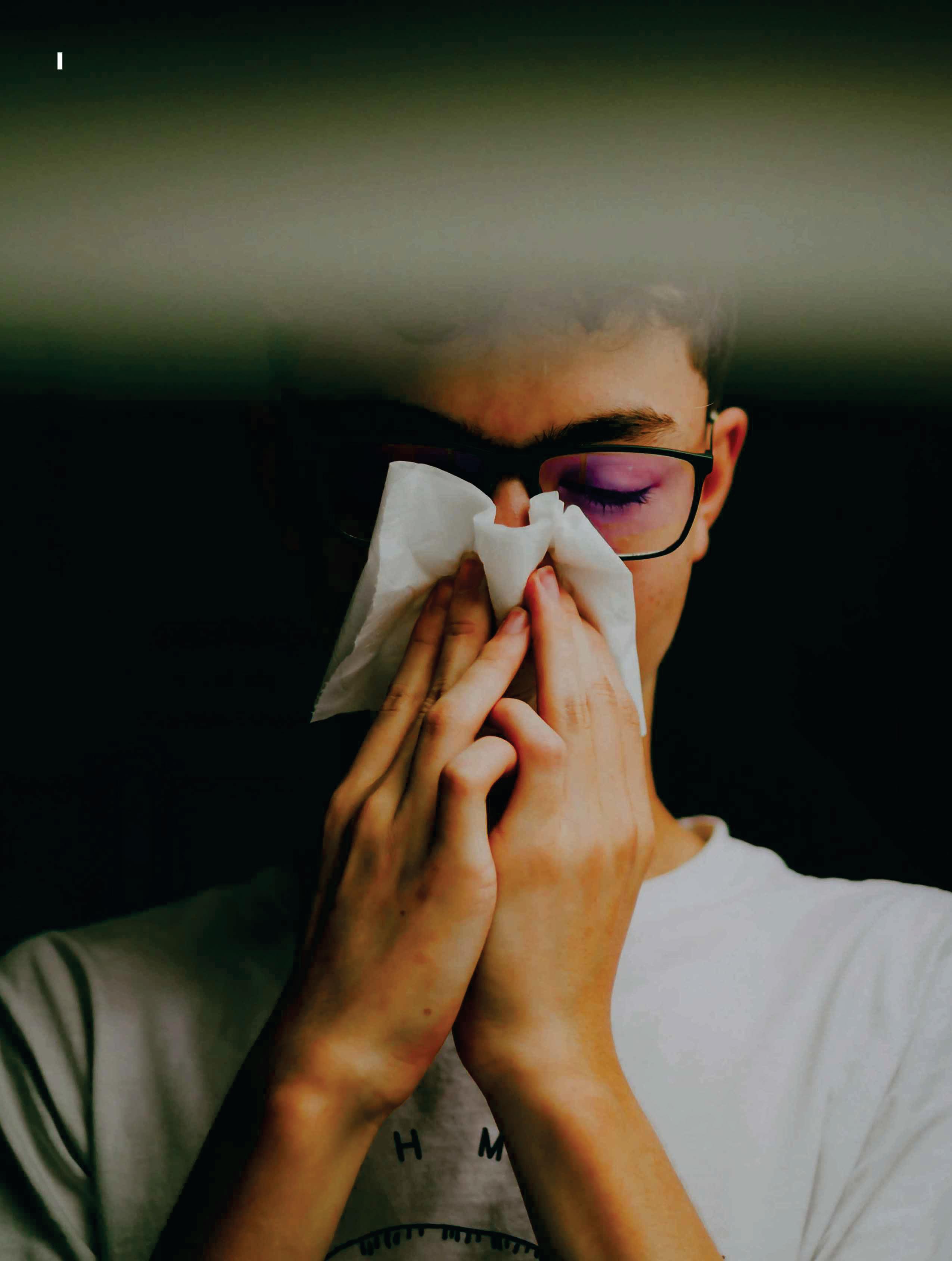
WHAT WE GET WRONG ABOUT
As the winter months draw in, so does the yearly wave of colds and flu, making now the perfect time to think about protecting yourself and others. You know the drill: wash your hands often, cover your coughs and sneezes, avoid touching your face, keep indoor spaces ventilated, stay home if you feel unwell and get a flu shot.
But beyond this familiar advice, there are also useful steps you can take that you might not know about. Here are the latest findings and lesser-known strategies to help get you and your family through the cold and flu season.
HUMIDITY IS KEY
It's common knowledge that ventilation is important to help stop the spread of cold and flu viruses. But what's often overlooked and plays an equally important role in how these viruses spread is humidity.
Research shows that flu viruses survive longer in dry air, which is why outbreaks often peak in winter when central heating dries out our homes and workplaces. Low humidity also makes the tiny droplets we exhale evaporate into even smaller particles. These can float in the air for longer and travel further, giving the virus more chances to spread.
Dry air also weakens the body's natural defences by drying out the protective mucus in our eyes, nose and throat. This makes it harder to trap and clear away germs, which not only increases the risk of infection, but also slows recovery time and makes symptoms like coughs, sore throats and congestion worse.
Evidence suggests that maintaining indoor humidity in the 'Goldilocks zone' of 40-60 per cent makes the environment less hospitable to viruses, while helping our airways stay moist and better able to fight off infections.


Esta historia es de la edición November 2025 de BBC Science Focus.
Suscríbete a Magzter GOLD para acceder a miles de historias premium seleccionadas y a más de 9000 revistas y periódicos.
¿Ya eres suscriptor? Iniciar sesión
MÁS HISTORIAS DE BBC Science Focus
BBC Science Focus
World's biggest cobweb is home to 100,000 spiders
Spiders don't normally create such large colonies, so there's no need to worry about finding one in your basement

1 min
February 2026

BBC Science Focus
A dementia vaccine could be gamechanging – and available already
Getting vaccinated against shingles could protect you from getting dementia, or slow the progression of the disease
1 mins
February 2026

BBC Science Focus
DATA IN SPACE
An unusual spacecraft reached orbit in November 2025, one that might herald the dawn of a new era.
7 mins
February 2026

BBC Science Focus
Climate change is already shrinking your salary
No matter where you live, a new study has found warmer temperatures are picking your pocket
4 mins
February 2026

BBC Science Focus
A MENTAL HEALTH GLOW-UP
Forget fine lines. Could Botox give you an unexpected mental health tweakment?
3 mins
February 2026
BBC Science Focus
Most people with high cholesterol gene don't know they have it
Standard testing struggles to detect the condition
1 mins
February 2026

BBC Science Focus
HOW CAN I BOOST MY IQ?
If you're serious about getting smarter, it's time to ditch the brain-training apps
4 mins
February 2026

BBC Science Focus
Humans are absolutely terrible at reading dogs' emotions
Think you can tell how our furry friends are feeling? Think again
1 mins
February 2026

BBC Science Focus
HOW TO TEACH AI RIGHT FROM WRONG
If we want to get good responses from AI, we may need to see what it does when we ask it to be evil
3 mins
February 2026

BBC Science Focus
What Australia's social media ban could really mean for under-16s
Many people think social media is bad for our kids. Australia is trying to prove it
5 mins
February 2026
Listen
Translate
Change font size