Intentar ORO - Gratis
ROLLS-ROYCE ON THE MOON
All About Space UK
|Issue 143
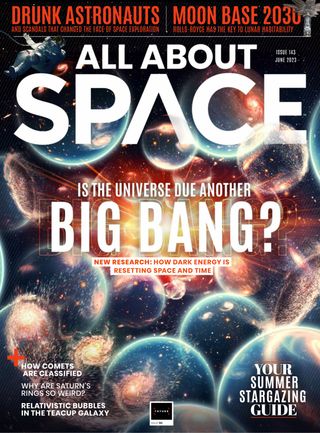
With the British car manufacturer shooting for the lunar surface, humankind could finally be ready to return by the 2030s

After a lull of over 50 years, the number of projects to take humans back to the Moon is escalating at a fast rate. This time, instead of one-off landing missions, these will be the first steps in building long-term Moon bases. An essential part of any Moon base will be a continuous and reliable source of power to run essential life-support systems, communications, lunar vehicles, workshops and scientific laboratories. A small nuclear reactor could meet many of these demands, and in 2022 the UK Space Agency funded a £249,000 ($310,510) study into the feasibility of designing and building one by Rolls-Royce. The agency has now provided a further £2.9 million ($3.6 million) of funding to deliver an initial demonstration of a UK lunar modular nuclear reactor. ”Space exploration is the ultimate laboratory for so many of the transformational technologies we need on Earth: from materials to robotics, nutrition, clean technology and much more,” says Minister of State in the Department for Science, Innovation and Technology George Freeman. “As we prepare to see humans return to the Moon for the first time in more than 50 years, we’re backing exciting research like this lunar modular reactor with RollsRoyce to pioneer new power sources for a lunar base. Partnerships like this between British industry, the UK Space Agency and government are helping create jobs across our space technology sector and help ensure the UK continues to be a major force in frontier science.”

Esta historia es de la edición Issue 143 de All About Space UK.
Suscríbete a Magzter GOLD para acceder a miles de historias premium seleccionadas y a más de 9000 revistas y periódicos.
¿Ya eres suscriptor? Iniciar sesión
MÁS HISTORIAS DE All About Space UK

All About Space UK
MYSTERIES OF THE UNI WHERE ARE ALL THE SPIRAL GALAXIES?
There are far fewer spiral galaxies than elliptical ones in the Supergalactic Plane, and scientists are keen to discover why

7 mins
Issue 161

All About Space UK
ZOMBIE STARS
+10 OTHER TERRIFYING SPACE OBJECTS
8 mins
Issue 161

All About Space UK
HOW TO BEAT LIGHT POLLUTION
Thought it was impossible to observe the wonders of the night sky from towns and cities? Think again. Follow our tips and tricks on successfully observing through sky glow
2 mins
Issue 161

All About Space UK
15 STUNNING STAR CLUSTERS
These beautiful stellar groupings are spattered across the cosmos
8 mins
Issue 161
All About Space UK
Eileen Collins "It was a difficult mission...we were the first to see Mir"
Having served as both the first female pilot and first female commander of NASA's Space Shuttle, Collins boosted the involvement of women in space exploration to a whole new level
9 mins
Issue 161

All About Space UK
MARS LEAKS FASTER WHEN IT'S CLOSER TO THE SUN
The Red Planet has lost enough water to space to form a global ocean hundreds of kilometres deep
2 mins
Issue 161
All About Space UK
FUTURE TECH KANKOH-MARU
This ambitious reusable spacecraft will be capable of taking 50 people to and from orbit
2 mins
Issue 161
All About Space UK
THE FINAL FRONTIER
Beyond the reach of the Sun is a fascinating region of the cosmos that were only just beginning to explore
8 mins
Issue 161
All About Space UK
A long-lost moon could explain Mars' weird shape and extreme terrain
A long-lost moon could explain why Mars is so different from the other rocky planets in the Solar System. Today Mars has two tiny moons.
2 mins
Issue 161

All About Space UK
A sprinkling of cosmic dust may have helped kick-start life on Earth
Cosmic dust may have helped kick-start life on Earth. New findings challenge a widely held assumption that this wasn't a plausible explanation.
3 mins
Issue 161
Translate
Change font size