Intentar ORO - Gratis
Unexpected automation
Amateur Photographer
|November 11, 2025
John Wade examines the ingenious ways mechanical cameras tackled automatic exposure
-
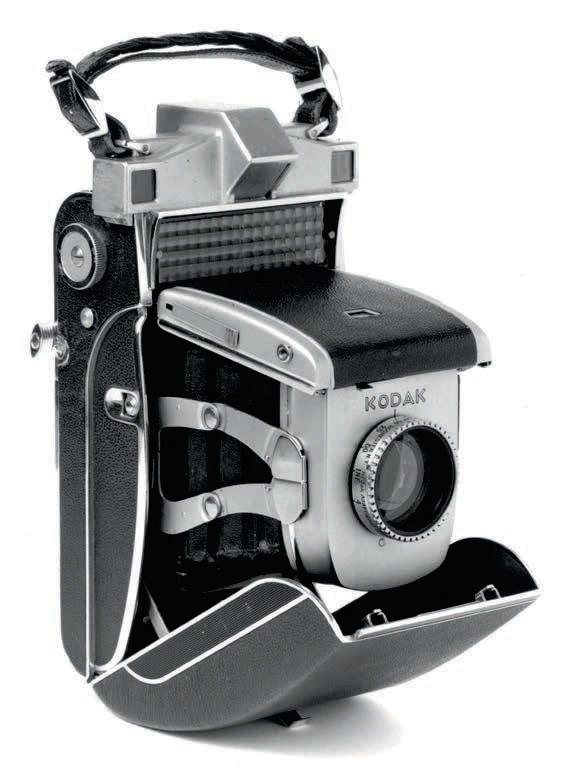
At the heart of a camera's automatic exposure system lie three basic procedures. First came shutter priority, in which the photographer chose a shutter speed and the camera automatically set the correct aperture. Then came the more popular aperture priority, allowing the photographer to select an aperture, leaving it to the camera to set the correct shutter speed. Finally, both shutter speeds and apertures were chosen automatically and set with a program mode. All of which took off big time when battery-driven electronics hit cameras in the 1970s. What you might not know is that automatic exposure modes like these go back much further, to the days when meters were activated by selenium cells that didn't need batteries to operate, and when automation relied on mechanical levers, rotating cogs, expanding and contracting springs and even compressed air. Welcome to the world of mechanical auto exposure, whose cameras are today both collectable and usable.
1938: Super Kodak Six-20
The first camera to incorporate an electronic exposure meter was the Zeiss Ikon Contaflex in 1935. But that meter only recommended correct apertures against shutter speeds that then needed to be set manually. The first camera to use a builtin exposure meter to actually activate an automatic exposure system was the Super Kodak Six-20.


Esta historia es de la edición November 11, 2025 de Amateur Photographer.
Suscríbete a Magzter GOLD para acceder a miles de historias premium seleccionadas y a más de 9000 revistas y periódicos.
¿Ya eres suscriptor? Iniciar sesión
MÁS HISTORIAS DE Amateur Photographer

Amateur Photographer
Martin Parr
AP Acting Features Editor Peter Dench pays a personal tribute to Martin Parr, a photographer who shaped him and reshaped how Britain sees itself

3 mins
December 16, 2025

Amateur Photographer
Smartphone makers take the long view
It's also been a busy year for smartphone makers, particularly in the hyper-competitive Android market. Beyond Al features, slimmer dimensions and beefed-up battery life, some cool technology came to the fore, exemplified by the Oppo Find X9 Pro. As well as being able to capture still photos at 50MP by default on all three rear cameras, a new Hasselblad Hi Res mode enables you to shoot 200MP still images. While this feature might seem overkill for a comparatively small phone sensor, it gives lots of cropping flexibility.
1 min
December 16, 2025

Amateur Photographer
Geoff Harris
AP's Deputy Editor finds his perfect lens for birding, enjoys a quirky compact camera, and sings the praises of a bargain 35mm film SLR
3 mins
December 16, 2025

Amateur Photographer
Jessica Miller
Our Deputy Online Editor has enjoyed using a flagship smartphone as her main device this year
1 mins
December 16, 2025
Amateur Photographer
Andy Westlake
AP's Technical Editor waxes lyrical about some lovely lenses from Sigma
2 mins
December 16, 2025

Amateur Photographer
AP out and about
As well as working on a weekly magazine, running a website and our social media platforms, we're often out taking photos, whether for gear reviews or just for pure enjoyment outside of work. Here's a selection of our favourite photos taken in 2025
7 mins
December 16, 2025

Amateur Photographer
Final Analysis
From the series Second City by Jesse Marlow (1998-2004)
2 mins
December 16, 2025
Amateur Photographer
Amy Davies
AP's Features Editor fell for the latest iPhone, and was impressed by probably the best-value full-frame mirrorless camera around
1 min
December 16, 2025

Amateur Photographer
Polaroid Flip
The Polaroid Flip is a great camera - it really shows how far we've come in terms of a brand that almost disappeared from existence.
1 min
December 16, 2025

Amateur Photographer
Best of the best
Jessica Miller looks back at the winning images from another great year of photography competitions
6 mins
December 16, 2025
Listen
Translate
Change font size