Intentar ORO - Gratis
Rising violence against politicians is an attack on democracy itself
The Guardian Weekly
|June 21, 2024
The response of Mette Frederiksen, Denmark's centre-left prime minister, to being physically assaulted in a Copenhagen street was dignified and very human. "I'm not doing great, and I'm not really myself yet," she admitted last week. The attack had left her feeling shocked and intimidated, she said.

Frederiksen suggested her experience was the culmination of some broadly familiar trends: proliferating social media threats, increasingly aggressive political discourse, a divisive Middle East war. "As a human being, it feels like an attack on me. But I have no doubt it was the prime minister that was hit. In this way, it becomes a kind of attack on all of us."
This idea that elected politicians - and the democracies they represent - are everywhere endangered by rising personalised violence is backed by plenty of evidence.
With contentious elections fast approaching in France, the UK and the US, it seems only too probable that there will be more outrages and more victims, some possibly high profile. The root causes of this phenomenon include anger at and distrust of "ruling elites", deliberate polarisation and fearmongering, antimigrant racism, sectarian bigotry, economic distress and digital provocations by malign state actors. Yet there is no obvious pattern. Political violence, mostly random, is coming from both right and left.
Robert Fico, Slovakia's hard-right prime minister, was shot several times last month and was fortunate to survive. He believes he was attacked because of his views, and blames the influence of political opponents on the left. "It's evident he [Fico's assailant] was only a messenger of evil and political hatred," he said.
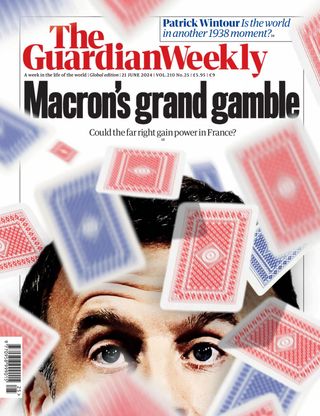

Esta historia es de la edición June 21, 2024 de The Guardian Weekly.
Suscríbete a Magzter GOLD para acceder a miles de historias premium seleccionadas y a más de 9000 revistas y periódicos.
¿Ya eres suscriptor? Iniciar sesión
MÁS HISTORIAS DE The Guardian Weekly
The Guardian Weekly
Price of fame
The creator of eradefining sitcom Girls on sex, stress and the dark side of celebrity

3 mins
May 08, 2026
The Guardian Weekly
Angels of deception
To test the safety and security of AI, hackers have to trick large language models into breaking their own rules. It requires ingenuity and manipulation - and can come at a deep emotional cost
9 mins
May 08, 2026
The Guardian Weekly
COUNTRY DIARY
Richard Bray’s hives stand in a crooked line at the edge of the apple orchard, beside a low thicket of nettles.
1 mins
May 08, 2026

The Guardian Weekly
Where are the so-called anti-racists when British Jews need them?
For me, it's mostly sadness.
4 mins
May 08, 2026
The Guardian Weekly
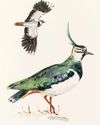
Take flight The Lost Words pair set sights on birds
Jackie Morris and Robert Macfarlane give the Guardian extracts from their book on Britain's declining bird species
4 mins
May 08, 2026

The Guardian Weekly
Fears for spears: how to cook asparagus without blanching
\"Blanching captures that green, verdant nature of asparagus so well, and saves its minerality, too,\" agrees Bart Stratfold of Timberyard in Edinburgh, but when the season is going full tilt, it's just common sense to expand our horizons.
2 mins
May 08, 2026

The Guardian Weekly
Just divine
A major London exhibition reveals how Francisco de Zurbarán reaches into the deepest dimensions of spirituality
6 mins
May 08, 2026
The Guardian Weekly
Brave new world
Olive Kitteridge and Lucy Barton make way for a teacher haunted by trauma
2 mins
May 08, 2026
The Guardian Weekly
My mother is addicted to gaming. What should I do?
My mother is in her 70s and addicted to playing video games such as Tetris, many different versions of solitaire and slot machine gambling games.
2 mins
May 08, 2026
The Guardian Weekly
Kneecap
Five tracks into Fenian, the listener is confronted by rapper Mo Chara expressing a desire to go and live off-grid outside a village in County Meath.
1 min
May 08, 2026
Listen
Translate
Change font size