Intentar ORO - Gratis
BLACK LUNGS: ULTIMATE GUIDE TO DELHI'S TOXIC AIR
Mint Bangalore
|November 07, 2025
We dissect this complex regional crisis, the failed efforts, and the factors keeping north India permanently choked
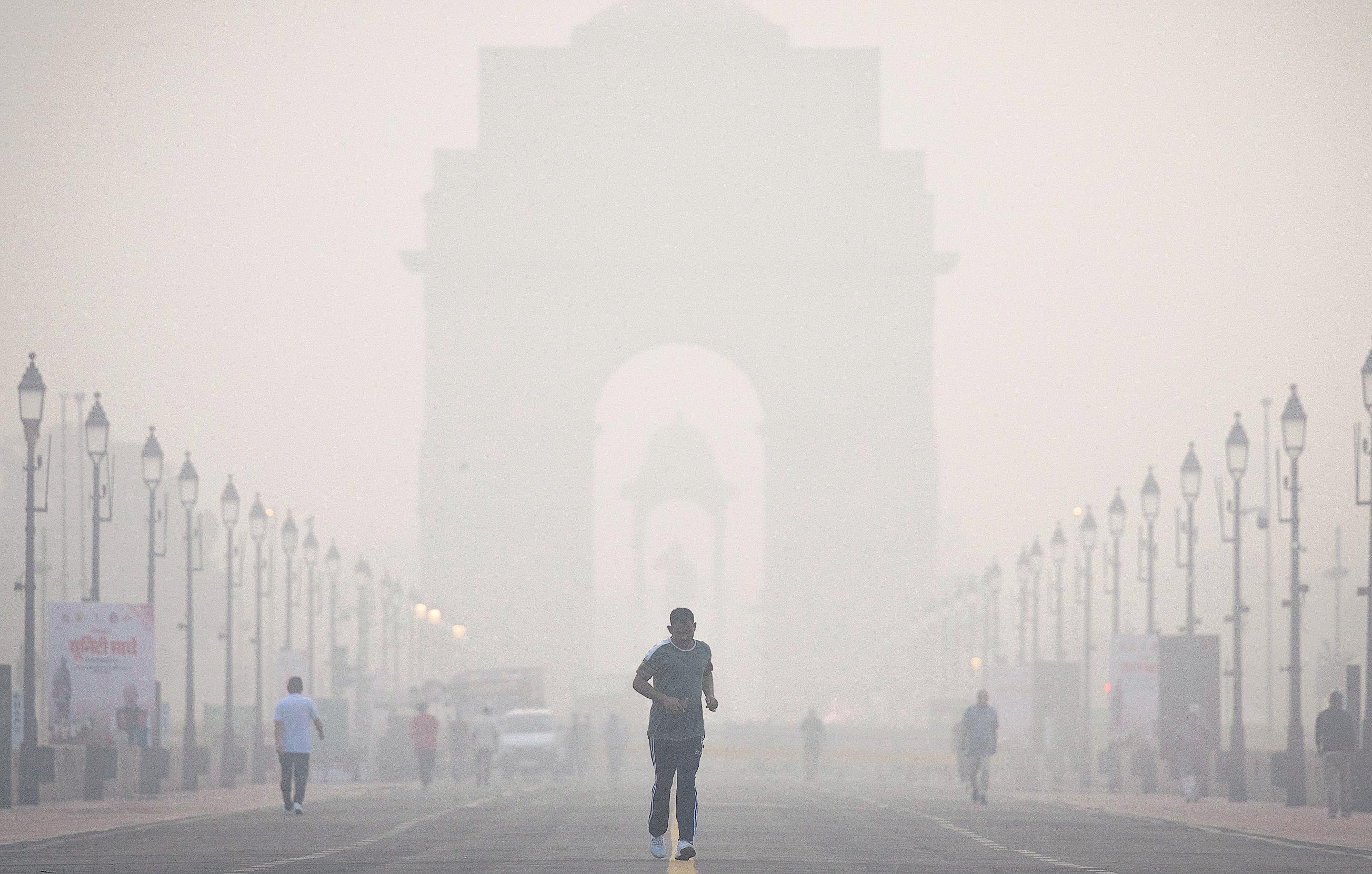
Kartavya Path in New Delhi on 31 October. Pollution levels are set to worsen in the coming days and months, as the winter sets in.
(REUTERS)
For most part of human civilization, the average life expectancy was dismal. Someone born in 1800 was not expected to live beyond thirty. A century later, by 1900, this number improved only marginally to 32 years. The largest increase came post 1950s, when life expectancy rose from a little over 46 years to 73 years by 2023. This dramatic rise in the length of human life was possibly because of multiple advancements in healthcare, access to vaccines, better nutrition and improvement of living standards.
In India, the average life expectancy is 72 years. But deteriorating air quality is now threatening to shorten lives. As per a 2025 report from the Energy Policy Institute at the University of Chicago (EPIC), an average Indian is losing 3.5 years of their life due to dirty air. And for a resident of its national capital Delhi, the life expectancy is shortened by 8.2 years.
The science here is quite clear. Life spans are shortened by particulate matter pollution, particularly PM2.5, which are fine particles of 2.5 microns or less in diameter. PM2.5 particles can penetrate deep into the respiratory system, enter the bloodstream, and increase the risk of cardiovascular and neurological diseases, cancer and premature death. Children are more vulnerable to air pollution because they breathe more air per unit of body weight. Due to a higher respiratory rate compared to adults, children inhale larger doses of pollution when exposed to the same environment.

Esta historia es de la edición November 07, 2025 de Mint Bangalore.
Suscríbete a Magzter GOLD para acceder a miles de historias premium seleccionadas y a más de 9000 revistas y periódicos.
¿Ya eres suscriptor? Iniciar sesión
MÁS HISTORIAS DE Mint Bangalore
Mint Bangalore
India's fertilizer policy needs a fruitful rehaul
Our subsidy framework is a formula for fiscal waste, inefficiency, ecological damage and health hazards. Let's adopt direct cash transfers to farmers and market determined usage

2 mins
January 07, 2026

Mint Bangalore
Why Grok is under the lens, but not Gemini or ChatGPT
MeitY’s notice put X under scrutiny; experts point to user policy gap with other platforms
3 mins
January 07, 2026
Mint Bangalore
NHAI asks DoT to fix mobile network gaps on highways
As India builds highways at a record pace, a critical digital gap is becoming harder to ignore.
1 min
January 07, 2026
Mint Bangalore
Devyani-Sapphire merger is a good fit, but not a demand fix
The proposed merger of Devyani International Ltd and Sapphire Foods Ltd appears strategically sound.
1 mins
January 07, 2026

Mint Bangalore
Edtech makes micro-learning pivot as dealmaking declines
The bet is on short, vernacular micro-learning to capture low-intent, high-frequency users
2 mins
January 07, 2026
Mint Bangalore
A study in deductions: How the taxman spots anomalies
A guide to how the tax system’s algorithms are flagging mismatches in Form 16, AIS and ITRs
4 mins
January 07, 2026
Mint Bangalore
Gold price spike lifts Titan Q3 sales
Titan Company on Tuesday posted a 40% jump in overall sales for the December quarter, driven by a higher average selling price for its gold jewellery and festive demand.
1 min
January 07, 2026

Mint Bangalore
After big bets, Japanese firms boost India tech centre plans
After Japanese investments into India hit a high last year, some of the largest companies of the East Asian country are now looking to expand or establish tech centres to tap India's deep talent pool.
2 mins
January 07, 2026

Mint Bangalore
TVs ward off smartphone threat with AI
Uber robotaxis are on their way in, in 2026—and other AI news this week
1 min
January 07, 2026

Mint Bangalore
Mid-sized startups ditch unicorn chase to go public earlier
A growing cohort of mid-sized companies is considering a much earlier entry into public markets, unlike the post-pandemic boom of 2021 when Indian startups stayed private as long as possible in pursuit of unicorn valuations.
1 min
January 07, 2026
Listen
Translate
Change font size