Intentar ORO - Gratis
Sri Lanka's disaster problem isn't just nature-it's architecture
Daily FT
|January 06, 2026
WHEN floods and landslides strike Sri Lanka, the public conversation almost always turns to nature.
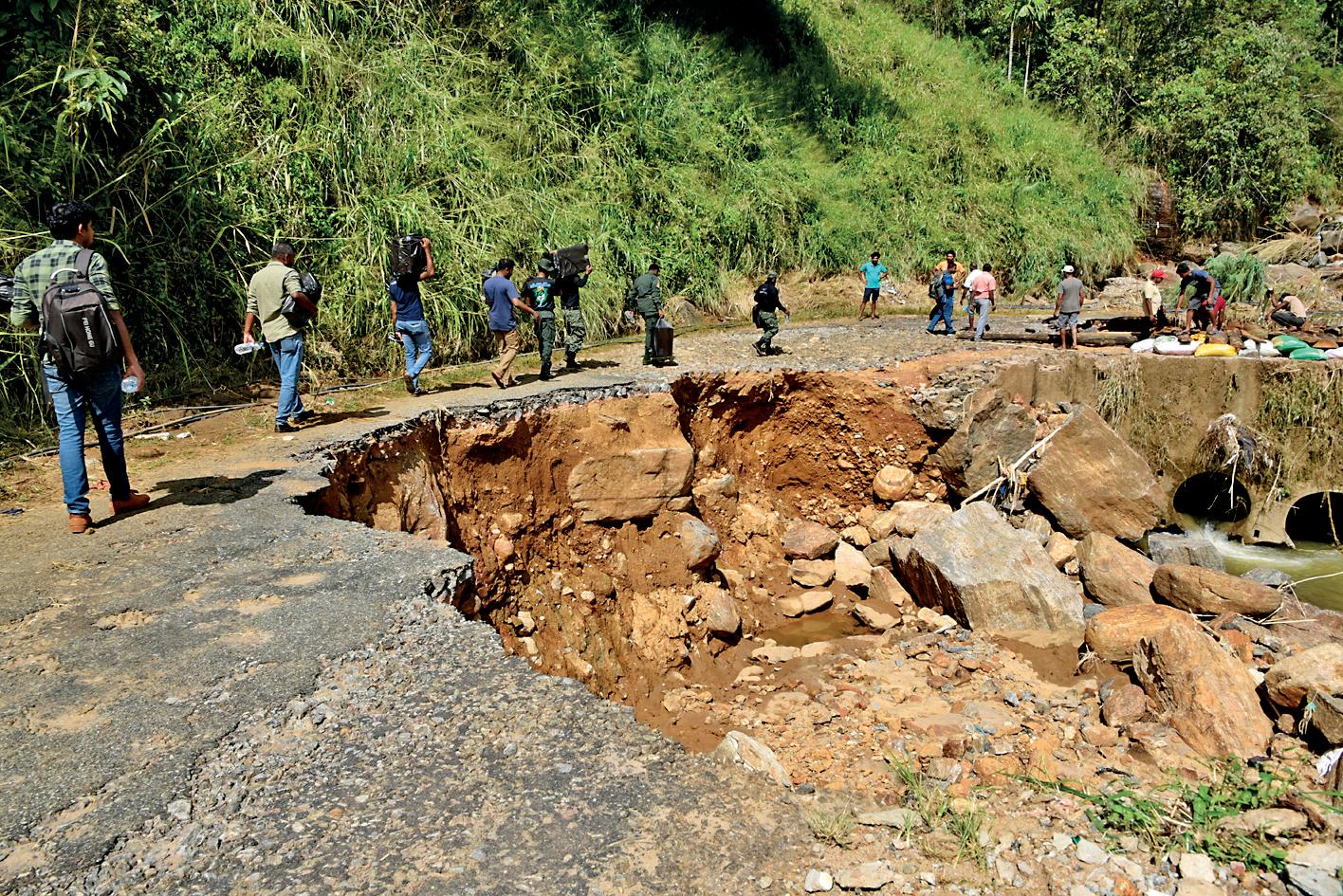
Heavy rain, deforestation, hill cutting, and river encroachment are cited as the culprits. These factors are real and serious: forest loss accelerates runoff, altered slopes destabilise terrain, and encroached floodplains erase natural buffers. None of this can be denied. Yet environmental degradation alone does not explain why disasters repeatedly unfold with late warnings, confused responses, and post-event blame.The deeper problem is architectural. Not architecture in the sense of buildings or dams, but the governance and control systems that translate environmental signals such as rainfall, river levels, reservoir storage, slope saturation into timely, enforceable public action. Environmental damage increases the load on this system. The absence of an integrated hazard management architecture is what allows that load to become a catastrophe.
Each major flood exposes a persistent gap in Sri Lanka's disaster management framework. Public debate quickly narrows to familiar, technical-sounding questions: Were reservoir gates opened too quickly? Were warnings issued on time? Was the rainfall truly unprecedented?
While these questions appear precise, they are largely distractions. They reduce what is fundamentally a national-scale systems failure into a sequence of isolated operational errors. This framing obscures the deeper issue: the absence of a coherent governance mechanism capable of integrating environmental realities into enforceable, statewide decisions.
From an engineering perspective, Sri Lanka’s challenge is not rooted in a lack of awareness, expertise, or concern. Rather, it lies in the absence of an executable hazard governance operating system, one that can systematically connect data, forecasts, and risk assessments to binding actions across institutions. Without such a system, responses remain fragmented, reactive, and vulnerable to repetition of the same failures with each new flood.


Esta historia es de la edición January 06, 2026 de Daily FT.
Suscríbete a Magzter GOLD para acceder a miles de historias premium seleccionadas y a más de 9000 revistas y periódicos.
¿Ya eres suscriptor? Iniciar sesión
MÁS HISTORIAS DE Daily FT
Daily FT
Sri Lanka tops list of Asia's most affordable retirement havens
SRI Lanka is described as one of the cheapest and most beautiful places to retire in Asia, according to insights from the Annual Global Retirement Index.

2 mins
January 12, 2026
Daily FT
Ceylon Grain Elevators to invest Rs. 3 b in value-added capacity expansion
CEYLON Grain Elevators PLC is investing Rs. 3 billion to double poultry processing capacity at plant in Seeduwa, signalling a further push into higher value-added food production.
1 min
January 12, 2026
Daily FT
SEC identifies key parties behind abnormal Wealth Trust debut price movements
SECURITIES and Exchange Commission (SEC) said yesterday it has identified those primarily responsible for the abnormal Wealth Trust Securities Ltd., prices on 7 January.
1 min
January 12, 2026
Daily FT
Ceylon Grain Elevators to invest Rs. 3 b in valueadded capacity expansion
CEYLON Grain Elevators PLC is investing Rs. 3 billion to double poultry processing capacity at plant in Seeduwa, signalling a further push into higher value-added food production.
1 min
January 12, 2026

Daily FT
CR end Kandy’s unbeaten run
CR & FC produced a statement performance to hand defending champions Kandy Sports Club their first defeat of the Inter-Club League season, recording a hard-fought 25/20 victory at a packed Nittawela Rugby Stadium last evening.
2 mins
January 12, 2026
Daily FT
Dec. workers' remittances hit all-time high
Dec. inflows surge to $ 879 m, up 43.2% YoY; highest monthly inflow in history Annual inflows surpass 2016 peak of $ 7.24 b to $ 8.07 b, up by 12% Fewer workers migrated in 2025, but higher per-worker transfers drove inflows higher
1 mins
January 12, 2026
Daily FT
Tourism revenue lags behind arrivals growth in 2025
SRI Lanka's tourism sector posted a modest financial recovery in 2025, generating just over $ 3.2 billion in revenue, as slower growth in earnings exposed a widening gap between rising visitor numbers and tourist spending.
1 mins
January 12, 2026
Daily FT
First four days of 2026 draw over 33,000 tourists
THE country's tourism industry has begun 2026 on an optimistic note, with arrivals in the first four days of January surpassing 33,000, reflecting steady momentum at the start of the New Year.
1 min
January 12, 2026

Daily FT
Health after the floods: Scientific realities and shared responsibility for Sri Lanka's future
SRI Lanka's recent floods were a stark reminder that health is not defined only by hospitals and clinics, but by the environments we live in, the systems that support us, and the daily choices we make as individuals.
4 mins
January 12, 2026

Daily FT
Sri Lanka beat Pakistan to share T20I series 1-all
■ In a rain truncated 12 overs-a- side contest
2 mins
January 12, 2026
Listen
Translate
Change font size