Intentar ORO - Gratis
ALL THE KING'S CENSORS
The Atlantic
|March 2025
When bureaucrats ruled over British theater
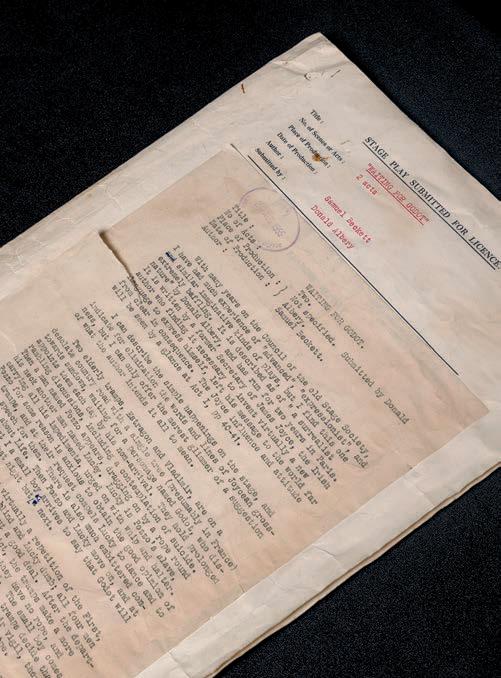
Several stories below the British Library's Magna Carta room, alongside a rumbling line of the London Underground, is a brightly lit labyrinth of rare and historic items. Past a series of antique rifles chained to a wall, past an intricate system of conveyor belts whisking books to the surface, the library stores an enormous collection of plays, manuscripts, and letters. Last spring, I checked my belongings at security and descended to sift through this archive a record of correspondence between the producers and directors of British theater and a small team of censors who once worked for the Crown.
For centuries, these strict, dyspeptic, and sometimes unintentionally hilarious bureaucrats read and passed judgment on every public theatrical production in Britain, striking out references to sex, God, and politics, and forcing playwrights to, as one put it, cook their "conceptions to the taste of authority." They reported to the Lord Chamberlain's Office, which in 1737 became responsible for granting licenses to theaters and approving the texts of plays. "Examiners" made sure that no productions would offend the sovereign, blaspheme the Church, or stir audiences to political radicalism. An 1843 act expanded the department's powers, calling upon it to block any play that threatened not just the "Public Peace" but "Decorum" and "good Manners."
"OMIT THE BUSINESS AND SPEECHES ABOUT FLYBUTTONS."
Hardly chosen for their artistic sensibilities or knowledge of theatrical history, the men hired by the Lord Chamberlain's Office were mostly retired military officers from the upper-middle class. From the Victorian era on, they scrutinized plays for references to racial equality and sexualityparticularly homosexualityvulgar language, and "offensive personalities," as one guideline put it.

Esta historia es de la edición March 2025 de The Atlantic.
Suscríbete a Magzter GOLD para acceder a miles de historias premium seleccionadas y a más de 9000 revistas y periódicos.
¿Ya eres suscriptor? Iniciar sesión
MÁS HISTORIAS DE The Atlantic
The Atlantic
The Eighth Deadly Sin
Humankind has devised a new form of debasement.

5 mins
May 2026

The Atlantic
The Art of the (New) Deal
What the murals of the Wilbur J. Cohen Federal Building can teach us about patriotism, propaganda, and beauty
12 mins
May 2026

The Atlantic
New Chairs
Collaboration, for Robert Rauschenberg and Merce Cunningham, began with the arrangement of chairs.
1 mins
May 2026
The Atlantic
HISTORY IS RUNNING BACKWARDS
Why reactionaries are taking over the world
21 mins
May 2026

The Atlantic
SOMEDAY IN TEHRAN
Like Donald Trump, I, too, once underestimated the Islamic Republic of Iran.
16 mins
May 2026

The Atlantic
On Losing a Daughter
The people we were died at the exact moment our child did.
19 mins
May 2026

The Atlantic
I Found It: The Best Free Restaurant Bread in America
Thirteen thousand miles. Infinite contenders. One beautiful loaf.
15 mins
May 2026

The Atlantic
EVERYTHING IS FREE AND NOTHING MATTERS
What I saw at Jeff Bezos's Campfire retreat
9 mins
May 2026

The Atlantic
Who Is Black Comedy For?
A new book is nostalgic for the '90s. But the era of crossover success was not necessarily the pinnacle of Black comedic achievement.
8 mins
May 2026

The Atlantic
The Feeling of Becoming Less and Less of a Person
In Ben Lerner's new novel, technology divides us further from one another, and ourselves.
9 mins
May 2026
Listen
Translate
Change font size