Intentar ORO - Gratis
PLASTIC BURNOUT
TIME Magazine
|July 15, 2024
Fiji is ground zero for the planet's waste problem and the challenge of stopping it at the source
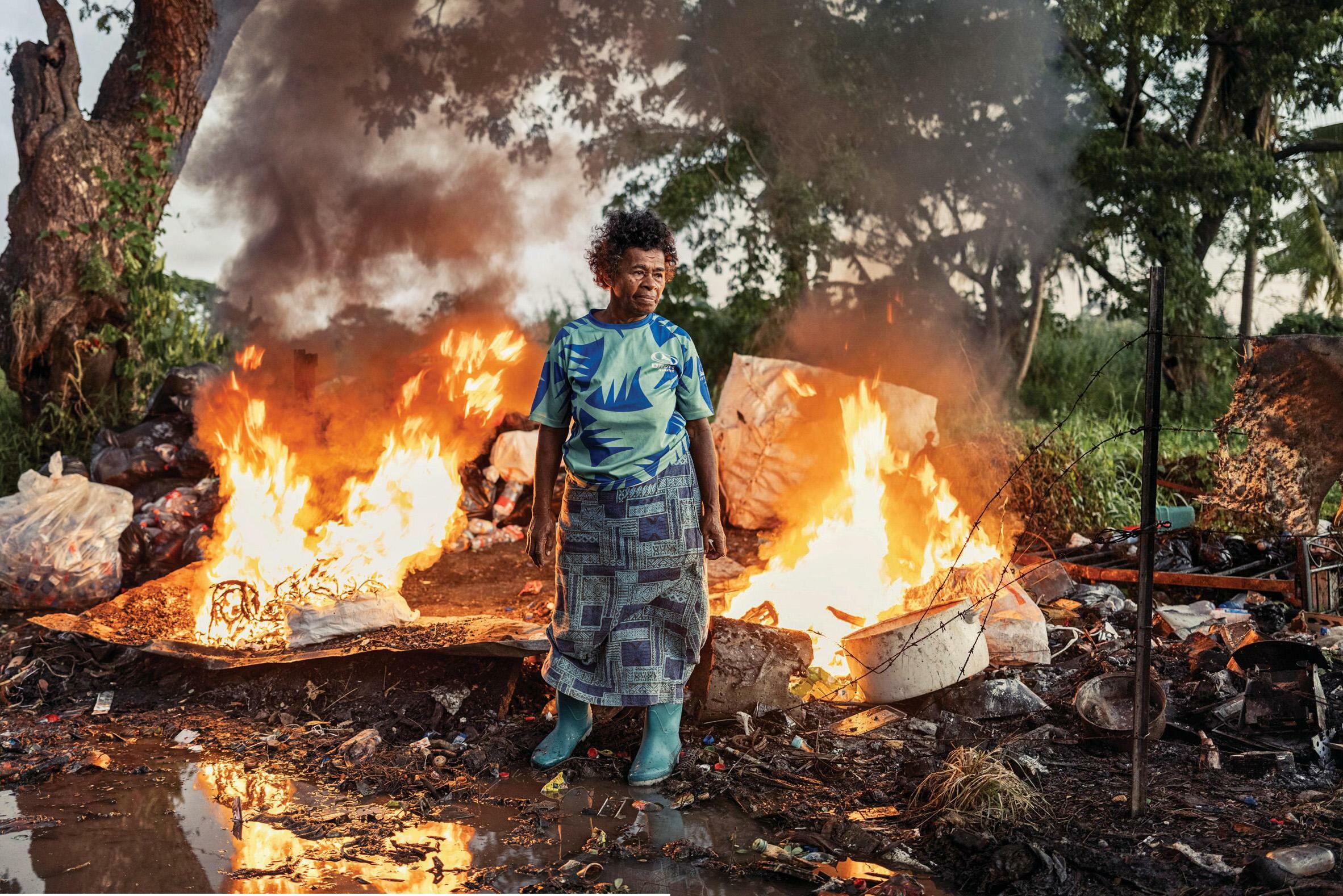
WHENEVER THE GROWING PILE OF PLASTIC waste in front of her door takes up too much space, Asinate Lewabeka has a simple solution. She sets it on fire. She prefers to do so at dawn when the air is still so that the smoke rises in a black column. She says any later in the day, the coastal breeze risks blowing the acrid fumes straight into her home, a modest shack built on the edge of the Vunato dump site in Lautoka, Fiji’s second-largest city.
Lewabeka watches in satisfaction as flames consume the haphazard pile of empty water bottles, travel-size tubes of shampoo, juice cartons, wads of food packaging, a broken plastic fan, and coils of copper wire coated in PVC insulation, reducing it all to carbonized lumps. “Plastic rubbish is the worst kind,” she says. “It is everywhere. It makes our country look so bad. I don’t want it to be a pollutant in our neighborhood, so I collect it and burn it so I can get rid of it.”
It may no longer be an eyesore, but Lewabeka’s problem is far from gone. Burning plastic releases toxic substances that will remain in the environment for hundreds of years, with deleterious impacts on human and ecosystem health. Yet open burning is one of the most common methods for eliminating unwanted waste in a remote island nation besieged by a plastic tide. Less than a third of Fiji’s plastic waste is locally produced. The rest drifts in with ocean currents from as far away as South Africa and Mexico. It must be disposed of, wherever it comes from, and burning is often the simplest option.

Esta historia es de la edición July 15, 2024 de TIME Magazine.
Suscríbete a Magzter GOLD para acceder a miles de historias premium seleccionadas y a más de 9000 revistas y periódicos.
¿Ya eres suscriptor? Iniciar sesión
Listen
Translate
Change font size