Intentar ORO - Gratis
Culture Vulture
Outlook
|April 01, 2026
The tragedy of 2026 is that both the major parties have found it easier to fight over "culture" rather than "capital"
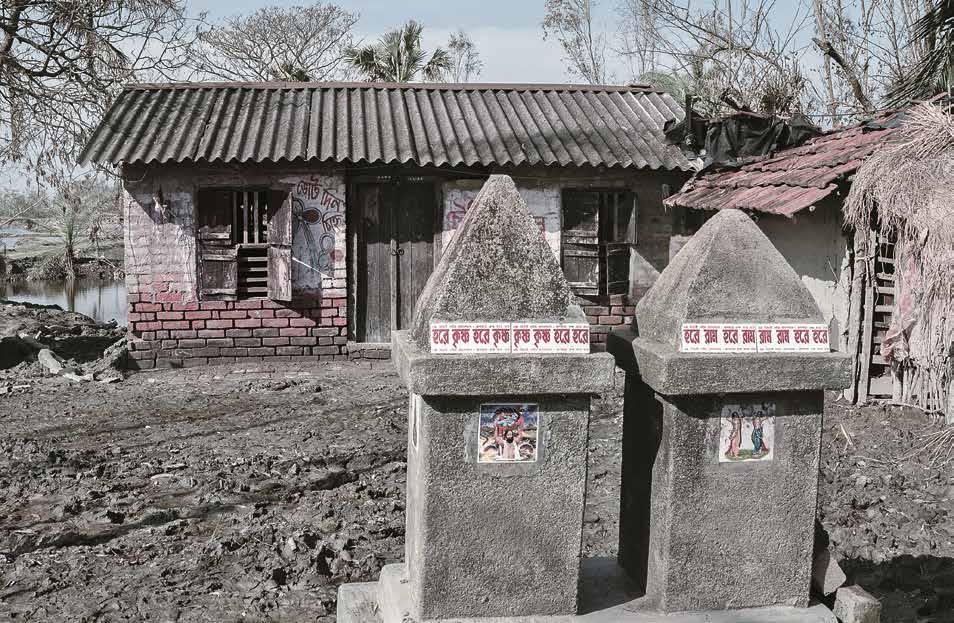
IN the tea stalls of Kolkata and the parched fields of Paschim Medinipur, the air is thick with a peculiar, manufactured tension. As West Bengal hurtles toward another high-stakes assembly election, public discourse has been effectively hijacked by two polarising spectres: the Special Intensive Revision (SIR) of electoral rolls and the relentless, competitive communalism of the two primary political behemoths. One side warns of “infiltrators” and “demographic shifts”, while the other decries a “conspiracy to disenfranchise Bengali voters”. It is a masterful symphony of distraction. There is indeed a sense of worry for the All India Trinamool Congress (TMC) as the final list indicates that 1.21 crore electors—nearly one in six voters in the state—are currently categorised as either “deleted” or “under adjudication”. In about 234 constituencies, the volume of affected electors exceeds the most recent winning margin in the 2024 Lok Sabha election.
With increasing regionalisation, voters are made to believe that the most important form of political identification is a state-endorsed definition of regional identity, effectively merging religion, ethnicity, and language into a singular “culture war”. This strategy successfully breaks the link between voters and material issues like corruption, or industrial decline. Whichever party takes the oath of office in 2026 will find that while they won the war of identity, they are losing the war of existence. This is no longer about any specific regime; it is rather a structural failure of the state’s political economy that has mutated over decades into an inescapable trap.

Esta historia es de la edición April 01, 2026 de Outlook.
Suscríbete a Magzter GOLD para acceder a miles de historias premium seleccionadas y a más de 9000 revistas y periódicos.
¿Ya eres suscriptor? Iniciar sesión
MÁS HISTORIAS DE Outlook

Outlook
'Why GDP Growth Doesn't Always Translate Into Votes'
The recent election results have once again shown that economic growth alone does not guarantee electoral victory.

3 mins
June 06, 2026

Outlook
Lights, Camera, Othering
The establishment of Israel has been accompanied by a national cinema devoted to negating and erasing the Palestinian Other
5 mins
June 06, 2026

Outlook
Goodbye to All That
Booker-winning British author Julian Barnes' Departure(s) is a unique hybrid work: playful, philosophical, whimsical
4 mins
June 06, 2026

Outlook
Collapse of Trust
As the NEET-UG 2026 paper leak forced the cancellation of India’s biggest medical entrance exam, more than 22 lakh aspirants find themselves trapped in uncertainty
11 mins
June 06, 2026

Outlook
NO LONGER A TWELFTH MAN
Bihar cricket, which has languished in the shadows for long, is all set to improve its strike rate, thanks to Vaibhav Sooryavanshi, the new Bihari kid on the block
5 mins
June 06, 2026

Outlook
BLAZE OF GLORY
The challenges of being a celebrity cricketer at a young age can be tough to handle
5 mins
June 06, 2026

Outlook
THE SWASHBUCKLERS
A new generation of fearless stars is emerging and finding its feet at the very top of an extremely competitive cricketing environment
5 mins
June 06, 2026

Outlook
THE TEEN TORNAD
At the age of 15, Vaibhav Sooryavanshi is already a cricketing legend
10 mins
June 06, 2026

Outlook
A Journey to Remember
The prerecorded message crackled over the din in the compartment: ‘Welcome to the Shatabdi Express.
4 mins
June 06, 2026

Outlook
Crossing Borders
Ruth Martin is the translator of German-Iranian author Shida Bazyar’s novel The Nights are Quiet in Tehran (originally written in German), which has been shortlisted for the 2026 International Booker Prize.
4 mins
June 06, 2026
Listen
Translate
Change font size