Intentar ORO - Gratis
Blank Editorials
Outlook
|October 01, 2024
Despite being under scrutiny during the Emergency, small journals like Himmat Weekly got around censorship by taking calculated risks

IRONIC is it not that a film on the Emergency was held up by what we call the Censor Board (officially the Central Board of Film Certification)? For it was during this infamous Emergency from 1975-77 that the Indian media, at that time essentially the print media, faced direct censorship for the first, and only time, since Independence.
On June 26, 1975, when the Indira Gandhi-led government declared a state of Emergency and announced that there would be press censorship, none of us knew what this meant. Censorship? How? Who would execute the policy? What were we as journalists supposed to do? At the time, I was working with a small independent news magazine called Himmat Weekly, founded by Rajmohan Gandhi who was also the editor-in-chief.
I had joined as an assistant editor, and as the name suggests, our remit was to have the courage to call out the powerful and write about the powerless. Within six months of the declaration of the Emergency, I became the magazine's editor as R M Lala, one of the founding editors, stepped down.
On that first day, our small team of mostly young journalists had to decide what to do. Should we submit to censorship? Or shut shop? Or should we find a way around it, even if it meant taking considerable risks given that practically all the Opposition leaders had been swept up and thrown in jail and even journalists and other critics were not spared. Perhaps it was our youth, our ignorance or sheer bravado that made most of us feel we should fight censorship and continue to publish as long as we could.
Much like the other, and better-known instances of defiance, such as the The Indian Express printing a blank front page to inform its readers about censorship, Himmat Weekly too ran blank editorials in its first two issues. Only to be told that even leaving a blank space violated the censorship guidelines.
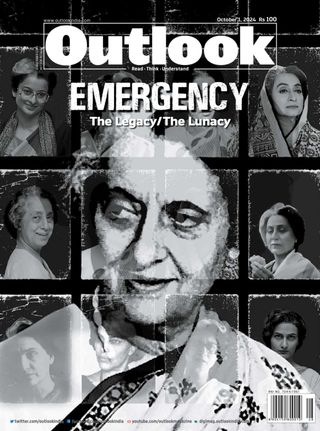

Esta historia es de la edición October 01, 2024 de Outlook.
Suscríbete a Magzter GOLD para acceder a miles de historias premium seleccionadas y a más de 9000 revistas y periódicos.
¿Ya eres suscriptor? Iniciar sesión
MÁS HISTORIAS DE Outlook
Outlook
The Spectacle of the Woman Accused
Media narratives—especially when women are involved—can end up amplifying suspicion and weaponising gender

7 mins
March 11, 2026

Outlook
The Stink of Epstein
Why are the rich and powerful of the world scared of what lies buried in the Jeffrey Epstein files?
6 mins
March 11, 2026
Outlook
Passing the Watermelon
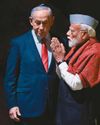
Narendra Modi's presence in Israel is being read not just as a bilateral engagement, but as an endorsement of Israeli action in Gaza and the West Bank
5 mins
March 11, 2026
Outlook
For Phoolan, Who Wasn't a Devi
“Whether or not it is the Truth is no longer relevant. The point is that it will, (if it hasn’t already) - become the Truth. Phoolan Devi, the woman has ceased to be important. (Yes of course she exists. She has eyes, ears, limbs, hair etc. Even an address now) But she is suffering from a case of Legenditis. She’s only a version of herself. There are other versions of her that are jostling for attention. Particularly Shekhar Kapur’s “Truthful” one, which we are currently being bludgeoned into believing.”–Arundhati Roy in ‘The Great Indian Rape-Trick I’, on the film Bandit Queen by Shekhar Kapur based on Phoolan, whom he never met because he didn’t think he needed to meet her. The film was based on journalist Mala Sen’s book India’s Bandit Queen: The True Story of Phoolan Devi.
5 mins
March 11, 2026

Outlook
The Chic Cartel
Women are not just victims or side characters in recent crime-and-power OTT dramas. They are complex forces-capable of empathy, strategy and ruthlessness-whose narratives demand both recognition and reckoning
5 mins
March 11, 2026

Outlook
The Hierarchy of Sympathy
In crimes against women, justice is shaped not only in courtrooms but in newsrooms where narrative determines whose suffering becomes national conscience and whose fades into procedural silence
5 mins
March 11, 2026

Outlook
Dasyu Sundari
Media accounts simultaneously cast her as victim and avenger, until a life shaped by caste violence and gendered oppression was repackaged into a consumable myth of dishonour and revenge
8 mins
March 11, 2026

Outlook
Prince Pervert
Are rumours of the death of the rule of law vastly exaggerated?
4 mins
March 11, 2026
Outlook
Together, Apart
Poonam Saxena's translations of Mannu Bhandari and Rajendra Yadav's memoirs present a portrait of the trailblazing Hindi writer-couple's marriage and of newly independent India
3 mins
March 11, 2026

Outlook
The Great Indian Rape Trick'
The trope of transforming sexual violence against women into a springboard for rage that can only be channelled through counter-violence has long served as a popular framework in cinema, both globally and in India
6 mins
March 11, 2026
Listen
Translate
Change font size