Intentar ORO - Gratis
FIRE AND ICE
Newsweek US
|August 29, 2025
NATO’S TRACKING OF RUSSIAN SUBMARINES IN THE ARCTIC IS BEING AFFECTED BY CLIMATE CHANGE
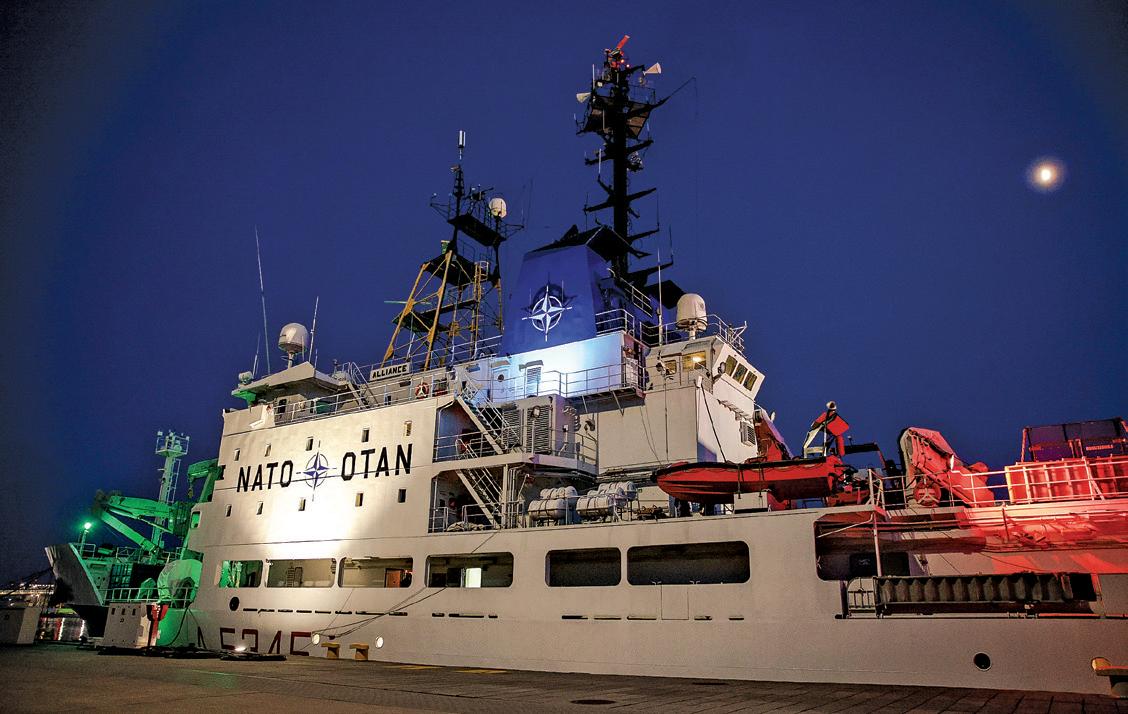
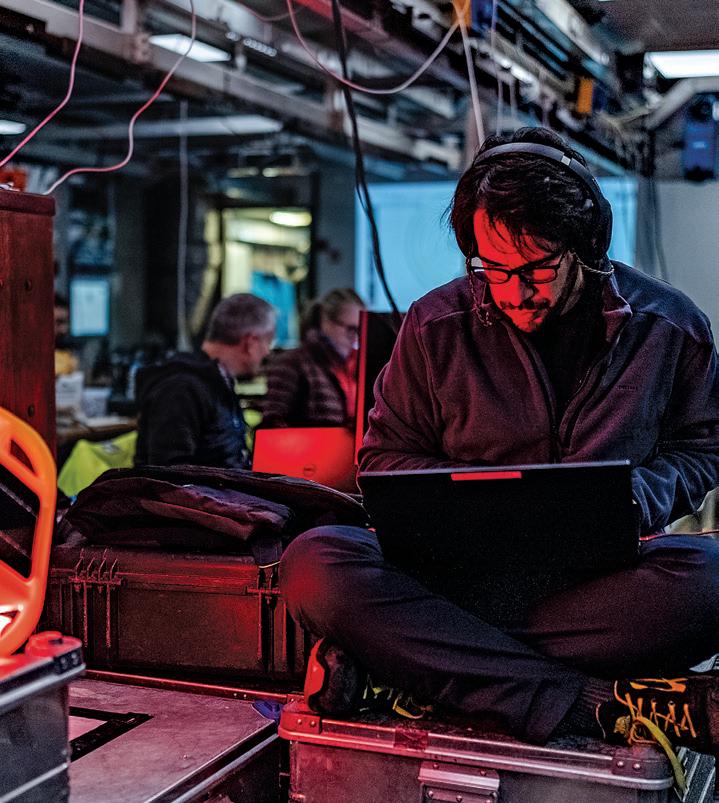
DEEP IN THE ARCTIC, ON BOARD NATO's only research vessel, green bars of data move across screens as computers whir, the noise occasionally rising in pitch.
To the untrained eye, it all means little. But to NATO's lone scientific unit on board the NRV Alliance, it is a glimpse into how the rapidly changing Arctic could force the alliance to switch how it detects objects and threats-lurk-ing beneath the waves.
One of these threats, and one notoriously hard to pick up, is Russian submarines. Climate change is making the task of finding them even more difficult.
As the planet heats up, fresh water is seeping into the Arctic Ocean as the sea ice and the permafrost melts, while warmer waters from the Atlantic bleed in from the south.
"Whereas in the past, we would have thought of the Arctic Ocean as a frozen desert, now, increasingly, it's being thought of as open water at some parts of the summer season," Klaus Dodds, a professor at the U.K.'s Royal Holloway, University of London, told Newsweek. "It's an ocean literally undergoing state change."
That change in temperature and salinity—or levels of salt—has a heavy hand in influencing how sound moves in water. But knowing how sound travels under the waves is key for picking up threats the alliance otherwise wouldn't spot.
"When you talk about detecting, tracking, identifying submarines, this is something where you can build all the technology you want," the expedition's chief scientist, Gaultier Real, told Newsweek. But "if you don't know the environment in which you are deploying that, in which you're operating that, you're missing something."
ARCTIC MISSION A group of NATO scientists set sail on the NRV Alliance (left) in early July to pull data that will help them understand how sound from any source travels in the Arctic waters.

Esta historia es de la edición August 29, 2025 de Newsweek US.
Suscríbete a Magzter GOLD para acceder a miles de historias premium seleccionadas y a más de 9000 revistas y periódicos.
¿Ya eres suscriptor? Iniciar sesión
MÁS HISTORIAS DE Newsweek US
Newsweek US
The Classroom Arms Race the West Is Losing to China
The West has spent billions trying to break China's grip on rare earths-critical minerals that power everything from electric vehicles to fighter jets.

1 min
June 19, 2026

Newsweek US
America's Greatest Workplaces 2026
From culture and benefits to leadership and flexibility, companies on this list define what makes a workplace truly exceptional
3 mins
June 26, 2026

Newsweek US
STATE OF CHANGE
Inside a Democratic Party divided by class, generation and vision, with California's high-stakes primaries testing its future direction
19 mins
June 26, 2026

Newsweek US
The Coveted Perk That's Big on Shrinking
The hottest line in a job offer isn’t a signing bonus or unlimited PTO. It’s a tiny weekly injection.
1 min
June 26, 2026

Newsweek US
War on Mar-a-Lago Face
On February 28, Mar-a-Lago hosted two parties at once. On one side, black-tie-clad guests sipped cocktails.
1 mins
June 26, 2026

Newsweek US
TAKE FIVE
STORIES FROM AROUND THE WORLD
1 mins
June 26, 2026

Newsweek US
OPPORTUNITY KNOCKS
Rather than treating Ukraine as a dependency, the U.S. should recognize it as a future strategic asset
3 mins
June 26, 2026

Newsweek US
Hollywood's Sure Thing
With Disclosure Day, Steven Spielberg proves his name still outshines every star
1 min
June 26, 2026

Newsweek US
Is Miami the New New York? Not So Fast
Move over Manhattan—Miami is having a moment.
1 min
June 26, 2026

Newsweek US
Budget EV Battle Gets a Tiny New Driver
Mexico is shifting gears in the electric vehicle race with Olinia Uno, nudging China out of the fast lane. Announced on June 7 by President Claudia Sheinbaum, the country's first homegrown EV is being positioned as a way for Mexico to jump into the driver's seat of its own technological future.
1 min
June 26, 2026
Listen
Translate
Change font size