Intentar ORO - Gratis
What Makes A Book Great?
Philosophy Now
|April / May 2024
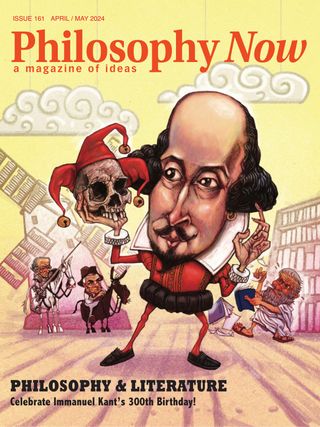
Colin Stott critiques the critical thinking of Matthew Arnold and F.R. Leavis.

We commonly associate the Victorian era with religious revivalism, yet many underwent a crisis of faith during this period. The poet and critic Matthew Arnold (1822-88) realised that established religion could no longer counter the impact that rapid industrialisation and trade cycles were inflicting on the poor, nor could it resist the incessant drive for material gain amongst the powerful. Religion, for many, was failing to invest life with purpose:
The sea of faith
Was once, too, at the full, and round earth's shore
Lay like the folds of a bright girdle furl'd; But now I only hear
Its melancholy, long, withdrawing roar, Retreating to the breath
Of the night-wind, down the vast edges drear
And naked shingles of the world.
(From Dover Beach by Matthew Arnold, c.1851.)

Arnold championed literature as the new channel for moral development, convinced of its importance in defining cultural identity and reinforcing social cohesion. He believed that poetry in particular could become the new scripture and elevate literary critics into a new priesthood. His vision introduced an enlightened paternalism into literary criticism, since he expanded the role of critic to include the guardianship of morality and good taste: to introduce, propagate and elucidate great poetry.

Esta historia es de la edición April / May 2024 de Philosophy Now.
Suscríbete a Magzter GOLD para acceder a miles de historias premium seleccionadas y a más de 9000 revistas y periódicos.
¿Ya eres suscriptor? Iniciar sesión
MÁS HISTORIAS DE Philosophy Now

Philosophy Now
Bilbo Theorizes About Wellbeing
Eric Comerford overhears Bilbo and Gandalf discussing happiness.

9 mins
December 2025 / January 2026

Philosophy Now
What Women?
Marcia Yudkin remembers almost choking at Cornell
11 mins
December 2025 / January 2026

Philosophy Now
Islamic Philosophers On Tyranny
Amir Ali Maleki looks at tyranny from an Islamic perspective.
4 mins
December 2025 / January 2026

Philosophy Now
Peter Singer
The controversial Australian philosopher defends the right to choose to die on utilitarian grounds
5 mins
December 2025 / January 2026

Philosophy Now
Another Conversation with Martin Heidegger?
Raymond Tallis talks about communication problems.
7 mins
December 2025 / January 2026

Philosophy Now
Letters
When inspiration strikes, don't bottle it up. Email me at rick.lewis@philosophynow.org Keep them short and keep them coming!
17 mins
December 2025 / January 2026
Philosophy Now
The Philosophy of William Blake
Mark Vernon looks at the imaginative thinking of an imaginative artist.
9 mins
December 2025 / January 2026

Philosophy Now
Philosophical Haiku
Peering through life’s lens God in nature is deduced: The joy of being.
1 mins
December 2025 / January 2026

Philosophy Now
Philosophy Shorts
More songs about Buildings and Food' was the title of a 1978 album by the rock band Talking Heads. It was about all the things rock stars normally don't sing about. Pop songs are usually about variations on the theme of love; tracks like Rose Royce's 1976 hit 'Car Wash' are the exception. Philosophers, likewise, tend to have a narrow focus on epistemology, metaphysics and trifles like the meaning of life. But occasionally great minds stray from their turf and write about other matters, for example buildings (Martin Heidegger), food (Hobbes), tomato juice (Robert Nozick), and the weather (Lucretius and Aristotle). This series of Shorts is about these unfamiliar themes; about the things philosophers also write about.
2 mins
December 2025 / January 2026
Philosophy Now
Hedonic Treadmills in the Vale of Tears
Michael Gracey looks at how philosophers have pursued happiness.
8 mins
December 2025 / January 2026
Listen
Translate
Change font size