Intentar ORO - Gratis
The Prayer the Machine Cannot Pray
Philosophy Now
|April/May 2025
Adnan Abbasi uses medieval metaphysics to understand modern Al.
-

"Subhan Allah!” (“Glory to God!”) The words escaped my lips as I watched Replit AI transform my half-coherent rambles into a functioning application. Twenty minutes earlier, I had been thinking aloud: “I want to track reading habits, link quotes to themes, maybe build some databases?” And now there was an app. A beautiful app. Complete with structured databases, state management, and search functionality I hadn’t requested but obviously needed. The code was elegant. Better than I would have written in that time. The AI had taken my ambiguous natural language, inferred intent, made architectural decisions, anticipated edge cases, and ironically, exhibited what my teachers call ‘understanding’. As a Muslim, I’ve uttered ‘Subhan Allah’ thousands of times. But this instance struck differently. I had just witnessed what looked like genuine comprehension. Replit uses Claude, Anthropic’s language model, as its basic underlying AI. So I thought: did Claude feel anything? When it generated that schema, was there ‘something it was like’ to be Claude at that moment? Or was it merely ‘pushing symbols around’, as John Searle would say — without any inner life? But in this situation, the questions stopped being abstract. Because, if I am praising God for AI, I need to know what I am praising Him for: Is it conscious machines, or nonconscious intelligence so sophisticated it mimics consciousness?
The answer requires understanding consciousness itself. And here, I believe, medieval Islamic philosophy offers something that contemporary cognitive science desperately needs.
The Hard Problem
Can something be intelligent (that is, behave intelligently) without being conscious? And what if consciousness isn’t something that emerges from smart information processing, but is something else entirely?

Esta historia es de la edición April/May 2025 de Philosophy Now.
Suscríbete a Magzter GOLD para acceder a miles de historias premium seleccionadas y a más de 9000 revistas y periódicos.
¿Ya eres suscriptor? Iniciar sesión
MÁS HISTORIAS DE Philosophy Now

Philosophy Now
Nosferatu
Stefan Bolea considers two very different artistic approaches to love and death.

6 mins
April/May 2025

Philosophy Now
Heidegger's Ghost
Raymond Tallis wonders where Heidegger's body went when he was philosophising.
7 mins
April/May 2025

Philosophy Now
Is Comedy Good For Us?
Damaris Stock has a laugh with Plato and friends.
10 mins
April/May 2025
Philosophy Now
In Defense of Idleness
Wendell O'Brien says, 'Just Don't Do It'.
10 mins
April/May 2025

Philosophy Now
Leaving Nothing to Chance by Carl Knight
LEAVING NOTHING TO Chance (2025) by Carl Knight, is an informed, proficient and lucid defence of luck egalitarianism.
3 mins
April/May 2025

Philosophy Now
Star Maker by Olaf Stapledon
THE 1937 SCIENCE FICTION novel Star Maker was written by philosophy professor Olaf Stapledon in the dark days as Europe awaited the onslaught of Nazi Germany. This casts a shadow over the whole book.
6 mins
April/May 2025
Philosophy Now
Love & Emptiness in the Sufi Tradition
Medha Ninad Tambe meditates on Rumi, love and self-negation.
7 mins
April/May 2025

Philosophy Now
The Hedgehog's Dilemma: A Metaphor About the Challenges of Human Intimacy
Krishna Chaubey explains Arthur Schopenhauer's poignant thought experiment.
4 mins
April/May 2025
Philosophy Now
The Mirror & the Flame
Rebwar Fatah imagines Attar's & Hegel's shared path.
4 mins
April/May 2025
Philosophy Now
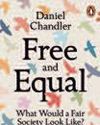
Free and Equal by Daniel Chandler
DANIEL CHANDLER, AN economist and philosopher based at the London School of Economics, begins Free and Equal: What Would a Fair Society Look Like? (2023) by asking an intriguing question. How is it, he wonders, that the most influential political philosopher of the last century has had almost no practical impact on politics or policy? The philosopher in question is John Rawls, whose magnum opus was A Theory of Justice (1971).
5 mins
April/May 2025
Listen
Translate
Change font size