
Vuélvete ilimitado con Magzter GOLD
Obtenga acceso ilimitado a más de 9000 revistas, periódicos e historias Premium por solo
Intentar ORO - Gratis
History, nature and recreation come together at D&R Canal State Park
Jersey's Best
|Summer 2023
Mules, hundreds of them, towed barges loaded with Pennsylvania coal down the Lehigh and Delaware Division canals to New Hope, Pa., then through to Lambertville and onto the Delaware & Raritan Canal, where they would head to Trenton.

Others came to the canal via Bristol, Pa., and Philadelphia, entering at Bordentown and heading to Trenton, New Brunswick and all points in between and beyond.
The trails were barren, standing in stark contrast to the forested routes now found along the 70-mile multiuse trail that makes up the Delaware and Raritan Canal State Park.
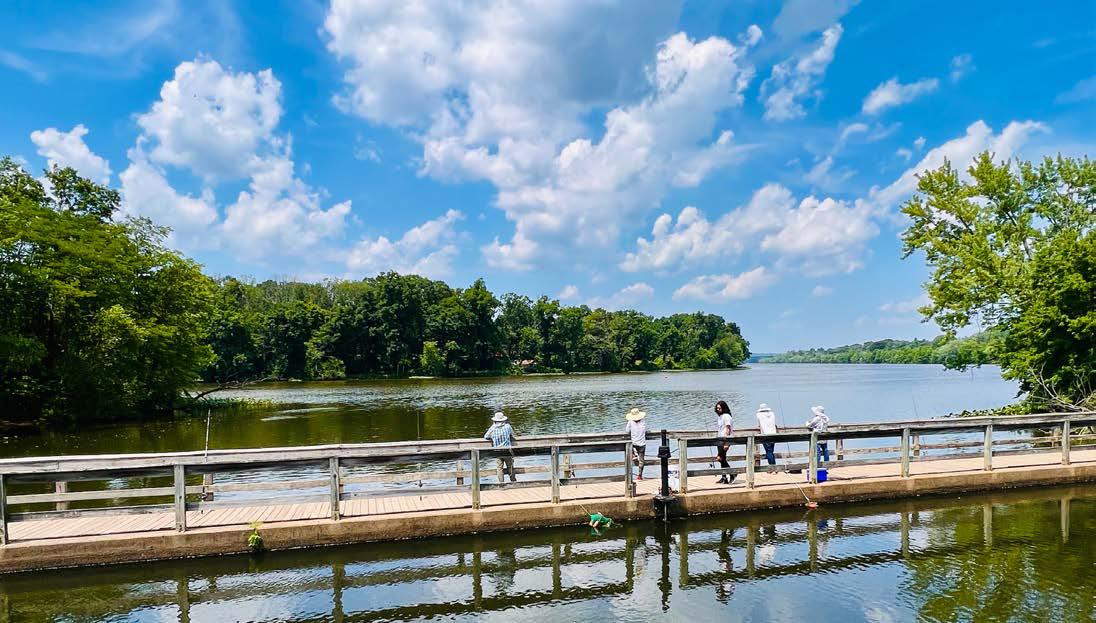
The D&R Canal opened in 1834 and provided a transportation connection between Philadelphia and New York City via the outlet locks at Bordentown and New Brunswick. From the outlet at New Brunswick, goods were transported via the Raritan River into New York City. The entire journey could take about two days, but before that transportation choices were to travel by land, or by boat via the ocean around the southern tip of the state, which could take up to two weeks, said Vicki Chirco, D&R Canal State Park resource interpretive specialist.
“The canal opened for navigation in 1834 — taking four years to construct, open and become navigable for boat traffic, but it was not officially completed until 1838,” Chirco said. “The first vessels were mule-drawn boats, which was the mainstay for a good portion of the canal’s working life. Mule-drawn boats on the canal were still being used up until World War I and perhaps lingering for some time beyond, but steam-powered vessels were also in use as early as the mid-1840s. One thing that made the canal unique was that it had open-swing bridges, so there were no height restrictions and masted vessels could use the corridor as well.”


Esta historia es de la edición Summer 2023 de Jersey's Best.
Suscríbete a Magzter GOLD para acceder a miles de historias premium seleccionadas y a más de 9000 revistas y periódicos.
¿Ya eres suscriptor? Iniciar sesión
MÁS HISTORIAS DE Jersey's Best
Jersey's Best
A Place to Be Creative in Matawan
CHASHAMA PROVIDES AFFORDABLE STUDIO SPACE TO PAINTERS, SCULPTORS AND OTHER ARTISTS

3 mins
Summer 2025

Jersey's Best
CITADELS OF COMPLETE CARE
CASTLE CONNOLLY'S 2025 TOP HOSPITALS IN NEW JERSEY HELPS DELIVER TRANSPARENCY, CREDIBILITY, AND PEACE OF MIND
3 mins
Summer 2025

Jersey's Best
A NEWARK ICON STEPS BOLDLY INTO THE FUTURE
With new exhibits, landmark restorations and a dynamic expansion, The Newark Museum of Art remains a cultural force
4 mins
Summer 2025

Jersey's Best
HEALING in MOTION
How the best in orthopaedics are keeping N.J. on its feet
5 mins
Summer 2025

Jersey's Best
HOME RUN Adventure
N.J. MOM AND SON VISIT ALL 30 MLB BALLPARK
4 mins
Summer 2025
Jersey's Best
48 hours in BRADLEY BEACH
People who know Bradley Beach love this small town by the sea.
4 mins
Summer 2025

Jersey's Best
OCEAN'S FIGHTERS
SEA TURTLES GET A SECOND CHANCE THANKS TO LOCAL HEROES
2 mins
Summer 2025
Jersey's Best
AFFORDABLE EATS: THIS N.J.POLISH DELI IS A TRUE HIDDEN GEM
AFFORDABLE EATS:
2 mins
Summer 2025

Jersey's Best
HOW A HI-TIDE RECORDINGS SURF MUSIC POWERHOUSE
SURFACED IN THE HEART OF FREEHOLD
4 mins
Summer 2025

Jersey's Best
backyard bliss
Tips for a dream outdoor oasis
3 mins
Summer 2025
Translate
Change font size