
Vuélvete ilimitado con Magzter GOLD
Obtenga acceso ilimitado a más de 9000 revistas, periódicos e historias Premium por solo
Intentar ORO - Gratis
The stuff of salvation
Country Life UK
|November 29, 2023
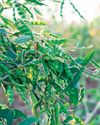
Forever wed to onion for a tasty stuffing, the versatile sage leaf was also once used to wash 'the secret parts of man or woman'

THE Holy Roman Emperor Charlemagne, whose domains spanned Frankish, Lombard and Papal lands across central and southern Europe from the Baltic to the Mediterranean, decreed that everyone should grow sage. But the mighty medieval potentate was not thinking of enhanced food. He was acknowledging the huge reputation of the herb as a singular treatment for almost any ailment, accepting and projecting the wisdom of ancient Greek writers and the veneration placed upon it in classical Rome.
Believed to have emanated from the Balkan peninsula, sage was welcomed in ancient Egypt as an aid to fertility. Classical culture valued it as a digestive agent and meat preservative with the ability to mask the flavour when the eat-by date had obviously passed, but it was more appreciated for medicinal purposes, the Greek philosopher Hippocrates commending it with the declaration ‘let your food be your medicine and your medicine be your food’. The Greeks used its leaves to stem external bleeding, drank sage tea to treat ulcers, enhance the memory and ease sore throats, as well as crushing sage for toothpaste.
The Romans shared these values, used sage as a diuretic and local anaesthetic, regarded it as a ‘holy herb’ and employed it in ceremonial rituals to improve harvests. They carried it with them when colonising western Europe and so brought it with them to Britain, where its virtues became widely esteemed. As Charlemagne was expounding its merits across the Continent with papal approval, so every monastery founded in this country established gardens wherein sage was planted, the most important of 16 herbs deemed to be essential to the health and wellbeing of monks and populace alike in the treatment of fevers, liver complaints, epilepsy, throat infections and the curing of warts. The Latin name

Esta historia es de la edición November 29, 2023 de Country Life UK.
Suscríbete a Magzter GOLD para acceder a miles de historias premium seleccionadas y a más de 9000 revistas y periódicos.
¿Ya eres suscriptor? Iniciar sesión
MÁS HISTORIAS DE Country Life UK
Country Life UK
Opposites can attract
As a big bookcase designed by Peter Waals proves large pieces of furniture can do well, a notable collection shows harmony can be born from difference

3 mins
June 03, 2026
Country Life UK
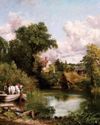
His green and pleasant land
Few artists travelled as little as John Constable, but his deep knowledge of the parts of England he loved gave him insights that others missed. Susan Owens explores the places that delighted him
6 mins
June 03, 2026
Country Life UK
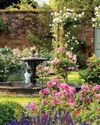
Dreaming of roses
A thousand English roses now bloom in the restored walled garden that forms the heart of this 27-acre estate, writes Charles Quest-Ritson
4 mins
June 03, 2026

Country Life UK
Ring for peace
A COPIOUS quantity of apple strudel became the unintended consequence of a winter walking holiday in the Austrian Tyrol.
2 mins
June 03, 2026
Country Life UK
Best of the pests
Pity the feral pigeon: long campaigned against as an urban nuisance, it is the descendant of birds lured into human service, some of which distinguished themselves in wartime
3 mins
June 03, 2026
Country Life UK
Red alert
The time is ripe for tomatoes in every form. We are days into British Tomato Fortnight (June 1–14) and weeks from Royal Ascot (June 16–20), where Bright Tomato has been declared the inaugural Colour of the Year by Ascot creative director Daniel Fletcher.
1 mins
June 03, 2026
Country Life UK
Totally tropical
I FIRST grew pineapple guava, also called feijoa (Acca or Feijoa sellowiana) almost a quarter of a century ago, when there were few nurseries stocking them.
3 mins
June 03, 2026
Country Life UK
Brewed awakening: where London learnt to talk
Rupert Clague explores how caffeine-fuelled conversation in Hanoverian London’s ‘penny universities’ helped shape the modern world—and where that same spirit still lingers today
5 mins
June 03, 2026

Country Life UK
The legacy Percy Shaw and cat's eyes
BEHIND the retina in a cat’s eyes lurks the tapetum lucidum, a layer of tissue that acts as a mirror, or a retroreflector, and allows the animal to see in the dark.
1 mins
June 03, 2026
Country Life UK
Britain is told to spill the beans
HOME-GROWN legumes have a vital role to play in strengthening national food security and reducing the UK's increasing reliance on imported food, the audience heard at last month's UK Legume Research Community Conference, held at the James Hutton Institute in Invergowrie, Perthshire.
2 mins
June 03, 2026
Translate
Change font size