Intentar ORO - Gratis
The pride of the peacock
Country Life UK
|June 07, 2023
Graceful peafowl have never been shy about coming forward, although most of us admire the males’ flamboyant tail feathers–long a vibrant and striking motif–far more than their grating cries,

WITH the imperious upturned head and rustling walk of an Edwardian dowager duchess, the peacock is the very emblem of elegant rural existence. The bird’s exotic radiance fits as reassuringly into a world of croquet lawns, terraces, topiary and ha-has as the russet feathers of other long-ago imported gamebirds do in our meadows and copses. Yet, although we have grown accustomed to its presence, the peacock retains an air of exclusivity. It is a polished, ornamented and expensive version of its cousin the pheasant —the limousine of the avian kingdom.
The peacock’s journey from its native India to the grounds of the British country house was long and convoluted. It started, perhaps, with Alexander the Great. When the Macedonian king first saw peacocks on the banks of the River Ravi in the Punjab, he was so astonished by their iridescent beauty he thought they must be divine and—as he was descended from a God himself—some sort of distant relation. Alexander ordered the birds protected and sent some back to Greece.
Although Phoenician traders probably brought peacocks to Europe some 600 years before Alexander, it was the charismatic conqueror who popularised them. His tutor Aristotle also played his part in the peacock’s voyage to our shores. The great philosopher conceived the idea that the peafowl’s flesh did not corrupt after death. This misplaced belief led to the bird being associated with immortality and the resurrection. As a consequence, it became an early symbol of Christianity. The catacombs of Rome were decorated with images of peacock feathers. Word of the bird spread as missionaries travelled westward.

Esta historia es de la edición June 07, 2023 de Country Life UK.
Suscríbete a Magzter GOLD para acceder a miles de historias premium seleccionadas y a más de 9000 revistas y periódicos.
¿Ya eres suscriptor? Iniciar sesión
MÁS HISTORIAS DE Country Life UK
Country Life UK
Making up lost ground
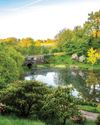
The gardens of Wootton Hall, Staffordshire The home of Johnny and Laura Greenall This woodland garden is one of the most ambitious and successful made this century

5 mins
April 29, 2026
Country Life UK
All hail the 'glory of Britain'
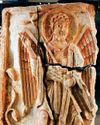
Offa: King of the Mercians Rory Naismith (Yale, £30)
6 mins
April 29, 2026

Country Life UK
Burnt butter, miso and watercress columns of Pompeii
Kitchen garden cook Watercress
1 min
April 29, 2026
Country Life UK
Childhood lost and found
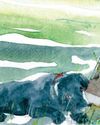
When he stumbles across a box of Nature books in the attic on a bright April morning, John Lewis-Stempel is transported from a donkey-identification hunt to a land of long ago and far away
4 mins
April 29, 2026

Country Life UK
Wild arts run free
A new, sustainable, small opera company is sweeping through our country-house gardens. Ysenda Maxtone-Graham reports
3 mins
April 29, 2026
Country Life UK
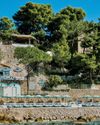
Le Sirenuse Mare, Italy
It was here, in Positano, that Hercules lost his heart to a nymph called Amalfi and where the very concept of la dolce vita was born.
1 mins
April 29, 2026
Country Life UK
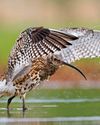
'Gold bubbles rising into sky'
A wader with a haunting call, the enigmatic curlew has inspired both gloom and life-affirming joy in the hearts of some of our greatest writers
5 mins
April 29, 2026
Country Life UK
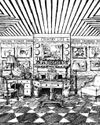
A garden lover's library
George Saumarez Smith reveals his design for COUNTRY LIFE's stand at this year's RHS Chelsea Flower Show, which embodies his passions for architecture, drawing and books, and his fiancée Jane Kennerley's love of plants
5 mins
April 29, 2026

Country Life UK
A study in history
JAMES NASON and his son Edward read at the table of the new library at Pitchford Hall. This striking Gothic interior was created in Shropshire with the help of the Kennedy family at nearby Acton Round Hall and a company of talented cabinetmakers.
1 min
April 29, 2026
Country Life UK
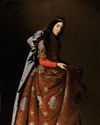
A leap in the dark
Francisco de Zurbarán captured the intense spirituality of Counter-Reformation Spain in highly charged paintings moulded by the contrast of light and shadow, often using tenebrism to almost shocking effect
7 mins
April 29, 2026
Translate
Change font size