
Vuélvete ilimitado con Magzter GOLD
Obtenga acceso ilimitado a más de 9000 revistas, periódicos e historias Premium por solo
Intentar ORO - Gratis
Understanding MCU Timing
Circuit Cellar
|December 2025
What Actually Happens Inside That Chip?
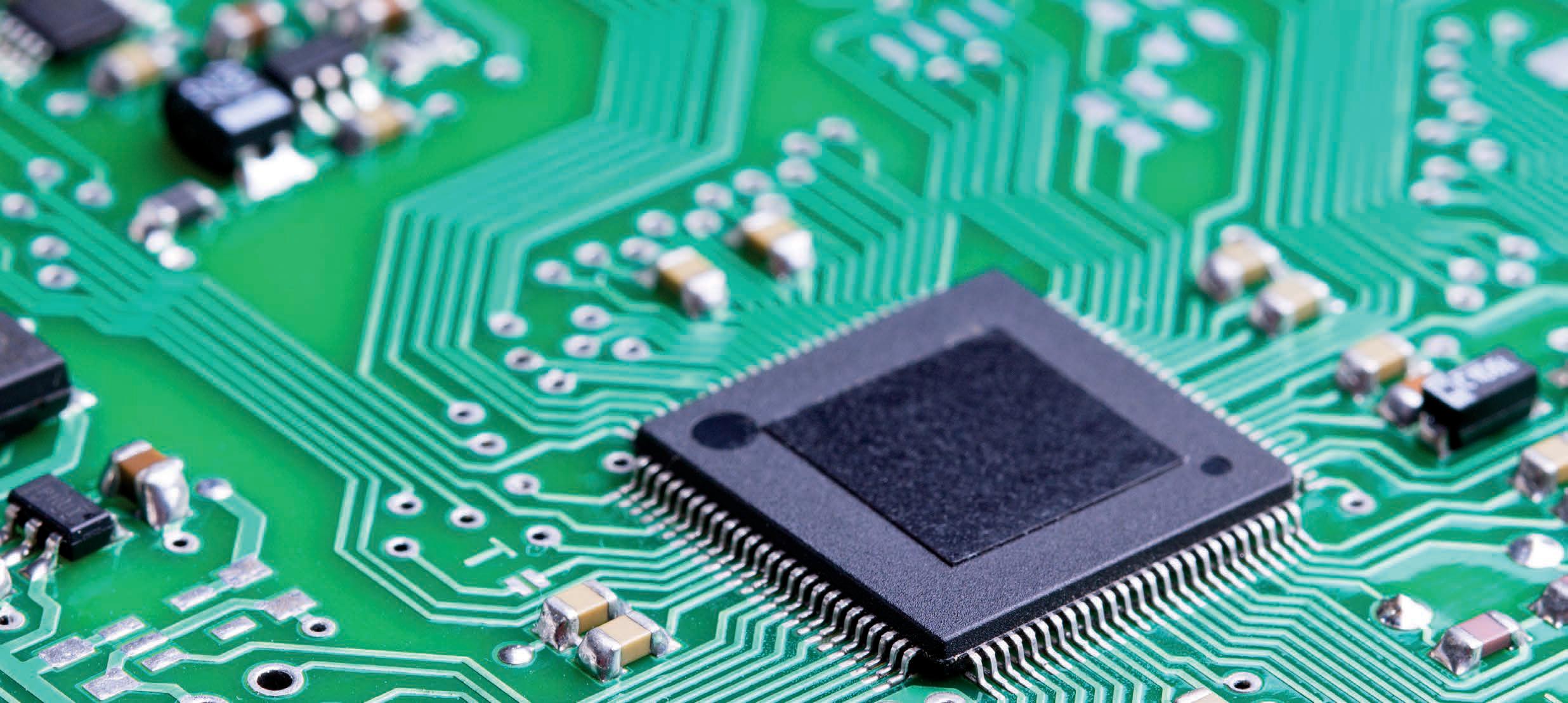
What happens between your source code and the low-level machine code in your MCU is not usually obvious. In this article, Stuart investigates that disconnect.
Most of the time when we work with an MCU, we design the hardware, write and debug the software, and then we're done. Long ago, when I started out in this industry, it wasn't uncommon to use assembly language. I wrote assembly code for both MCU and DSP designs. But it didn't take long for languages like C and C++ to replace assembly. Higher level languages provide a lot of benefits: type checking, memory management, simpler code, code that's easier to maintain, and at least some abstraction from the underlying hardware. There are C and C++ compilers for most MCUs, both free tools from the manufacturers and commercially available tools. But one thing you give up with a higher-level language is a connection between the source code and the related timing.
When I was in college, many years ago, I took about every programming course available, including COBOL (that tells you how far back that was, assuming you're old enough to even know what COBOL was). We were programming on an IBM 360 mainframe computer, and I discovered there was a compiler switch that would show you the underlying assembly code generated by the compiler. The printout (no interactive terminals, at least not for this class) would show you the line of COBOL code and then the underlying assembler statements. COBOL provides a high level of abstraction, so a single COBOL statement can produce many lines of assembly code. I turned in an assignment that way; what would have been a single page of COBOL statements was many pages of assembly code. The grader gave me 100 on the assignment but added a note: “Don’t ever do this again.” At that age, I thought it was humorous. The grader obviously did not.

Esta historia es de la edición December 2025 de Circuit Cellar.
Suscríbete a Magzter GOLD para acceder a miles de historias premium seleccionadas y a más de 9000 revistas y periódicos.
¿Ya eres suscriptor? Iniciar sesión
MÁS HISTORIAS DE Circuit Cellar

Circuit Cellar
Sensors: From Canned Tuna to Caviar
In the first installment of a new Circuit Cellar column on sensors, Brian Chee looks at how sensors figure into larger application packages and when can be the perfect solution.

10 mins
February 2026

Circuit Cellar
Bosch Sensortec Launches BMI423 Inertial Measurement Unit
Smart wearables are always on the move-and so is their sensing technology. Bosch Sensortec introduced the BMI423, a new-generation Inertial Measurement Unit (IMU) that combines extended measurement range with low power consumption.
1 mins
February 2026

Circuit Cellar
Renesas Releases its First Wi-Fi 6 and Wi-Fi/Bluetooth LE Combo MCUs for IoT and Connected Home Applications
Renesas Electronics Corp., a premier supplier of advanced semiconductor solutions, has introduced the RA6W1 dual-band Wi-Fi 6 wireless microcontroller (MCU), along with the RA6W2 MCU that integrates both Wi-Fi 6 and Bluetooth Low Energy (LE) technologies.
1 mins
February 2026

Circuit Cellar
Airborne Embedded Software: Simplifying Safety and Security
With modern airborne systems no longer isolated computing environments, any vulnerabilities introduced into these increasingly connected devices can quickly become much more than just a cybersecurity issue, but a safety risk no one can afford.
4 mins
February 2026

Circuit Cellar
Wearable LIDAR Spatial Audio Navigator for Visually-Impaired Individuals
Built with a Raspberry Pi Pico, a TF-Luna LiDAR Sensor, and a Hand-Held Potentiometer
13 mins
February 2026

Circuit Cellar
ADRs: The Missing Memory in Embedded Projects
Remembering and communicating why design decisions were made and the reasons behind their particular implementations can be critical when it comes to developing software as a team and maintaing that software in the future. This time Jacob shares his thoughts on and experience with one of the most valuable tools to extend the reach of software development memories.
9 mins
February 2026

Circuit Cellar
Sensors: From Canned Tuna to Caviar
In the first installment of a new Circuit Cellar column on sensors, Brian Chee looks at how sensors figure into larger application packages and when \"just enough sensors\" can be the perfect solution.
10 mins
February 2026
Circuit Cellar
Embedded DSP with the RT1010 MCU
Part 2: Delay, Flanger, IIR, and Overdrive
15 mins
February 2026
Circuit Cellar
Omnion Power Provides Modular, Scalable DC Power System Monitoring and Control with New Pulsar 200 Controller
Omnion Power is helping to redefine the role of the DC power system controller with its next-generation Pulsar 200 platform.
1 mins
February 2026

Circuit Cellar
Robot Operating System 2 (ROS 2): Core Concepts, Architecture, and Real-World Capabilities
The Robot Operating System 2 (ROS 2) is an open-source, middleware framework that addresses the communication and coordination challenges inherent in modern, distributed robotic systems. In this article, Pedro details how ROS 2's architectural foundations successfully address the core limitations of its predecessor, ROS 1, using real-world scenarios, and steps for setting up the ROS 2 Foxy environment on Ubuntu Linux distro, and cross-platform communication between a host PC and a Raspberry Pi module.
14 mins
February 2026
Listen
Translate
Change font size