
Vuélvete ilimitado con Magzter GOLD
Obtenga acceso ilimitado a más de 9000 revistas, periódicos e historias Premium por solo
Intentar ORO - Gratis
NXP MCX MCUs and IDEs Cut Development Time
Circuit Cellar
|February 2025
Development boards, such as NXP's FRDM platform for MCX A series MCUs, are revolutionizing embedded systems by integrating components for prototyping and innovation in the IoT landscape. These technologies streamline development, enhance flexibility, and reduce costs, enabling greater focus on software development while addressing complex challenges.
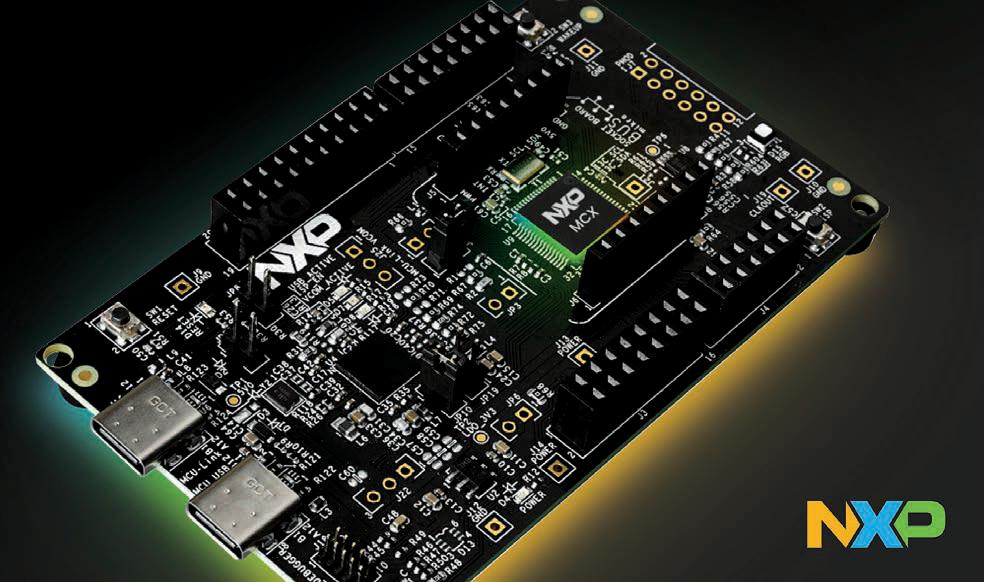
Development boards are an integral part of developing and testing for embedded systems. As more devices in industrial facilities, the home, and buildings become connected to the Internet of Things (IoT), the need for streamlined and cost-efficient ways to design and innovate new technology has skyrocketed.
It is no secret that spending time testing connections on a breadboard, or worse, soldering, could cause massive headaches and undue stress when a developer's time could be better spent coding. Electronics development has evolved significantly, from the complexities of single-board computers to the user-friendly convenience of development boards. Development boards have integrated essential components like microcontrollers, power supplies, and pre-programmed functionalities onto a single, compact platform. This shift has democratized electronics development, making it faster, more affordable, and easier for a wider range of creators to learn. To further boost developer efficiency, NXP's FRDM development boards [1] as shown in Figure 1 come with an MCX MCU, a standard form factor and headers, easy access to the MCU's I/Os, and an on-board debugger, which makes it ready to use.
NXP's MCX portfolio, which includes the MCX A series, is part of the MCUXpresso Developer Experience and has many ready-to-use tools for engineers, such as its MCUXpresso IDE. NXP's enhanced FRDM boards allow for faster prototyping while also offering flexibility and scalability, not just from MCX A microcontrollers but across the entire MCX portfolio.
DEVELOPER CHALLENGES

Esta historia es de la edición February 2025 de Circuit Cellar.
Suscríbete a Magzter GOLD para acceder a miles de historias premium seleccionadas y a más de 9000 revistas y periódicos.
¿Ya eres suscriptor? Iniciar sesión
MÁS HISTORIAS DE Circuit Cellar
Circuit Cellar
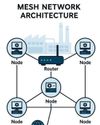
Mesh for Embedded Control
Mesh Networks Are Rewiring Embedded Systems

11 mins
March 2026

Circuit Cellar
A System That Detects, Tracks, and Deters Deer
Using Computer Vision, an Arduino, and a Raspberry Pi 5
14 mins
March 2026

Circuit Cellar
Analog Meets Digital
Part 4: Eliminating Mains Interference with an ADC
19 mins
March 2026

Circuit Cellar
Datasheet: Linux-Based SBCs
SBCs Running Linux Bring Enterprise Power to the Network's Edge
8 mins
March 2026
Circuit Cellar
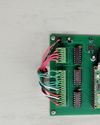
Running Model Trains Without Human Input
A Raspberry Pi Pico Controls Two Trains
9 mins
March 2026

Circuit Cellar
Inside the Tech: E-Bikes Explained
The Future of Product Developement Nature
5 mins
March 2026

Circuit Cellar
Connector Requirements for High-Voltage Healthcare Applications
Simplifying Safety and Security
9 mins
March 2026
Circuit Cellar
PIC32CM PL10 MCUs Expand Microchip's ARM Cortex-MO+ Portfolio
Building on decades of experience, Microchip Technology has added PIC32CM PL10 MCUs to its PIC32C family of ARM Cortex-M0+ core devices. PL10 MCUs feature a rich set of Core Independent Peripherals (CIPs), 5V operation, touch capabilities, integrated toolsets and safety compliance.
1 mins
March 2026

Circuit Cellar
From Buffer Overflows to Control Flow Attacks
This article extends the January 2026 article by showing a buffer overflow attack that changes a return value. I also discuss the use of the GCC stack protection feature, and demonstrate that it's not always a bulletproof protection method, even if it is better than doing nothing.
7 mins
March 2026
Circuit Cellar
Another Matter-Enabled MCU: the ESP32-C6
The list of MCUs that support the Matter protocol continues to get longer. In this column, Brian goes in-depth on one of the newer Matter-enabled MCUs and shows just how it compares to some of the alternatives now on the market.
21 mins
March 2026
Listen
Translate
Change font size