
Vuélvete ilimitado con Magzter GOLD
Obtenga acceso ilimitado a más de 9000 revistas, periódicos e historias Premium por solo
Fill AI with Computer Vision - On the Leading Edge of Adoption in Industrial IoT
Circuit Cellar
|September 2024
In just about any factory, production lines hum along like a symphonic orchestra. However, makers of artificial intelligence hardware are pushing transformative technology with mind-boggling productivity gains to unlock unrealized potential. Just how fast will AI seamlessly integrate into the means of production?

When a company like Nvidia invests heavily in the Industrial Internet of Things market like it has with the introduction of the Jetson brand of embedded processors, it turns a lot of people's heads. But will the company have the same type of impact it has had on industrial automation that it has on the datacenter universe by offering endless amounts of GPU horsepower to tackle the inferencing, machine language and computer vision applications installed on assembly lines? The smart money says eventually but it will take a while.
Nvidia has tried to demonstrate its commitment to the industrial embedded market and one of its goals is to revolutionize edge processing tasks for Artificial Intelligence in factories to make assembly lines more productive through improved quality control, predictive maintenance, autonomous vehicle operation and visual inspection among other things. Some industry watchers say generative AI is now gaining momentum in the industrial automation space.
But can you just imagine how Nvidia's overtures are going over with the people who operate assembly lines? Anecdotal evidence supports the theory that manufacturing technology adoption for industrial users occurs at a much slower pace than it does for datacenter users. Factory tech personnel eschew pie-in-the-sky productivity promises that leading-edge technology offers because they place more weight on safety, security, reliability and 24-hour uptime. New technology is often perceived as unnecessarily disruptive in a manufacturing environment, and it poses risk to the continuous flow of operations because it introduces challenges.
A deeper dive into the innovative technology that IIOT providers are promising for factories reveals some of the end-user benefits that may stir demand. Perhaps a small handful of industries will adopt the latest and greatest as soon as they are available, but every environment is different and so actual results may vary.
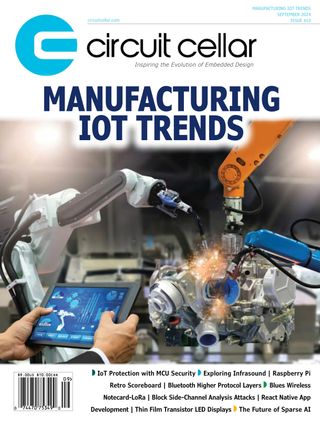

Esta historia es de la edición September 2024 de Circuit Cellar.
Suscríbete a Magzter GOLD para acceder a miles de historias premium seleccionadas y a más de 9000 revistas y periódicos.
¿Ya eres suscriptor? Iniciar sesión
MÁS HISTORIAS DE Circuit Cellar
Circuit Cellar
The Future of Sensors in Safety Systems Sensing the Stop
How Magnetic Sensors Are Enabling the Next Generation of Braking Systems

5 mins
December 2025
Circuit Cellar
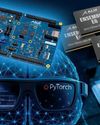
Alif Semiconductor Elevates Generative AI at the Edge with New Support for ExecuTorch Runtime in Its Ensemble MCUs
Alif Semiconductor, the leading global supplier of secure, connected, power efficient Artificial Intelligence and Machine Learning (AI/ML) microcontrollers (MCUs) and fusion processors, announced that developers can now use the ExecuTorch Runtime, a quantization extension of the popular PyTorch ML framework, for AI applications built to run on its Ensemble E4/E6/E8 series of MCUs and fusion processors.
1 min
December 2025

Circuit Cellar
Encrypted MQTT Protocol for Critical Sectors
Mechanisms, Challenges, and Best Practices
3 mins
December 2025

Circuit Cellar
Datasheet: Small Size, Big Power
Smaller Microcontrollers Bring New Possibilities
9 mins
December 2025

Circuit Cellar
Analog Devices Launches ADI Power Studio and New Web-Based Tools
Analog Devices, Inc. (ADI), a global semiconductor leader, announced the launch of ADI Power Studio, a comprehensive family of products that offers advanced modeling, component recommendations, and efficiency analysis with simulation.
1 mins
December 2025
Circuit Cellar
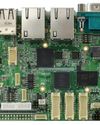
Compact IBR300 2.5" SBC Powered by NXP i.MX 93 from IBASE
IBASE Technology, Inc., a leading provider of rugged embedded computing platforms, announced the release of the IBR300, a 2.5\" RISC-based single board computer (SBC) powered by the NXP i.MX 93 processor with dualcore ARM Cortex-A55 (up to 1.7GHz) and a Cortex-M33 MCU.
1 min
December 2025
Circuit Cellar
Sensors in the Spotlight
The Next Decade of Embedded Sensor Systems
12 mins
December 2025

Circuit Cellar
Bob's Wrap Up
In Bob's last article with Circuit Cellar, he attempts to wrap up a career of more than 50 years as an embedded systems engineer and 14 years with Circuit Cellar. He looks at each of his 58 articles by category and provides some recommendations for his fellow engineers.
7 mins
December 2025

Circuit Cellar
Designing Embedded Software Architectures That Last
I've reviewed hundreds of firmware projects over the years, and one thing always stands out: the most successful projects have a clear, deliberate architecture.
10 mins
December 2025

Circuit Cellar
Broadcom Introduces Industry's First Wi-Fi 8 Silicon Ecosystem Powering the AI Era
Broadcom, Inc. unveiled the first Wi-Fi 8 silicon solutions for broadband wireless, targeting residential gateways, enterprise access points, and smart mobile clients.
1 mins
December 2025
Listen
Translate
Change font size