Intentar ORO - Gratis
Swings and Roundabouts
BBC History UK
|July 2025
We all have childhood memories of playgrounds. But what does the evolution of outdoor play in Britain tell us about the experience of being young over the past 200 years? Jon Winder serves up a history of sandpits, bombsites and battles with cars
-
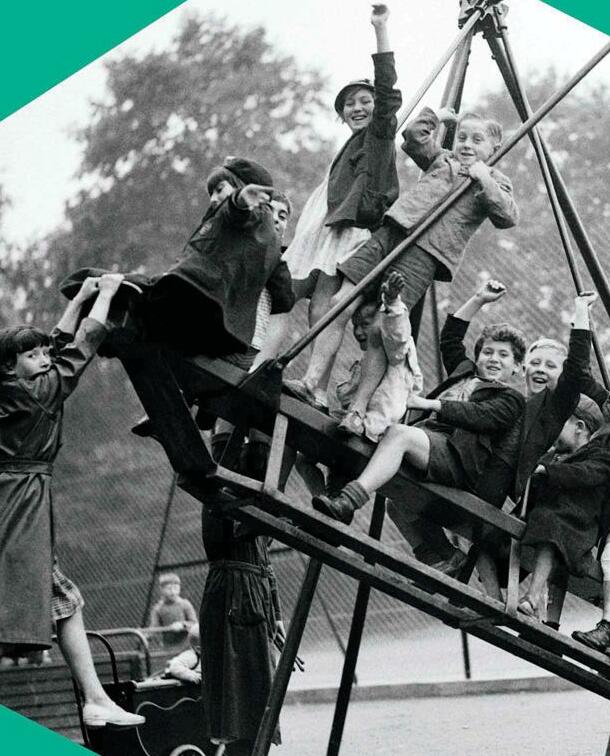
As the guests dined on seasonal delicacies and fine wines, Dickens gave an impassioned plea on behalf of the Playground and Recreation Society, an organisation that had been established just a few months earlier with the express aim of providing “playgrounds for poor children in populous places”. To the accompaniment of music laid on by the band of the 1st Life Guards, the celebrated author extolled the benefits that having a “playground near to their own dwellings where they knew their children would be safe” conferred on parents.
“I venture to assert that there can be no physical health without play; and there can be no efficient and satisfactory work without play; that there can be no sound and wholesome thought without play,” he declared.
It was a powerful argument, and one to which Dickens’ audience evidently listened - for, by the end of the following year, the Recreation Grounds Act had made its way into law. Henceforth, local authorities across the land would be allowed to create and own playgrounds for children and young people. It marked a turning point in British children’s access to play. Or did it?
The new legislation - and Dickens’ high-profile support - could have been a Big Bang moment for the playground movement in Britain. But, despite celebrity endorsement, political backing and widespread publicity, by 1860 the Playground Society had collapsed in a heap. It had amassed considerable debts – largely from putting on extravagant fundraising dinners. More damningly still, it had failed to create a single space in which London's children could play.
The movement was hardly in full swing elsewhere, either. While dedicated play space was set aside in Salford and Manchester in the 1840s, unaccompanied children were barred from entering some city parks – notably Saltaire Park in Bradford – altogether.
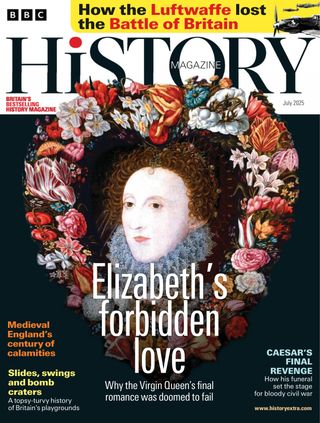

Esta historia es de la edición July 2025 de BBC History UK.
Suscríbete a Magzter GOLD para acceder a miles de historias premium seleccionadas y a más de 9000 revistas y periódicos.
¿Ya eres suscriptor? Iniciar sesión
MÁS HISTORIAS DE BBC History UK
BBC History UK
On the skids
Richard Rodgers and Oscar Hammerstein II's smash musical Oklahoma! opened on Broadway on 31 March 1943.

1 min
Christmas 2025

BBC History UK
Small pleasures
Memory is imperfect, but what if you could get a professional model maker to recreate a moment from the past?
1 min
Christmas 2025

BBC History UK
Bath in five places
In the Georgian era, Bath became arguably Britain's most fashionable destination. KIRSTEN ELLIOTT promenades five historic highlights
3 mins
Christmas 2025
BBC History UK
End times
Why do civilisations that dominated their epoch fail? In an era of autocracy, climate change, the rise of Al and a first-hand understanding of how deadly pandemics can be, it's a question that seems pertinent.
1 min
Christmas 2025
BBC History UK
What are the origins of the Yule Lads?
To learn about the Jólasveinar (Yule Lads), we must start with their mother, the terrifying ogress Grýla. Her name appeared in Icelandic texts as early as the 13th century, although it wasn’t until later that those 13 mischievous lads became associated with her. Folk tales and poems tell how she descends from the mountains with an empty sack to stuff full of children. Grýla owns the monstrous Jólaköttur (Yule Cat), which roams the countryside on Christmas Eve, searching for children to gobble up if they're not wearing new clothes.
1 mins
Christmas 2025

BBC History UK
Santa Claus v Father Christmas
The true identity of the white-bearded, red-robed figure who fills children's stockings at Christmas has long been debated. Thomas Ruys Smith sizes up the merry contenders
8 mins
Christmas 2025

BBC History UK
Frontier friction
Set in Washington Territory in 1854, The Abandons is a Western that's unusual for having two matriarchs, women whose lives become entangled, at its centre.
1 min
Christmas 2025

BBC History UK
The Last Days of Pompeii: The Immersive Experience
Delve into the culture of daily Roman life, witness the momentous eruption of Mount Vesuvius, and follow its fallout in Immerse LDN's new exhibition. In a blend of cutting-edge technology and vivid storytelling, this exhibition launches visitors into Pompeii's rich history with recreations of the ancient city's beautiful pre-eruption landscape, a 360-degree virtual reality Roman amphitheatre experience, and a digital metaverse recreating Pompeii's 'Villa of Mysteries'.
1 min
Christmas 2025
BBC History UK
Elizabeth Marsh The corsair's captive
Taken hostage by a Barbary ship's captain in the 18th century, a young Englishwoman found herself fighting for her freedom in Marrakech. ADAM NICHOLS introduces a brave captive who later wrote a book about her dramatic experiences
6 mins
Christmas 2025
BBC History UK
29 DECEMBER 1170: Thomas Becket is murdered in Canterbury
Knights loyal to Henry II rid him of the “low-born cleric”
2 mins
Christmas 2025
Listen
Translate
Change font size