Intentar ORO - Gratis
HOW TO SURVIVE THE DARK AGES
BBC History UK
|October 2022
The collapse of Roman rule in Britain left a vacuum that numerous powers competed to fill - but only a few realms endured. How did some thrive while others vanished or were vanquished? Thomas Williams offers six crucial survival tips for would-be rulers of early medieval kingdoms

1 Go big or go home
After Roman rule collapsed at the start of the fifth century, everything changed in Britain - politically, socially, culturally and economically. Migration from northern Europe and around the Irish Sea contributed to the development of new kingdoms across the island that competed for power, or just for survival, until the advent of the Vikings marked a watershed at the end of the eighth century. Some of these kingdoms - Wessex in south-west England; Mercia in the Midlands; Northumbria in the north-east; East Anglia; and Gwynedd in north-west Wales - left an enduring legacy.
Others sank with barely a trace. So what factors brought long-term success? Growth was one key strategy. It wasn't a universal prerequisite - East Anglia, for example, remained largely static in size and shape until the Viking Great Army conquered it in AD 869. But most of the big beasts of early medieval Britain were realms that pursued aggressive, expansionist policies.
Take Northumbria, itself formed from the merger of two smaller kingdoms, Bernicia and Deira. It swallowed up several near neighbours, and had a crack at others.
Mercia was the midland realm with perhaps the greatest ambitions of all particularly during the reign of Offa (ruled 757-796) and his successor Coenwulf (r796-821). In the eighth century, it controlled an empire that extended from the Welsh borders to the Wash and south to the Channel. At its height, Mercia could claim overlordship of Sussex and Ken Hwicce, Lindsey and parts of Wales.
Wessex, the south-western realm that was later the only survivor of the Viking cataclysm, entered the mid-ninth century in control of all of Britain south of the Thames.
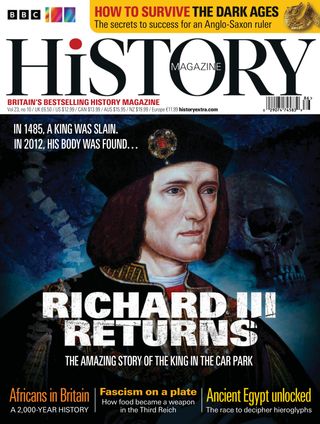

Esta historia es de la edición October 2022 de BBC History UK.
Suscríbete a Magzter GOLD para acceder a miles de historias premium seleccionadas y a más de 9000 revistas y periódicos.
¿Ya eres suscriptor? Iniciar sesión
MÁS HISTORIAS DE BBC History UK

BBC History UK
On the skids
Richard Rodgers and Oscar Hammerstein II's smash musical Oklahoma! opened on Broadway on 31 March 1943.

1 min
Christmas 2025

BBC History UK
Small pleasures
Memory is imperfect, but what if you could get a professional model maker to recreate a moment from the past?
1 min
Christmas 2025

BBC History UK
Bath in five places
In the Georgian era, Bath became arguably Britain's most fashionable destination. KIRSTEN ELLIOTT promenades five historic highlights
3 mins
Christmas 2025
BBC History UK
End times
Why do civilisations that dominated their epoch fail? In an era of autocracy, climate change, the rise of Al and a first-hand understanding of how deadly pandemics can be, it's a question that seems pertinent.
1 min
Christmas 2025
BBC History UK
What are the origins of the Yule Lads?
To learn about the Jólasveinar (Yule Lads), we must start with their mother, the terrifying ogress Grýla. Her name appeared in Icelandic texts as early as the 13th century, although it wasn’t until later that those 13 mischievous lads became associated with her. Folk tales and poems tell how she descends from the mountains with an empty sack to stuff full of children. Grýla owns the monstrous Jólaköttur (Yule Cat), which roams the countryside on Christmas Eve, searching for children to gobble up if they're not wearing new clothes.
1 mins
Christmas 2025

BBC History UK
Santa Claus v Father Christmas
The true identity of the white-bearded, red-robed figure who fills children's stockings at Christmas has long been debated. Thomas Ruys Smith sizes up the merry contenders
8 mins
Christmas 2025

BBC History UK
Frontier friction
Set in Washington Territory in 1854, The Abandons is a Western that's unusual for having two matriarchs, women whose lives become entangled, at its centre.
1 min
Christmas 2025

BBC History UK
The Last Days of Pompeii: The Immersive Experience
Delve into the culture of daily Roman life, witness the momentous eruption of Mount Vesuvius, and follow its fallout in Immerse LDN's new exhibition. In a blend of cutting-edge technology and vivid storytelling, this exhibition launches visitors into Pompeii's rich history with recreations of the ancient city's beautiful pre-eruption landscape, a 360-degree virtual reality Roman amphitheatre experience, and a digital metaverse recreating Pompeii's 'Villa of Mysteries'.
1 min
Christmas 2025

BBC History UK
Elizabeth Marsh The corsair's captive
Taken hostage by a Barbary ship's captain in the 18th century, a young Englishwoman found herself fighting for her freedom in Marrakech. ADAM NICHOLS introduces a brave captive who later wrote a book about her dramatic experiences
6 mins
Christmas 2025
BBC History UK
29 DECEMBER 1170: Thomas Becket is murdered in Canterbury
Knights loyal to Henry II rid him of the “low-born cleric”
2 mins
Christmas 2025
Translate
Change font size