Intentar ORO - Gratis
VALLEY BOY
The New Yorker
|March 16, 2026
The worlds of Paul Thomas Anderson.
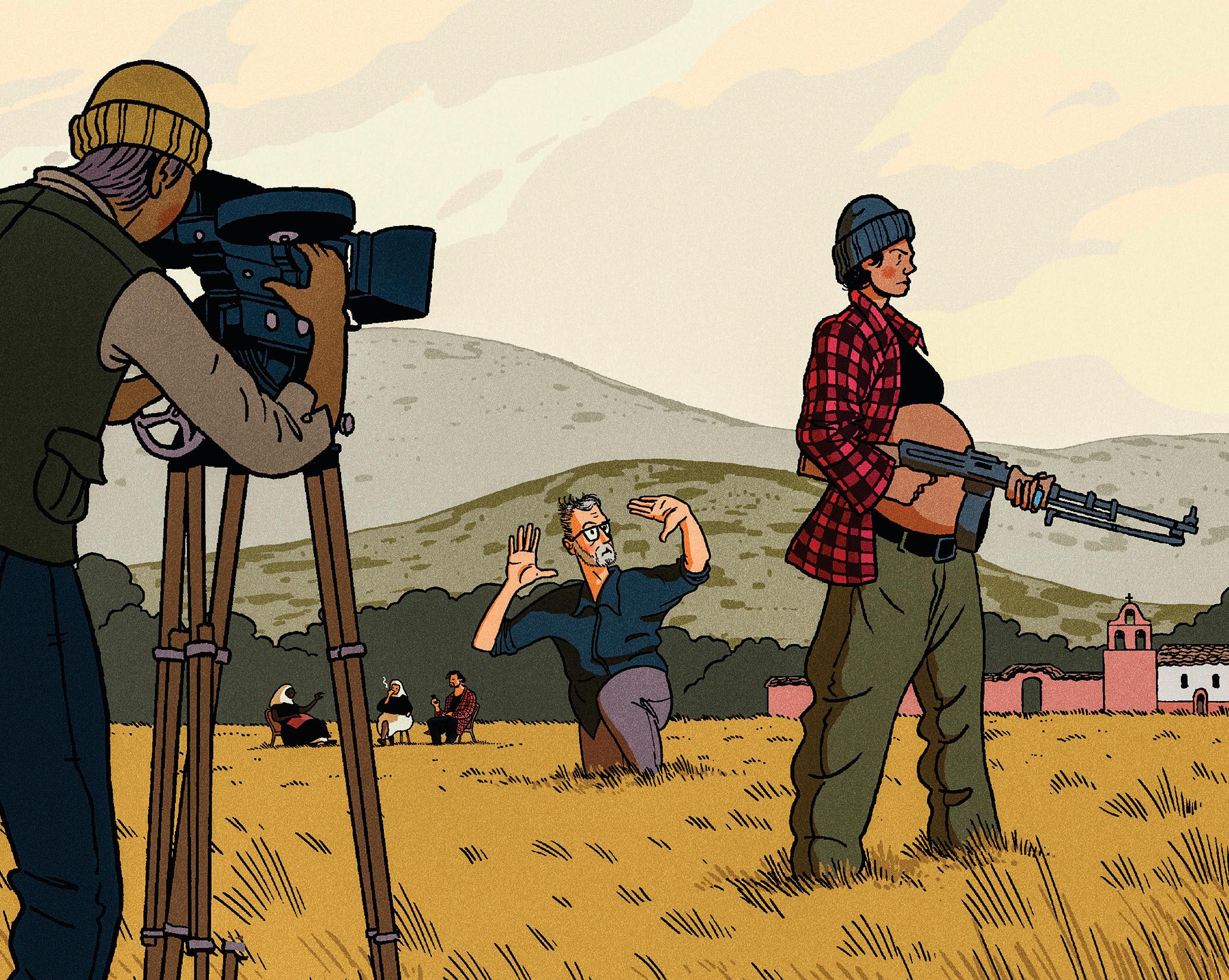
Anderson plunges us into the physical realization of experience with a thoroughness that can be unsettling.
What is the sound of a needle entering fabric?
Something more significant, it seems, than the sound of one hand clapping. You hear a tiny pop followed by the rustle of violated muslin—a shudder in the silence of the universe. Scrupulous directors make sure that the sound of their movies is grossly efficient, so that the dramatic meaning of a scene is apparent even in the worst theatre or home system in the country. They also layer in, for those who care about such things, a secondary level of sound—think of the swishing skirts in Martin Scorsese's adaptation of Edith Wharton's “The Age of Innocence.” In “Phantom Thread” (2017)—the needle-and-fabric movie—the director, Paul Thomas Anderson, uses such details to build an exquisitely perceptible epic of minute events. The film is devoted to couture in mid-fifties London, a period of heavy, draped, self-conscious luxury. The style-setter in this milieu is Reynolds Woodcock (Daniel Day-Lewis), a designer of genius who is also an infantile narcissist. Reynolds must control every aspect of his life or fall into despair. At breakfast, his working-class mistress (Vicky Krieps) audibly butters her toast, and he acts as if the day has been lost to him. Excruciation is the movie's dominant emotional mode—not pain but nerves drawn to the breaking point. The struggle between the man and woman is fierce. Anderson surprises us: Reynolds's mistress, initially passive, employs stealth and guile and becomes her master’s master.

Esta historia es de la edición March 16, 2026 de The New Yorker.
Suscríbete a Magzter GOLD para acceder a miles de historias premium seleccionadas y a más de 9000 revistas y periódicos.
¿Ya eres suscriptor? Iniciar sesión
MÁS HISTORIAS DE The New Yorker
The New Yorker
WHAT WE HOLD
The writing and meaning of the Declaration of Independence.

19 mins
May 11, 2026

The New Yorker
AMERICAN TWEEN
In some ways, the world is cooked. But being a twelve-year-old still kind of eats.
33 mins
May 11, 2026

The New Yorker
FOOLS RUSH IN
With gold prices soaring, Americans are once again heading West.
26 mins
May 11, 2026

The New Yorker
SENIOR-DISCOUNT DISNEYLAND
NOTE: You must be at least seven and a half decades old to go on these rides.
3 mins
May 11, 2026
The New Yorker
ROMAN HOLIDAY
Wolfgang Koeppen's sprawling masterpiece of postwar amnesia and hypocrisy.
13 mins
May 04, 2026

The New Yorker
THE TRICKSTER
Marcel Duchamp's belief in possibility radicalized art itself.
14 mins
May 04, 2026
The New Yorker
GROWTH NARRATIVE
The L.A. restaurant that weathered a moldy-jam scandal.
7 mins
May 04, 2026
The New Yorker
PROCESS OF ELIMINATION
Someone must have been telling lies about me because when I came in for my shift this morning, I found out I was going to be fired for stealing the tip jar.
25 mins
May 04, 2026
The New Yorker
AVA'S LIFE LIST
“I can't be sure. I don't want to cheat.”
3 mins
May 04, 2026

The New Yorker
ATTENTION MUST BE PAID
How Scott Rudin turned Laurie Metcalf into the First Lady of American Theatre.
28 mins
May 04, 2026
Listen
Translate
Change font size