
Vuélvete ilimitado con Magzter GOLD
Obtenga acceso ilimitado a más de 9000 revistas, periódicos e historias Premium por solo
Intentar ORO - Gratis
SICKENING
The New Yorker
|July 31, 2023
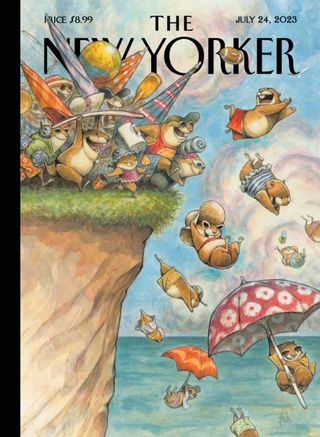
How bad is processed food?

The opposition of the raw and the cooked, to borrow from the title of Claude Lévi-Strauss’s most cited though not best-read book, seems basic to our ideas of nature and culture. A raw prawn is part of the sea; broiled, it becomes part of our art. But for Lévi-Strauss the real work was done by the third leg of his “culinary triangle”: the rotting. Spoilage, after all, is a natural tendency of food and the most urgent reason we transform nature into culture—we’re desperately trying to keep what we’re about to eat from going bad.
The line between the raw and the cooked is, to be sure, nebulous; a plate of sushi is both raw and cooked, “made,” in the cultural sense, by a knife and seaweed. Sushi is the dream of pure sensation, but herring is the normal state of life. The more consequential point is that cooked meat decays more slowly than raw; pickling and curing postpone the unpalatable end even longer. We save the world from rotting by rolling it in salt, smoking it in maple fires, preserving it in brine. Nature is always going bad, and the most immediate form of “good” that humans know is keeping that from happening. Sisyphus’ famous boulder, rolled uphill and crashing down again, is better represented in our daily lives by the nova we eat on Sunday morning’s bagel—salmon saved from spoiling by smoke and salt—with the knowledge that lox, too, has a sell-by date. Its own bagel-shaped boulder ultimately rolls back down.

Esta historia es de la edición July 31, 2023 de The New Yorker.
Suscríbete a Magzter GOLD para acceder a miles de historias premium seleccionadas y a más de 9000 revistas y periódicos.
¿Ya eres suscriptor? Iniciar sesión
MÁS HISTORIAS DE The New Yorker

The New Yorker
CONTACT SOLUTIONS
“Disclosure Day.”

6 mins
June 22, 2026

The New Yorker
BAD ROMANCE
When did white-collar work start to look so bleak?
14 mins
June 22, 2026

The New Yorker
MUTTER
I'm waiting for my mother at the airport, holding a strip of cardboard above my head that says \"MUTTER.\"
10 mins
June 22, 2026

The New Yorker
BILLIONS AND BILLIONS
The hedge-fund titan Ken Griffin beats the competition at making money—and spending it.
40 mins
June 22, 2026

The New Yorker
MISERY LOVES COMPANY
The rise of \"Admin Nights\" in pursuit of productivity.
13 mins
June 22, 2026
The New Yorker
MEET RUSS FREUD
It used to be called the Roberts Institute for Living, but everybody knew that it was the insane asylum, and that’s what people called it.
3 mins
June 22, 2026

The New Yorker
UP TO NO GOOD
The hell-raising rocker who conquered country radio.
5 mins
June 22, 2026

The New Yorker
SOUL-SEARCHING
How the American church found its followers.
12 mins
June 22, 2026
The New Yorker
FAREWELL, MY LOVELY
Gustavo Dudamel and James Conlon put down their batons in Los Angeles.
9 mins
June 22, 2026
The New Yorker
ALLIES ON ICE
How the secret plans to take over Greenland have ruptured transatlantic relations.
44 mins
June 22, 2026
Translate
Change font size