Intentar ORO - Gratis
SHOCKING THE CONSCIOUSNESS
The New Yorker
|March 06, 2023
The New Age sounds of Laraaji.

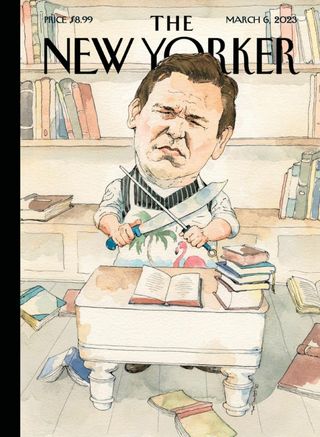
In 1969, Edward Larry Gordon—a standup comedian, part-time jazz pianist, and aspiring actor—walked into a New York City pawnshop, hoping to hock his guitar for rent money. Instead, Gordon found himself preternaturally drawn to an Autoharp, a type of zither popularized in the nineteen-forties by Mother Maybelle, of the Carter Family, and prominent in the folk revival then going on in Greenwich Village. He lugged it back to his apartment in Harlem and started tinkering, eventually prying off the chord bars (which allowed him to more easily experiment with pentatonic, modal, and minor tunings) and adding a contact pickup (which electrified the instrument). Soon, Gordon was playing the Autoharp through effects pedals, and cramming various odds and ends, including chopsticks, mallets, and pedalsteel slides, underneath the strings— a technique popularized, for piano, in the nineteen-thirties, by the experimental composer John Cage. Gordon’s Autoharp no longer sounded dainty or sweet. It was now fierce, glimmery, and extraterrestrial.

Esta historia es de la edición March 06, 2023 de The New Yorker.
Suscríbete a Magzter GOLD para acceder a miles de historias premium seleccionadas y a más de 9000 revistas y periódicos.
¿Ya eres suscriptor? Iniciar sesión
MÁS HISTORIAS DE The New Yorker
The New Yorker
DEPT. OF ETCHING
One recent weekday morning, the British painter Peter Doig arrived at a bonded warehouse—a cavernous brick building—about a mile south of the River Thames, but not subject to the import taxes of the United Kingdom.

3 mins
January 19, 2026
The New Yorker
SUBWAY VIGILANTE
Revisiting the New York shooting that defined an era
17 mins
January 19, 2026

The New Yorker
MOM AND DAD: THE PERFORMANCE REVIEW
Mom, Dad, thanks for being on time this year. Dad, I can see by your T-shirt that it was a challenge. So you've already exceeded expectations.
3 mins
January 19, 2026
The New Yorker
Patrick Radden Keefe on Truman Capote's “In Cold Blood”
In 1972, on “The Tonight Show,” Johnny Carson asked Truman Capote about capital punishment. Capote had written, in unsettling detail, about the hanging of two killers, Dale Hickock and Perry Smith. Carson said, of the death penalty, “As long as the people don't have to see it, they seem to be all for it”; if executions occurred “in the public square,” Americans might stop doing them. Capote wasn't so sure. His hands laced together professorially, he murmured, in his baby-talk drawl, “Human nature is so peculiar that, really, millions of people would watch it and get some sort of vicarious sensation.”
3 mins
January 19, 2026
The New Yorker
BOOTS ON THE GROUND
There aren't many moments in Donald Trump's political career that could be called highlights.
4 mins
January 19, 2026

The New Yorker
CALL OF THE WILD
When calamity strikes in America's busiest national park, who comes to the rescue?
35 mins
January 19, 2026
The New Yorker
UNDER THREAT
The Danes were America's most loyal ally. Now they feel targeted—and terrified.
22 mins
January 19, 2026

The New Yorker
CONTAGION
A Broadway revival of Tracy Letts's “Bug.”
6 mins
January 19, 2026

The New Yorker
ANNALS OF TECHNOLOGY: HEY THERE!
How WhatsApp took over the global conversation.
25 mins
January 19, 2026
The New Yorker
M.I.P. IN CHAINS
Whatever else you think about invading a country and capturing its President, there's no getting around the inconvenience of imprisoning Nicolás Maduro in New York City.
7 mins
January 19, 2026
Translate
Change font size