
Vuélvete ilimitado con Magzter GOLD
Obtenga acceso ilimitado a más de 9000 revistas, periódicos e historias Premium por solo
Intentar ORO - Gratis
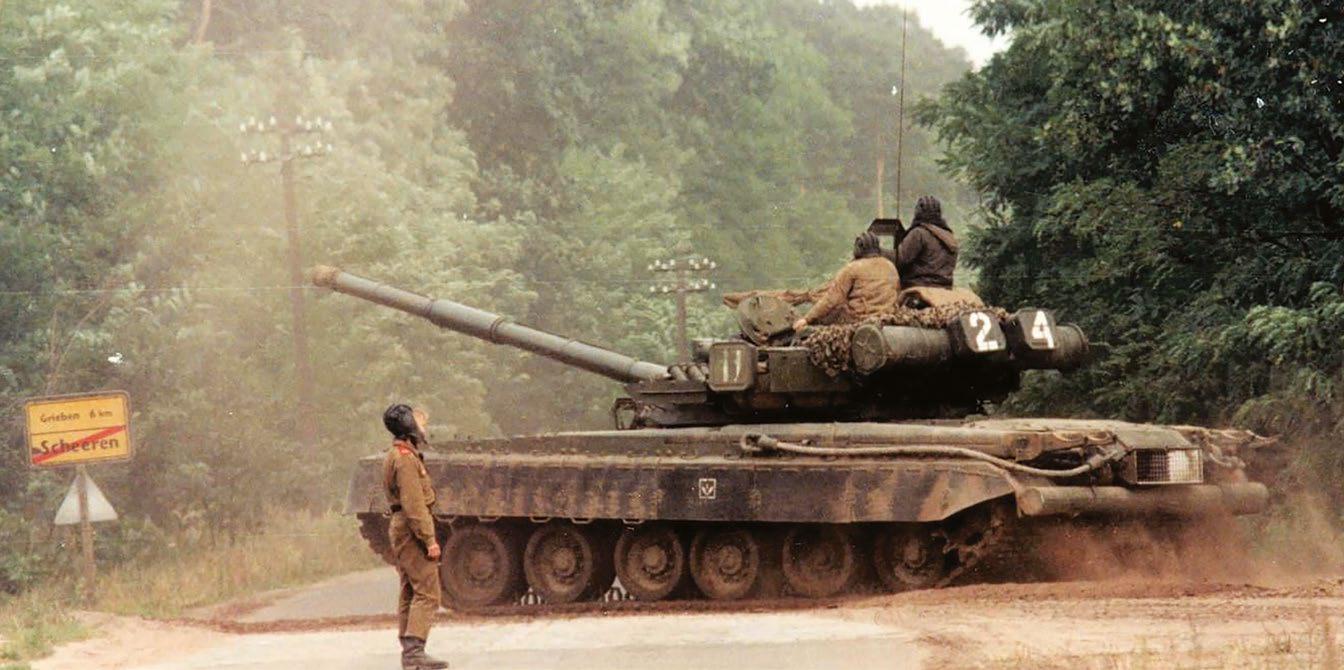
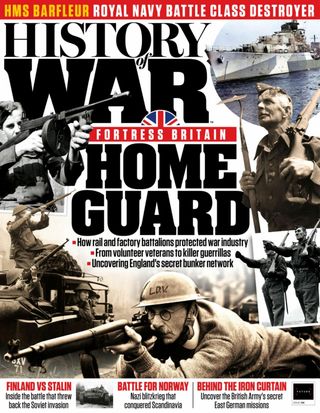
BRITS BEHIND THE IRON CURTAIN
History of War
|Issue 136
At the beginning of the Cold War, a peculiar military mission began its work officially, and unofficially, gathering intelligence inside Soviet-occupied East Germany

In September 1946, the British military government of occupied Germany, and its Soviet opposite number, signed an agreement formalising a military liaison between the two newly neighbouring powers. The idea was to create a communications channel to resolve disputes or misunderstandings which could lead to, at best, a diplomatic incident – at worst, a military confrontation. ‘Liaison’ created a pathway for the discussion of issues and resolution of disputes before they escalated out of control. The agreement, which became known as the Robertson-Malinin Agreement (RMA), created reciprocal missions in the British and Soviet zones, accredited to the respective commander-in-chief, and remained in place, unaltered, until German reunification.
The British Mission was called the British Commanders’in-Chief Mission to the Soviet Forces of Occupation in Germany – BRIXMIS, BRX, or to those who served in it, the Mission. The Soviet equivalent in the British zone of West Germany was known as SOXMIS, and similar agreements were made in 1947 with the Americans and the French, creating the US Military Liaison Mission (USMLM) and the Mission Militaire Française de Liaison (MMFL). Together with BRIXMIS, they formed the Allied Military Liaison Missions (AMLMs).
The Mission had two headquarters: a forward HQ in Potsdam, the Mission House, inside the Soviet Zone (later the German Democratic Republic); and a rear HQ, located at the Olympic Stadium in West Berlin. The only way Mission personnel could cross from West to East was via the Glienicke Bridge (the ‘Bridge of Spies’), running the gauntlet of Soviet guards and closely watched by the East German secret police, the infamous Stasi. Their opposite number in Potsdam was the Soviet External Relations Branch (SERB), staffed mainly by GRU and KGB officers.

Esta historia es de la edición Issue 136 de History of War.
Suscríbete a Magzter GOLD para acceder a miles de historias premium seleccionadas y a más de 9000 revistas y periódicos.
¿Ya eres suscriptor? Iniciar sesión
MÁS HISTORIAS DE History of War
History of War
HOW TO BUILD A SPITFIRE
AN ABSORBING TALE OF ONE MAN'S OBSESSION TO BUILD A FULL-SIZE REPLICA SPITFIRE IN HIS GARDEN JUXTAPOSED AGAINST REAL STORIES OF BUILDING SPITFIRES AND THE MEN WHO FLEW THEM

2 mins
Issue 154

History of War
THE AIRLIFT
VICTORIES, MYTHS, AND THE BERLIN BLOCKADE
3 mins
Issue 154

History of War
WITH SPANNERS DESCENDING
Discover the essential role of British Army engineers during Second World War airborne operations
1 min
Issue 154
History of War
HOMEMADE EOKA FLAG
Breaking a ban enforced during the Cyprus Emergency, this flag compared the Cypriot fight against the British Empire to the Greek War of Independence against the Ottoman Empire
1 mins
Issue 154

History of War
SPIES, LIES AND DECEPTION
Introduce your children to over a century of spying as the Imperial War Museum's exhibition on espionage comes to Manchester
1 mins
Issue 154
History of War
DESERT DAREDEVIL
Scientist, explorer and a pioneer of special forces warfare – Ralph Bagnold was responsible for creating a crack unit during WWII
9 mins
Issue 154
History of War
OBJECTS IN FOCUS: VE/VJ DAY
The Royal Armouries Museum's new display commemorates the individuals and weapons who fought in the Pacific during WWII's final months
1 min
Issue 154
History of War
1945 - THE RECKONING WAR, EMPIRE AND THE STRUGGLE FOR A NEW WORLD
THIS EXAMINATION OF WHAT THE END OF WWII MEANT FOR THE BRITISH, DUTCH AND FRENCH EMPIRES POSES SOME UNCOMFORTABLE QUESTIONS
2 mins
Issue 154
History of War
POINTE DU HOC
During D-Day's toughest mission, US Rangers stormed an artillery position between Omaha and Utah beaches, before holding out against two nights of counterattacks
10 mins
Issue 154
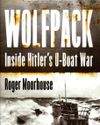
History of War
WOLFPACK- INSIDE HITLER'S U-BOAT WAR
GET A TASTE OF THE FEAR, TENSION AND 'DEATH OR GLORY' LIFE OF GERMANY'S SUBMARINE CREWS
1 min
Issue 154
Listen
Translate
Change font size