
Vuélvete ilimitado con Magzter GOLD
Obtenga acceso ilimitado a más de 9000 revistas, periódicos e historias Premium por solo
Intentar ORO - Gratis
A LIFE LIVED ON PAPER
Best of British
|August 2023
Chris Hallam turns the pages on the story of literary superstar Martin Amis
-

All writers, it can be assumed, secretly fantasise about achieving what perhaps might be seen as a form of literary immortality: the dream of seeing their work continuing to be read long after their death.
Not so Kingsley Amis. Like his son, Martin, Kingsley was a celebrated and successful author, but always denied having any interest in what happened to his own books in the future. According to Martin: “My father used to say he didn’t care at all about posterity as he wouldn’t be around to enjoy its good opinion. ‘It’s no bloody use is it to me!’ he’d say.” But Martin, for one, didn’t believe him. “All that matters [to writers] is whether you’re read after you’re dead,” he said in 1996. “And it keeps writers honest, because it’s this big important question and they know they’ll never get a glimpse of it.”
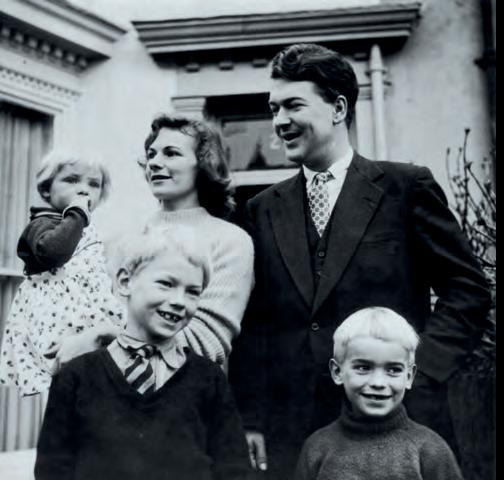
We do not know whether Martin Amis, who died in May at the age of 73, will still be read long into the future. All that can be said for certain is that books such as The Rachel Papers (1973), Success (1978), Money (1984), London Fields (1989) and Time’s Arrow (1991) ensured he became one of the best known and successful British novelists of the late 20th and early 21st centuries. He became a literary superstar, “the Mick Jagger of literature” according to his friend Ian McEwan, and the coolest of a bunch of new, young writers who emerged in the 1970s, a gang who included Christopher Hitchens, Salman Rushdie, Julian Barnes and McEwan himself.

Esta historia es de la edición August 2023 de Best of British.
Suscríbete a Magzter GOLD para acceder a miles de historias premium seleccionadas y a más de 9000 revistas y periódicos.
¿Ya eres suscriptor? Iniciar sesión
MÁS HISTORIAS DE Best of British
Best of British
The Medway Queen Club
Richard Halton recalls a little ship of Dunkirk's time as a nightclub

6 mins
May 2026

Best of British
Red Giant
Chris Hallam pays tribute to a co-creator of Red Dwarf
5 mins
May 2026
Best of British
Freddie in the Overworld
Philip and David Williams investigate Freddie Garrity's life beyond the Dreamers
5 mins
May 2026
Best of British
Looking Back (in Anger)
Colin Mayo celebrates the 70th anniversary of John Osborne's groundbreaking play
5 mins
May 2026

Best of British
BACK INSIDE THE TARDIS
Oliver Crocker travels back in time to explore the 1996 Doctor Who TV movie
12 mins
May 2026
Best of British
Spymaster
Chris Hallam pays tribute to spy writer and cookery expert Len Deighton
5 mins
May 2026
Best of British
BACK IN TIME WITH COLIN BAKER
BoB's very own Time Lord recalls corpsing in front of an audience of one, and how his return to Doctor Who on TV was a heartening experience
2 mins
May 2026

Best of British
RAINING CHAMPIONS
The nearest I get to watching the Eurovision Song Contest these days is pointing the remote control at the screen to change channels the moment I hear the opening notes of Te Deum.
1 mins
May 2026
Best of British
Better Than the Captain's Table
Simon Stabler visits a pair of Brighton dining favourites
2 mins
May 2026
Best of British
The Great Exhibition
Michael Montagu celebrates the beginning of the Crystal Palace and draws on his family's accounts of its destruction
9 mins
May 2026
Translate
Change font size