Intentar ORO - Gratis
Birds of a Feather
Archaeology
|July/August 2025
Intriguing rock art in the Four Corners reveals how the Basketmaker people drew inspiration from ducks 1,500 years ago
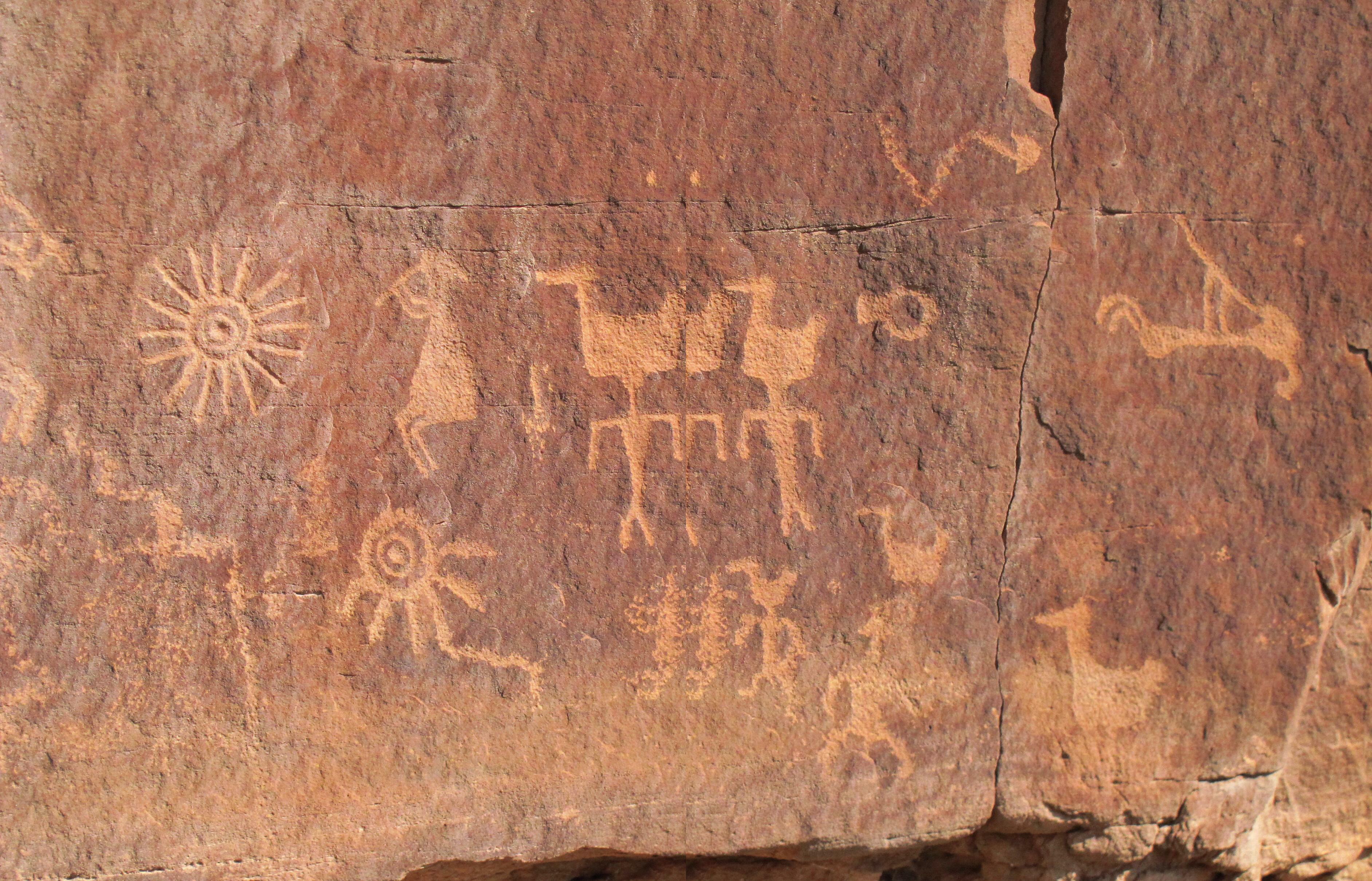
YOU DON’T HAVE TO BE a birder to recognize a duck call. The courtship whistles, odd cackles, and persistent quacking of ducks are some of the natural world’s most familiar sounds. In 2024, the U.S. Fish and Wildlife Service estimated that the North American population of wild ducks stands at around 34 million. Mallards, the most common duck species, are reckoned to number 6.6 million. Federal wildlife specialists arrive at these figures through annual surveys of duck breeding grounds, conducted from May to June, that allow them to forecast the fall flight, or the number of ducks that will migrate that autumn. Some scholars have suggested that an average fall flight before Europeans arrived in North America could have seen as many as 400 million ducks heading south. The cackling and quacking heard on the banks of the continent’s waterways in those days must have been deafening. For the Ancestral Puebloan people living in the Four Corners region near the San Juan River some 1,500 years ago, those calls seem to have taken on special resonance.
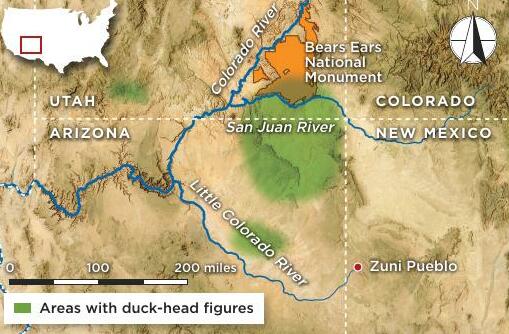 In the canyons of southeastern Utah and northeastern Arizona, researchers studying Native American rock art have long remarked on what archaeologist Polly Schaafsma of the Museum of Indian Arts and Culture calls the “duck complex.” These paintings, known as pictographs, and carvings, or petroglyphs, feature ducks as central actors in scenes whose meaning scholars still debate. The birds are often shown sitting on peoples’ heads, creating what appear to be duck-human hybrids. “No other bird or animal is depicted this way,” says Schaafsma. Often a flute player is shown serenading the figures.

Esta historia es de la edición July/August 2025 de Archaeology.
Suscríbete a Magzter GOLD para acceder a miles de historias premium seleccionadas y a más de 9000 revistas y periódicos.
¿Ya eres suscriptor? Iniciar sesión
MÁS HISTORIAS DE Archaeology
Archaeology
THE EGYPTIAN SEQUENCE
Until now, the earliest Egyptians to have even part of their DNA sequenced were three people who lived between 787 and 544 B.C.

1 mins
November/December 2025
Archaeology
SOURCE MATERIAL
As early as 40,000 years ago, some hunter-gatherers in southern Africa ventured long distances to procure special types of stone to make their tools.
1 min
November/December 2025

Archaeology
Secrets of the Seven Wonders
How archaeologists are rediscovering the ancient world's most marvelous monuments
13 mins
November/December 2025
Archaeology
ACTS OF FAITH
Evidence emerges of the day in 1562 when an infamous Spanish cleric tried to destroy Maya religion
12 mins
November/December 2025
Archaeology
OASIS MAKERS OF ARABIA
Researchers are just beginning to understand how people thrived in the desert of Oman some 5,000 years ago
8 mins
November/December 2025

Archaeology
FOSSIL FORCE
One of the planet's most successful arthropods, trilobites, abounded in the oceans from about 520 million to 250 million years ago.
1 min
November/December 2025
Archaeology
BIGHORN MEDICINE WHEEL, WYOMING
Perched almost 9,700 feet above sea level on Medicine Mountain in Wyoming's Bighorn Range, the Medicine Wheel is an 80-foot-diameter circular structure made from limestone boulders.
2 mins
November/December 2025
Archaeology
ANCIENT LOOK BOOK
A young woman buried in China's Tarim Basin some 2,000 years ago went to the afterlife accompanied by the height of fashion.
1 mins
November/December 2025
Archaeology
A FAMILIAR FACE
In the early eleventh century, a landslide on the island of Ostrów Lednicki in western Poland caused a hillfort to collapse and slip to the bottom of Lake Lednica.
1 min
November/December 2025
Archaeology
Temples to Tradition
A looted cache of bronzes compels archaeologists to explore Celtic sanctuaries across Burgundy
13 mins
November/December 2025
Listen
Translate
Change font size